
Trees
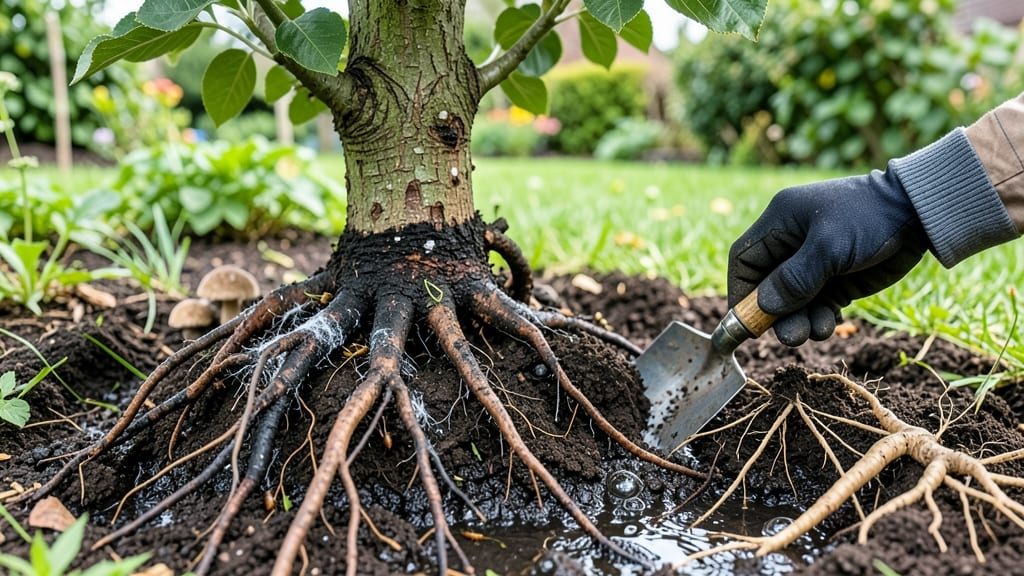
Apple tree root problems struggling? That’s the first sign your tree’s health is in trouble—and fixing it starts with understanding the hidden damage beneath the soil. 🌳 I’ve seen girdling roots choke a tree’s growth, rot turn roots to mush, and compaction suffocate them before they can spread. The good news? Most of these problems have simple, organic fixes that can revive even a stressed tree.
Girdling roots wrap around the trunk like a noose, cutting off nutrients and water flow. Root rot shows up as soft, discolored roots in soggy soil, while compaction makes roots grow shallow and weak.
The worst part? Many gardeners don’t notice until the tree’s leaves yellow or fruit production drops. But catching these issues early means you can save your tree before it’s too late.
You’ll learn how to prune girdling roots without harming the tree, amend soil to break up compaction, and fix drainage to prevent rot. These steps don’t require expensive tools—just a sharp saw, some compost, and a little patience.
Within a season, you’ll see stronger roots, better growth, and a tree that’s back to producing those sweet apples you love.
Whether your tree is young or mature, these fixes work for any apple variety. The key is acting fast—before the damage spreads deeper. Let’s get those roots healthy again so your tree can thrive for years to come.
Root Trouble Explained
Apple tree roots aren’t just passive anchors—they’re the lifeline of your tree, and when they struggle, your entire orchard suffers. Understanding why these problems occur is the first step to prevention and recovery. Let’s dig into the science behind the most common root issues in apple trees.
Girdling roots are one of the most insidious apple tree root problems because they start as a survival tactic. When roots grow in a circular or spiral pattern around the trunk or a buried root, they create a physical barrier that restricts nutrient and water flow. Here’s why it happens:
- Competition for Space: In crowded or poorly spaced orchards, roots twist and turn to escape competition from neighboring trees or roots. Over time, this twisting tightens like a noose.
- Improper Planting Depth: Burying the root flare (the swollen area where roots meet the trunk) too deep forces roots to grow upward in search of oxygen. These upward-growing roots often loop around the trunk, creating girdling.
- Genetic Predisposition: Some apple tree varieties, like Malus domestica, are more prone to girdling due to their natural root growth patterns. Shallow soil or rocky terrain can exacerbate this tendency.
- Soil Compaction: Hard or compacted soil restricts root expansion, causing roots to grow erratically. When roots can’t spread outward, they spiral inward toward the trunk.
💡 Pro Tip: Always plant apple trees with the root flare above the soil line and space them 15–20 feet apart to prevent root competition.
Root rot is a fungal or bacterial infection that thrives in waterlogged conditions, suffocating roots and cutting off their ability to absorb moisture and nutrients. The primary culprits are Phytophthora (water mold) and Armillaria (honey fungus), but poor drainage sets the stage:
- Excessive Moisture: Apple trees hate soggy soil. Heavy clay soils, poor drainage, or overwatering create anaerobic conditions (low oxygen) that weaken roots, making them susceptible to pathogens.
- Fungal Spores in Soil: Fungal spores are often already present in the soil but lie dormant until conditions become favorable—like after prolonged rain or irrigation.
- Wounded Roots: Physical damage from cultivation, construction, or even girdling roots creates entry points for pathogens to invade.
- Poor Airflow: Dense mulch or compacted soil traps moisture against the roots, accelerating rot. Even well-draining soil can become problematic if it’s not amended with organic matter.
🌡️ Warning Sign: If your apple tree’s leaves yellow or wilt despite moist soil, root rot may be the culprit. Dig carefully—healthy roots are white or tan, while rotting roots are dark, mushy, and may smell foul.
Compacted soil is like wearing a pair of tight boots—your apple tree’s roots can’t stretch, breathe, or absorb nutrients properly. Compaction is often a human-made problem, but nature plays a role too:
- Heavy Foot or Machinery Traffic: Walking, mowing, or driving over the root zone compresses soil, reducing pore space for air and water. This is especially damaging in clay or silt soils.
- Natural Soil Layers (Hardpan): Some soils have a dense, impermeable layer (like clay or rock) just below the surface. Roots can’t penetrate these layers, forcing them to grow horizontally where they’re more vulnerable to injury.
- Lack of Organic Matter: Soil without compost, mulch, or decomposed plant material stays tightly packed. Organic matter acts like a sponge, improving aeration and drainage.
- Freeze-Thaw Cycles: In cold climates, soil expands when wet and freezes, then contracts when it thaws. This repeated stress breaks down soil structure over time, increasing compaction.
✨ Fix It Fast: Aerate compacted soil with a garden fork or core aerator in early spring. Mix in 2–3 inches of compost to loosen the soil and encourage deeper root growth.
Now that you know why these root problems start, the next step is spotting the signs early. Keep an eye on your tree’s leaves, trunk, and soil—your apple tree’s health depends on it!
Fixing Apple Tree Root Struggles
Once you’ve identified the root of the problem (pun intended), it’s time to take action! 🌱 Whether your apple tree is battling girdling roots, fungal rot, or compacted soil, these targeted solutions will help restore its health.
Below, we’ll break down practical fixes for each common issue—plus prevention tips to keep your tree thriving long-term.
Cause: Roots growing in a circular pattern around the trunk, cutting off vital nutrients and water.
How to Fix It:
- 🔪 Prune the Problem Roots
- Carefully dig around the base of the tree (about 12–18 inches from the trunk) to expose girdling roots.
- Use sterilized pruning shears to cut the offending roots without damaging the trunk. Aim to remove only the circular sections—never more than 25% of the root system at once.
- Pro Tip: 💡 If roots are deeply embedded, gently tease them apart with a tool like a root saw or even a sturdy knife (wear gloves!).
- 🌱 Mulch for Root Relief
- Apply 2–4 inches of organic mulch (wood chips, straw, or shredded bark) away from the trunk to encourage outward root growth.
- Keep mulch 6 inches from the trunk to prevent rot or pest attraction.
- 💧 Water Deeply (But Not Too Much)
- After pruning, water thoroughly to help roots recover. Use a soaker hose to deliver moisture directly to the root zone.
Prevention Tips: ✅ Choose the right spot when planting—avoid areas with poor drainage or existing root competition. ✅ Stake young trees temporarily to prevent root circling during growth. ✅ Inspect roots annually during pruning season (late winter/early spring).
Cause: Overwatering, poor soil drainage, or fungal infections (like Phytophthora or Armillaria).
How to Fix It:
- 🚰 Improve Drainage Immediately
- Dig a drainage trench around the tree’s drip line (the edge of its canopy) to redirect excess water.
- Amend the soil with sand or perlite (for sandy soils) or compost (for clay-heavy soils) to improve aeration.
- Warning: ⚠️ Never add pure sand—it can compact further. Mix with 50% compost instead.
- 🍄 Treat Fungal Infections - Remove infected roots (sterilize tools with rubbing alcohol between cuts). - Apply a fungicide like copper sulfate or hydrogen peroxide (3%) to the root zone.
For organic options, try neem oil or baking soda spray (1 tbsp baking soda + 1 quart water). - Pro Tip: 🌡️ Avoid watering at night—fungi thrive in damp, dark conditions.
- 🌿 Adjust Watering Habits
- Water deeply but infrequently—aim for 1–1.5 inches per week (including rain).
- Use drip irrigation to deliver water slowly to the root zone.
Prevention Tips: ✅ Plant in well-draining soil—raise beds or use raised planters if your yard floods easily. ✅ Avoid over-mulching—keep mulch no deeper than 3 inches. ✅ Test soil pH (ideal: 6.0–7.0 for apple trees).
Cause: Heavy foot traffic, machinery, or clay soil compressing roots, restricting oxygen and water uptake.
How to Fix It:
- 🔨 Core Aeration (Best Solution)
- Rent a manual or powered aerator to create 2–3 inch deep holes across the root zone (up to the drip line).
- For small trees, use a garden fork to manually loosen soil in a grid pattern.
- Pro Tip: 🎯 Do this in early spring or fall when soil is moist but not soggy.
- 🌱 Add Organic Matter
- Mix compost, leaf mold, or aged manure into the top 6–12 inches of soil.
- Top-dress with 1–2 inches of compost annually to improve structure.
- 🚜 Reduce Soil Pressure
- Avoid driving or parking heavy vehicles near the tree.
- Install gravel paths or stepping stones to protect the root zone.
Prevention Tips: ✅ Mulch heavily (4+ inches) to protect soil structure. ✅ Avoid tilling near the tree—it can damage roots. ✅ Plant cover crops (like clover) in bare areas to prevent compaction.
- 🌿 Fertilize Lightly (if needed): Use a balanced, slow-release fertilizer (10-10-10) in early spring.
Avoid high-nitrogen fertilizers if rot is suspected. - 🌳 Monitor for Stress: Yellowing leaves, wilting, or stunted growth? Adjust care immediately—don’t wait for symptoms to worsen. - 🐛 Pest Patrol: Check for borers, nematodes, or rodents digging near roots. Use beneficial nematodes or physical barriers if needed.
Final Thought: 🌟 Patience is key—roots take time to recover. With the right fixes, your apple tree can bounce back stronger than ever. Start small, act fast, and watch your tree thrive!
Frequently asked questions
How do I tell if my apple tree has girdling roots?
Look for roots growing in tight circles around the trunk or buried roots that appear to be strangling the tree. Check for swollen bark above the root or cracks where roots press against the trunk. If you see these signs, prune the circular roots carefully with sterilized tools—never remove more than 25% of the root system at once.
Can I save an apple tree with root rot?
Yes, but act fast! First, improve drainage by amending soil with compost or perlite and avoid overwatering. Treat fungal infections with copper sulfate or neem oil, and remove any mushy, dark roots. For severe cases, consider transplanting the tree to a well-draining raised bed—but only if the trunk is still healthy.
What’s the best way to test for soil compaction near my apple tree?
Dig a small hole (6–12 inches deep) near the tree’s drip line. If the soil feels hard as concrete or holds its shape when squeezed, it’s compacted. Use a garden fork to loosen it, then mix in 2–3 inches of compost. For large areas, rent a core aerator in early spring or fall for best results.
Will mulching help with apple tree root problems?
Organic mulch (like wood chips) improves soil structure and encourages outward root growth. Keep it 2–4 inches thick and 6 inches away from the trunk to prevent rot. Avoid piling mulch against the trunk—this traps moisture and attracts pests. Replenish mulch annually for long-term benefits.
How often should I check my apple tree’s roots for problems?
Inspect roots once a year during late winter or early spring pruning. Look for girdling, rot, or compaction signs. For young trees, check roots every 6 months since they’re more vulnerable. Early detection means quicker fixes—don’t wait until leaves yellow or fruit production drops!