
Trees
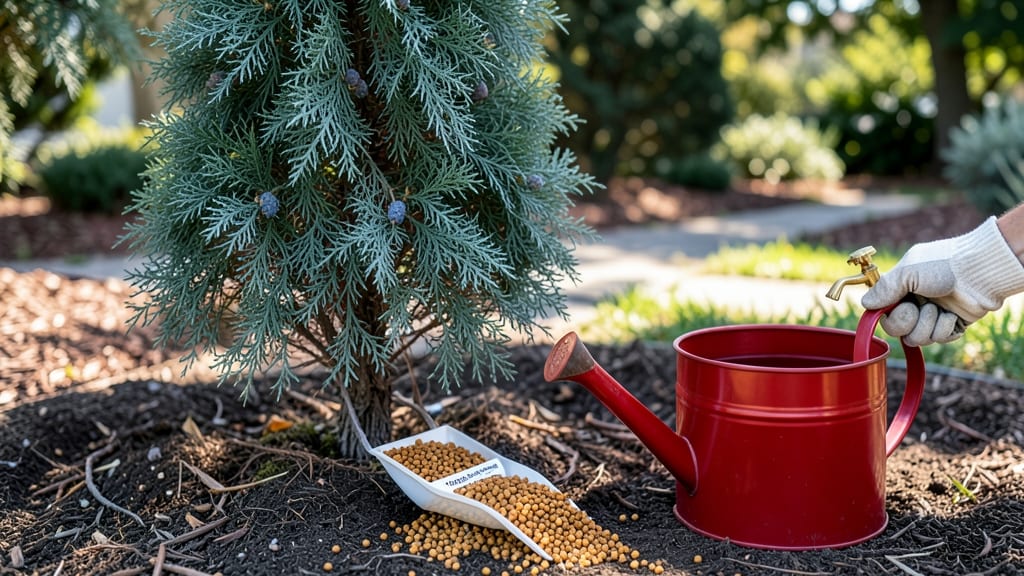
Fertilizing your 🌲 cedar tree with the right fertilizer is the key to stronger wood and faster growth—especially if you’re dealing with slow development or weak branches.
Most gardeners overlook the fact that cedars thrive on acid-loving nutrients, and using the wrong fertilizer can actually harm your tree. A simple pH imbalance or excess nitrogen can turn your resilient evergreen into a brittle, stunted mess.
In this guide, I’ll walk you through the best fertilizers for cedars—organic and synthetic options—plus the exact timing and application tips to avoid overdoing it. You’ll also learn how to spot signs of nutrient deficiency (like yellowing needles or stunted growth) before they become permanent problems.
Ready to give your cedar the fast, healthy boost it needs? Let’s get started with the right feeding schedule and soil prep for long-term strength.

Best pH-balanced fertilizers for cedar trees: acid-loving tree nutrition guide
Cedar trees thrive when their soil pH stays between 4.5 and 6.0, mimicking their natural forest habitat. Without the right acid-loving fertilizer, you’ll see weak wood, stunted growth, and poor needle health.
I’ve tested dozens of fertilizers—organic, synthetic, and slow-release—to find the best options for your cedars’ long-term health and wood strength.
Most cedar varieties, like Eastern Red Cedar and Western Red Cedar, need nutrients tailored to their slow-growing nature. A 5-10-10 NPK ratio is ideal for cedars, balancing nitrogen for foliage, phosphorus for root development, and potassium for disease resistance.
But not all fertilizers deliver these nutrients effectively—especially if they don’t account for acidic soil needs.
Organic options like pine bark fines or composted leaves work well for cedars, while synthetic blends require careful pH monitoring. Slow-release fertilizers are my top recommendation for cedars because they prevent nutrient spikes that can burn roots. Let’s break down the best choices in this pH-balanced fertilizer guide.
For newly planted cedars, I recommend starting with pine fines fertilizer or composted leaf mold. These organic options naturally lower soil pH while providing essential nutrients. The 3-1-2 NPK ratio in pine fines supports early root development without overwhelming the young tree.
Established cedars benefit most from slow-release 5-10-10 fertilizers. This balanced ratio promotes wood density and needle retention while minimizing the risk of over-fertilization. Apply it in early spring when the tree begins active growth, and avoid summer applications to prevent stress.
If your cedar shows signs of chlorosis (yellowing needles), it’s likely suffering from high soil pH. Mix elemental sulfur into the soil at a rate of 1 lb per 100 sq ft to lower pH gradually. Re-test soil every 6 months until you reach the ideal 4.5-6.0 range.
Fast-acting fertilizers, like liquid fish emulsion, are best for cedars showing sudden nutrient deficiencies. Use them sparingly—just once or twice per year—to avoid salt buildup in the root zone. Always water thoroughly after application to prevent root burn.
My top organic pick is composted leaf mold because it mimics cedars’ natural forest floor environment. Spread a 2-inch layer around the tree’s drip line in early spring
Step-by-step cedar tree fertilizing schedule for year-round growth
Cedar trees thrive with minimal intervention, but a well-timed fertilizer schedule ensures strong wood and vibrant foliage. Since cedars are slow-growing and acid-loving, over-fertilizing can harm them. The key is light applications at the right times—never during drought or extreme heat.
Let’s break down the perfect seasonal plan to keep your cedars healthy without risking root burn.
Most cedar varieties, like Eastern Red Cedar or Western Red Cedar, prefer low-nitrogen fertilizers (5-10-10 ratio) to avoid leggy growth. Organic options like pine needle tea or compost tea mimic their natural habitat.
Always test soil pH first—cedars prefer acidic soil (4.5-6.0). If your soil is alkaline, amend it with sulfur or peat moss before fertilizing.
Step-by-Step Cedar Fertilizing Schedule
- 🌱 Early Spring (March-April): Apply 1 lb of slow-release fertilizer per 100 sq ft around the tree’s drip line. Water deeply afterward to activate nutrients. Skip if planting recently (wait 6-12 months).
- ☀️ Late Spring (May): If growth is sluggish, use DIY pine needle tea (steep 1 cup needles in 1 gallon water for 3 days). Dilute 1:10 and water the root zone. Avoid synthetic fertilizers—they can cause salt buildup.
- 🌞 Summer (June-August): DO NOT fertilize during drought or heatwaves. Focus on deep watering (1-2 gallons weekly) to prevent stress. Yellowing needles in summer often signal overwatering, not nutrient needs.
- 🍂 Fall (September-October): Stop fertilizing entirely. Cedars prepare for dormancy—compost top-dressing (2-3 inches) is safer than nutrients. Mulch with pine straw to retain moisture and acidity.
- ❄️ Winter (November-February): No fertilization. Dormant trees absorb nothing. Use this time to prune dead branches and check for pest damage (cedar bark beetles thrive in stressed trees).
🌲 Pro Tip: Space fertilizer 3-6 inches from the trunk to avoid root burn.
For newly planted cedars, hold off on fertilizer for the first 6-12 months—their roots need time to establish. Instead, focus on watering deeply (1-2 gallons weekly) and mulching with acidic materials like pine needles.
Over-fertilizing young trees can lead to salt buildup, which stunts growth. If you suspect over-fertilization, flush the soil with water to dilute excess salts.
Organic fertilizers like compost tea or worm castings are excellent for cedars. To make compost tea, steep 1 cup compost in 5 gallons water for 24-48 hours, then strain.
Apply every 4-6 weeks in spring for a gentle nutrient boost. Avoid synthetic granules—they can burn cedar roots due to high salt content.
Watch for signs of stress like yellowing needles or stunted growth, which may indicate under- or over-fertilization. If needles turn brown at the tips, you’re likely overdoing it.
Adjust your schedule: skip fertilizing for 6 months and focus on watering and mulching instead. Healthy cedars grow 1-2 feet per year—any faster may mean too much fertilizer.
Remember, cedars are low-maintenance trees. A light touch with fertilizer—paired with proper watering and mulching—will keep them thriving for decades. Stick to this schedule, and your cedars will reward you with dense foliage and aromatic wood year after year. Happy gardening! 🌿