
Blooming
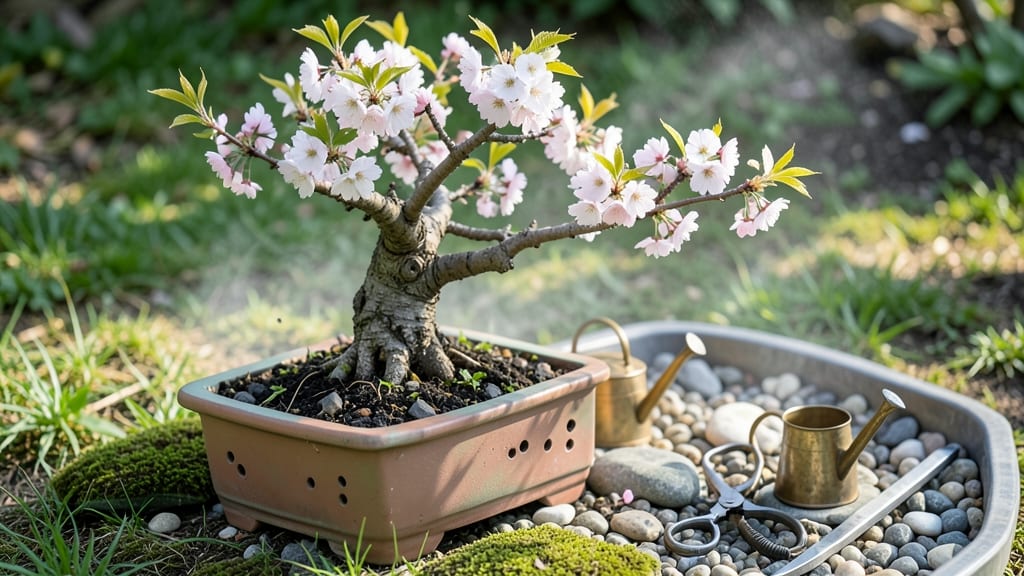
Caring for a cherry blossom bonsai tree means preserving its delicate beauty through every season—especially when pruning transforms bare branches into cascades of pink blooms. 🌸 I learned the hard way that timing and technique make all the difference, and now my tree bursts with flowers every spring without losing its miniature elegance.
The secret lies in seasonal adjustments that keep the tree healthy year-round, not just during bloom season.
You’ll need sharp bonsai shears, copper wire for shaping branches, and a well-draining soil mix designed for deciduous trees. Watering becomes an art too—keeping the soil moist but never soggy, especially during the tree’s active growth in spring and summer.
Most mistakes happen when people over-prune or ignore seasonal needs, so we’ll cover exactly when to trim, how much to remove, and which branches to prioritize for that signature bonsai silhouette.
By winter’s end, you’ll see fresh green buds forming, and with careful pruning, those buds will open into clusters of blossoms that last weeks. The tree’s trunk thickens over time, its roots spread deeper, and the whole process becomes meditative—like sculpting with nature’s own tools.
The payoff? A bonsai that looks like it’s been growing for centuries, not just a few years.
This method works for both beginners and experienced growers—just adjust the intensity based on your tree’s age and health. Whether you’re shaping your first bonsai or refining a masterpiece, these seasonal secrets will keep your cherry blossom thriving for decades.
Let’s get started with the first critical step: understanding your tree’s natural growth cycle.
📚 In This Guide
- What you need
- Instructions
- Tips and common mistakes
- Wrapping up and next steps
What you need
- ● Cherry Blossom Bonsai Tree: A healthy, pre-bonsai Prunus serrulata (Japanese cherry) or grafted variety (e.g., Prunus × yedoensis). Bonsai Pot: 1 shallow, well-draining pot (3–6 inches deep) with drainage holes. Unglazed clay is ideal for airflow. Bonsai Soil Mix: 1 bag (1–2 cubic feet) of akadama, pumice, and lava rock (ratio: 50% akadama, 30% pumice, 20% lava rock). Pruning Tools: 1 pair of concave bonsai scissors (for branch pruning). 1 set of needle-nose pliers (for wire removal). 1 sharp bonsai knife (for root pruning).
Step-by-Step cherry blossom bonsai tree care
Here's how I keep my cherry blossom bonsai thriving through every season—no fancy tools, just consistent care.
🌱 Step 1: Master Spring Pruning for Flowering
Prune immediately after blooms fade in spring. Use sharp bonsai shears to trim back new growth to 3-4 leaves per branch. This encourages bushier growth and better flowering next year. I cut just above a leaf node at a 45-degree angle to prevent water pooling.
Remove any dead or crossing branches completely. You'll see new buds forming within 2-3 weeks—these are your future blossoms. If your tree looks bare, don't panic; cherry blossoms need time to establish their framework.
☀️ Step 2: Summer Maintenance for Healthy Foliage
Water daily during summer heat, checking when the top inch of soil feels dry. Mist leaves in the morning to prevent fungal issues. I use a fine spray nozzle to avoid disturbing the delicate branches. Fertilize every 2 weeks with diluted bonsai fertilizer—half-strength prevents salt buildup.
Watch for new growth at branch tips. When these shoots reach 2-3 inches, pinch them back to encourage branching. This creates that classic bonsai silhouette. Avoid heavy pruning now—you're shaping, not reshaping.
✂️ Step 3: Fall Pruning for Structure and Winter Prep
In late fall, prune back 1/3 of new growth to harden branches before winter. Trim at leaf nodes to maintain the tree's natural taper. I like to do this after the first frost when growth slows naturally. Remove any remaining leaves that didn't drop—dead leaves invite pests.
Reduce watering to every 3-4 days as temperatures drop. Move your bonsai to a cool but frost-free location (around 40-50°F). This mimics its natural winter dormancy period. You'll see new buds forming in early spring—proof your tree is ready for another flowering cycle.
⏰ Step 4: Winter Care for Next Year's Blooms
Keep soil slightly moist during winter—just enough to prevent complete drying. I check weekly by lifting the pot; if it's light, water lightly. Avoid cold drafts or direct heat sources. Cherry blossom bonsais need consistent winter rest to set next year's flower buds.
This is when I do my annual health check. Look for any dead branches or unusual spots. Prune out any problems immediately—diseased wood won't recover. With proper winter care, your tree will burst into bloom in spring, just like the famous Japanese cherry trees.
Tips & tricks for perfect cherry blossom bonsai care
Real talk: Your bonsai's beauty comes from the details—not just the pruning, but the timing and technique. Here's what nobody tells you about keeping your cherry blossom thriving.
Pruning Precision: In Step 1, when trimming to 3-4 leaves per branch, focus on the outer leaves first. These receive the most sunlight and will develop into stronger growth. I also recommend using a magnifying glass—it helps you spot tiny buds that might otherwise get missed during pruning. This targeted approach ensures you're shaping the tree while preserving its natural form.
Seasonal Watering Wisdom: The "top inch dry" rule in Step 2 is your guide, but don't rely solely on your finger. Invest in a moisture meter—it's a game-changer for bonsai care. During summer, I water in the morning to prevent fungal issues, but I also check the pot's weight. A dry pot feels noticeably lighter, and this visual cue helps me adjust my watering schedule before the soil actually dries out.
Winter Temperature Strategy: That 40-50°F range in Step 4 is crucial, but location matters just as much. Place your bonsai near an east-facing window during winter—this provides gentle morning sunlight without the harsh afternoon heat. If you don't have a suitable window, a grow light on a timer** (6-8 hours/day) works beautifully. Avoid south-facing windows, which can create heat stress even in winter.
Health Check Hack: During your annual winter health check, don't just look for dead branches—run your fingers along the bark. Healthy bark should feel smooth and firm, while diseased areas often feel soft or spongy. I also check the undersides of leaves for spider mites (tiny red dots) or aphids (sticky residue). Catching these early makes all the difference in spring blooming.
Pro Tips for Cherry Blossom Bonsai Tree Care
- Real talk: Your bonsai's beauty comes from the details—not just the pruning, but the timing and technique. Here's wha...
- Pruning Precision: In Step 1, when trimming to 3-4 leaves per branch, focus on the outer leaves first. These receive ...
- Seasonal Watering Wisdom: The "top inch dry" rule in Step 2 is your guide, but don't rely solely on your finger. Inve...
Frequently asked questions
Got questions about keeping your cherry blossom bonsai tree thriving? You’re not alone! Here are some of the most common concerns—plus expert answers to help you care for your tree like a pro.
Prune your cherry blossom bonsai twice a year: once in late winter or early spring (just before buds swell) to shape the tree, and again in summer (after flowering) to control growth. Avoid heavy pruning in fall—this can stress the tree before winter. Use sharp, sterilized tools and focus on 1/3 of the new growth to maintain balance. Cherry blossom bonsai typically bloom in early spring (March–April), mirroring their outdoor counterparts. To encourage more flowers:- Provide full sun (6+ hours/day) for vibrant blooms.
- Use a balanced fertilizer (like 10-10-10) in early spring.
- Avoid over-pruning—leave some older branches to support flowering.
- Ensure proper dormancy in winter (cool temps, reduced watering).
Overwatering?
Let the top 1–2 inches of soil dry between waterings.
Underwatering?
Adjust to a consistent moisture (not soggy, not bone-dry).
Nutrient issues?
Flush the soil with water to remove salts, then fertilize lightly.
Pests/fungus?
Inspect for spider mites or powdery mildew—treat with neem oil if needed.
Pro tip: Yellow leaves on older branches may just be natural aging—prune them out to refresh the tree. While possible, indoor growth is tricky for cherry blossom bonsai due to their sun and cold requirements:- Light: Place near a south-facing window or use grow lights (12+ hours/day).
- Temperature: Mimic outdoor seasons—cool winter (40–50°F) for dormancy.
- Humidity: Use a humidifier or pebble tray to prevent dry air stress.
- Outdoor time: If possible, acclimate the tree outdoors in spring/fall for blooming.
For best results, outdoor cultivation (or a sunroom with seasonal changes) works best! A well-draining, slightly acidic mix (pH 5.5–6.5) is ideal. Try this blend:
| Component | Ratio | Purpose |
|---|---|---|
| Akadama | 50% | Retains moisture, improves aeration. |
| Pumice | 30% | Enhances drainage and root health. |
| Organic matter (peat moss or compost) | 20% | Provides nutrients and structure. |
Refresh the top layer every 6–12 months to prevent compaction.
Wrapping up and next steps
Caring for a cherry blossom bonsai is a rewarding journey that blends patience, creativity, and seasonal attention.
By mastering pruning techniques, adjusting watering habits, and embracing the tree’s natural rhythm, you’ll nurture a stunning miniature masterpiece that blooms with grace year after year. Start small—whether it’s refining your pruning skills or experimenting with seasonal adjustments—and watch your bonsai thrive!
🌸 Next step: Grab your tools and schedule your first pruning session—your cherry blossom bonsai is waiting for your expert touch! 🌱