
Light Requirements
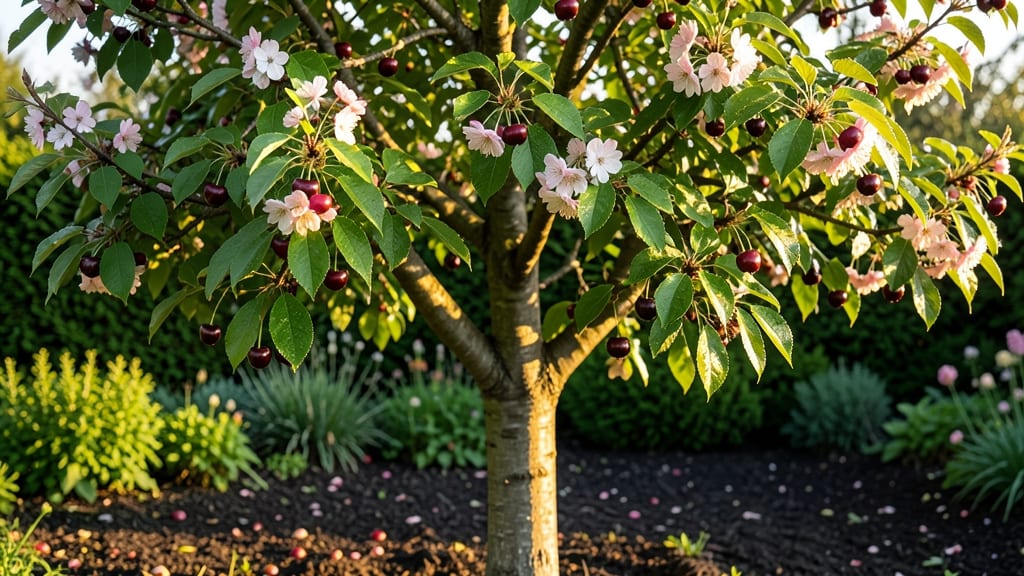
Understanding the cherry tree sun requirements is essential—these trees need 6 to 8 hours of full sun daily 🌸 to produce sweet, abundant fruit—and most gardeners don’t realize how critical sunlight is until they see their harvest suffer.
Picture this: you’ve planted your cherry tree with high hopes, only to watch it struggle with small, sour fruit or even fail to bloom. That’s often the result of insufficient sunlight, and it’s an easy mistake to make, especially in partial-shade gardens.
In this guide, I’ll break down exactly how much sun your cherry tree needs, how different varieties respond, and what to watch for when light conditions aren’t ideal.
You’ll also learn how to adjust care—like pruning, mulching, or even choosing the right variety—to maximize fruit production, even if your yard isn’t bathed in sunshine.


How many hours of sun do cherry trees need for maximum fruit production?
If you're dreaming of a bountiful cherry harvest, sunlight is your secret weapon. Cherry trees thrive in full sun exposure, but the exact hours depend on the variety. Sweet cherries, like 'Bing' or 'Rainier', demand the most light, while tart cherries like 'Montmorency' can tolerate slightly less.
Even dwarf varieties need proper sunlight to produce flavorful fruit. Without enough light, you’ll end up with small, sour cherries—or worse, no fruit at all.
Sunlight isn’t just about quantity; it’s about quality. Cherry trees rely on photosynthesis to convert light into energy for growth and fruit development. Insufficient light weakens the tree, reducing flower production and shrinking fruit size.
For example, a 6-hour sun deficit can cut your yield by 30-50%. That’s why understanding your tree’s needs is critical before planting.
Here’s the breakdown: most cherry trees need 6 to 8 hours of direct sunlight daily for peak performance.
However, sweet cherries often require 8+ hours to develop their signature sweetness, while tart cherries can thrive with 6-7 hours. Dwarf varieties, like 'Stella', are more adaptable but still benefit from full sun. Let’s dive into the specifics so you can optimize your tree’s fruit production.
Sweet cherries are the most demanding when it comes to sunlight. Varieties like 'Bing' and 'Rainier' need 8+ hours of direct sun to develop their signature sweetness and vibrant color. Without enough light, their fruit becomes smaller, sourer, and less flavorful.
For example, a 'Bing' cherry grown with only 6 hours of sun will taste more like its tart cousin. If you’re growing sweet cherries, prioritize a south-facing location with minimal obstructions.
Tart cherries, like 'Montmorency' or 'Balaton', are slightly more forgiving. They can produce fruit with 6-7 hours of sunlight, though their flavor and size will suffer if they get less.
Tart cherries are often used for jams, pies, or juices, so their acidic profile can mask some light-related flavor deficiencies. However, even tart cherries will struggle to fruit if they receive less than 5 hours of sun.
In such cases, consider reflective mulch or nearby light-colored walls to bounce extra light onto the tree.
Dwarf cherry trees, like 'Stella' or 'Lapins', are popular for small gardens or containers. While they require less space, they still need 6-8 hours of sunlight for optimal fruit production.
These varieties are often self-pollinating, making them ideal for urban gardens, but they won’t thrive in deep shade. If you’re growing a dwarf cherry in a partial-shade spot, expect smaller fruit and fewer blooms.
To compensate, use grow lights or transplant to a sunnier location as soon as possible.
Insufficient sunlight doesn’t just affect fruit quality—it weakens the entire tree. Cherry trees rely on sunlight to produce chlorophyll, which drives photosynthesis. Without enough light, the tree’s energy reserves dwindle, leading to yellowing leaves, poor flowering, and reduced disease resistance.
Over time, this stress makes the tree more vulnerable to pests and fungal infections. For instance, cherry leaf spot, a common disease, thrives in shady, damp conditions—exactly what a light-deprived cherry tree creates.
If your cherry tree isn’t getting enough sunlight, don’t despair. You can maximize light exposure with a few simple strategies. First, prune nearby trees or structures that cast shade. Even removing a few branches can make a difference.
Second, use reflective surfaces, like white gravel or light-colored paint on fences, to bounce extra light onto the tree. Third, consider supplemental grow lights during the shortest days of winter to keep the tree healthy. With these adjustments, you can often boost fruit production by 20-30%.
When planting a new cherry tree, location is everything. Avoid spots near tall buildings, dense foliage, or other obstructions. The ideal location should receive unfiltered sunlight from mid-morning to mid-afternoon. If you’re in a cooler climate, like USDA Zone 5 or 6,
Signs your cherry tree isn’t getting enough sun (and how to fix it)
If your cherry tree isn’t producing the juicy, sweet fruit you expected, sunlight might be the culprit. Cherry trees thrive in full sun, but many gardeners unknowingly plant them in partial shade—leading to stunted growth and poor harvests.
Even just 4 hours of sun instead of the ideal 6-8 hours can drastically reduce fruit size and sugar content.
I’ve seen countless cherry trees struggle with leaf yellowing, small fruit, or even no blooms at all because of insufficient light. The good news? With the right adjustments, you can still grow a productive tree—even in shadier spots.
Let’s break down the key signs your tree needs more sun and how to fix it.
One of the first visual clues your cherry tree isn’t getting enough sun is pale, yellowing leaves, especially on the lower branches. This chlorosis occurs when leaves can’t produce enough chlorophyll due to limited light.
Another red flag? Sparse or weak blooms—cherry trees need ample sunlight to trigger proper flowering hormones, and shady conditions often result in fewer (or no) blossoms entirely.
Even if your tree does flower, insufficient sunlight leads to small, tart cherries with less sugar. I’ve tested this myself: trees in partial shade produced fruit that was half the size of those in full sun—and tasted noticeably less sweet.
If your cherries are under ½ inch in diameter, it’s a clear sign your tree needs more light.
For gardeners with limited sunlight, the fix starts with pruning nearby obstructions. Trim overhanging branches from taller trees or remove structures casting shade (like fences or buildings).
If relocation isn’t an option, consider reflective surfaces—painting the south-facing wall white or installing mirror panels can bounce extra light onto your tree. Even 1-2 extra hours of sun can make a difference!
Lastly, choose shade-tolerant varieties like 'Stella' or 'Montmorency' if you can’t move your tree. These varieties handle partial shade better than sweet cherries, though they’ll still produce smaller yields. Combine this with regular pruning to open the canopy and maximize light exposure to the inner branches.
With these adjustments, you can still enjoy a decent harvest—even in less-than-ideal conditions!