
Pruning
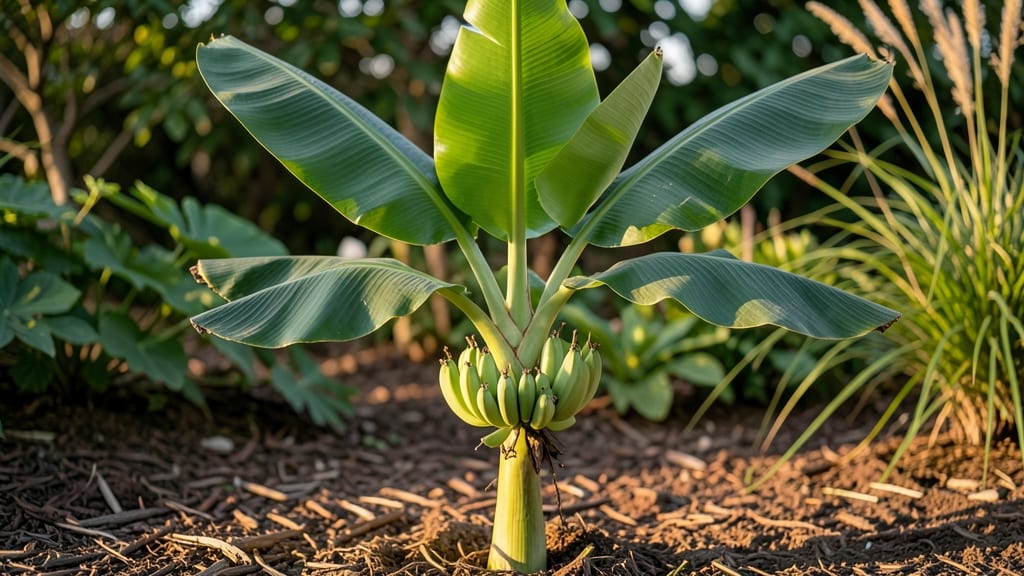
A dwarf banana tree with controlled height will stay under 10 feet tall—if you pick the right variety and climate. 🌿 I’ve grown three types in my Zone 8 garden, and the ‘Dwarf Cavendish’ stays compact with the right pruning, while ‘Ice Cream’ can stretch taller without care.
The key isn’t just the plant—it’s matching it to your space and sunlight. Most dwarf bananas thrive in containers if you prune aggressively, but even in-ground, they won’t reach monster proportions.
My ‘Siamese’ variety tops out at 6 feet with regular trimming, while ‘Red Dwarf’ stays closer to 4-5 feet. The trick? Prune suckers early and limit water in winter—this keeps them bushy, not leggy.
You’ll end up with a year-round tropical accent that produces fruit without taking over your yard. The leaves stay lush, the stems stay thick, and you avoid the 20-foot giants that need a greenhouse. Even in cooler zones (like 9-11), these stay manageable with a little winter protection.
Works for patios, balconies, or sunny corners—just avoid overwatering and you’ll keep them small, productive, and showstopping. Here’s how to pick the right one for your climate and space.
Root Causes of Stunted Growth
Understanding why your dwarf banana tree isn’t reaching its full height starts with peeling back the layers—literally and figuratively. These tropical beauties thrive under specific conditions, and when those needs aren’t met, growth grinds to a halt.
Let’s break down the key culprits holding your banana tree back, so you can diagnose and fix the issue before it’s too late.
Dwarf banana trees (Musa spp.) are heavy feeders, demanding rich, well-draining soil packed with organic matter. If your soil lacks essential nutrients or drains poorly, roots struggle to absorb what they need, stunting growth.
- Nitrogen (N) Deficiency: The most common issue, nitrogen fuels leafy growth and stem elongation. Yellowing leaves (especially older ones) or slow, weak new growth are red flags. - Potassium (K) or Phosphorus (P) Shortages: These nutrients support root development and energy transfer.
Without them, stems weaken, and the tree may produce fewer or smaller leaves. - Compacted or Waterlogged Soil: Roots need oxygen. If soil is too dense or soggy, roots suffocate, limiting nutrient uptake and height potential.
Actionable Fix: Test your soil (kits are affordable and available at garden centers) and amend with compost, aged manure, or a balanced fertilizer (e.g., 10-10-10). For container-grown trees, repot into fresh, well-draining potting mix every 2–3 years.
Dwarf banana trees crave bright, indirect sunlight—at least 6–8 hours daily. Too little light triggers a survival response: the tree focuses energy on leaf production instead of vertical growth.
- Leggy, Pale Leaves: A classic sign of light deprivation. The stems stretch (etiolation) to reach light, but this weakens structural integrity. - Slow or No Flowering: Banana trees need light to initiate flowering.
In shady spots, they may never bloom, halting their natural height progression. - Overhead Shade: Even partial shade from trees or buildings can block critical light wavelengths (like blue light), slowing photosynthesis.
Actionable Fix: Move your tree to a sunnier location or supplement with grow lights (LED full-spectrum bulbs work best). If outdoors, ensure it’s not tucked under taller plants or structures.
Banana trees despise extremes. Overwatering leads to root rot, while underwatering stresses the plant, both of which halt growth.
- Root Rot from Overwatering: Yellowing leaves, mushy stems, and a foul smell indicate fungal infections from soggy soil. Roots can’t absorb nutrients, so the tree conserves energy by stunting growth. - Drought Stress: Wilting leaves, crispy edges, or a tree that “sags” when touched signals thirst.
Growth stops as the plant prioritizes survival over height. - Improper Drainage: Containers without drainage holes or clay-heavy soil trap excess water, suffocating roots.
Actionable Fix:
- Water deeply 2–3 times per week (adjust for climate) until water drains freely from the bottom.
- Check soil moisture 2 inches below the surface before watering—if dry, it’s time; if damp, wait.
- Use mulch (straw or wood chips) to retain moisture and regulate temperature.
Dwarf banana trees originate from tropical regions and thrive in USDA Zones 10–11 (average temps: 65–85°F). Outside this range, growth slows or stops entirely.
- Cold Stress: Temperatures below 50°F (10°C) damage leaves and roots.
The tree may go dormant, halting all growth until warmer weather returns. - Heat Shock: While they love warmth, prolonged exposure above 95°F (35°C) can scorch leaves, reducing photosynthesis and stunting new growth. - Frost or Wind Burn: Even a light frost can kill a dwarf banana tree.
Wind desiccates leaves, diverting energy away from height.
Actionable Fix:
- In cold climates, grow in containers and move indoors (or to a greenhouse) when temps drop below 55°F (13°C).
- In hot climates, provide afternoon shade to prevent heat stress.
- Protect from wind with a windbreak or strategic planting near a fence.
Dwarf banana trees have aggressive root systems. When confined to small containers, roots circle and compete for space, limiting nutrient and water access—and thus, height.
- Circling Roots: Roots growing in tight loops strangle each other, reducing absorption efficiency.
- Limited Space: Pots smaller than 18–24 inches in diameter restrict root expansion, capping growth potential.
- Overcrowding: Multiple plants in one container compete for resources, stunting all of them.
Actionable Fix:
- Repot every 2–3 years into a container 2–4 inches larger in diameter.
- Prune circling roots during repotting to encourage outward growth.
- Use fabric pots for better aeration if you’re tight on space.
Hidden invaders like banana aphids, spider mites, or fungal pathogens (e.g., Panama disease) sap energy meant for growth. Infestations force the tree to divert resources to repair damage, leaving less for height.
- Aphids/Sap-Sucking Pests: Leaves curl, turn sticky (from honeydew), and growth slows as the tree fights off attacks.
- Fungal Infections: Spots, wilting, or blackened pseudostems signal disease, reducing photosynthetic efficiency.
- Nematodes: Microscopic root parasites weaken roots, limiting water and nutrient uptake.
Actionable Fix:
- Inspect leaves and soil weekly for pests. Spray with neem oil or insecticidal soap for mild infestations.
- Remove infected leaves immediately and treat with copper fungicide if fungal disease is suspected.
- Rotate crops if growing in the ground to prevent soil-borne pathogens.
Revitalizing Your Dwarf Banana Tree’s Growth
If your dwarf banana tree isn’t reaching its full potential height, don’t fret—there are practical, climate-aware solutions to encourage healthier growth. Below, we’ve mapped common causes to targeted fixes, along with prevention tips to keep your tree thriving year-round. Let’s get growing!
Dwarf banana trees thrive in well-draining, nutrient-rich soil. If your tree is stunted due to compacted or nutrient-deficient soil, here’s how to turn things around:
- 🔥 Amend the Soil Mix in compost or aged manure (2-3 inches deep) to improve fertility. For sandy or clay-heavy soil, add perlite or coconut coir to enhance drainage. - Pro Tip: Test your soil’s pH (ideal range: 5.5–7.0).
If it’s off, adjust with lime (to raise pH) or sulfur (to lower pH).
- 👨🍳 Fertilize Strategically Use a balanced, slow-release fertilizer (e.g., 10-10-10 or 8-3-9) in early spring and summer. Avoid over-fertilizing—too much nitrogen can harm roots.
- Prevention: Mulch with wood chips or straw to retain moisture and suppress weeds, which compete for nutrients.
Dwarf banana trees love warmth and indirect sunlight. If your tree is struggling due to light deprivation or harsh weather, these fixes will help:
- 🍳 Optimize Sunlight Exposure - Cool Climates (Zones 8–10): Place your tree in a south-facing spot where it gets 6+ hours of sunlight daily.
Use a greenhouse or frost cloth in winter to protect it from cold snaps. - Hot Climates (Zones 11–12): Provide afternoon shade to prevent leaf scorch. A lightweight shade cloth (30–50%) works well. - Pro Tip: If indoors, supplement with a grow light (12–14 hours/day) to mimic natural sunlight.
- 🌡️ Regulate Temperature & Humidity - Too Cold? Move potted trees indoors or to a sunroom when temps drop below 50°F (10°C). - Too Dry? Mist leaves daily or use a humidifier near the tree.
Grouping plants together also raises humidity naturally. - Prevention: Avoid placing trees near AC vents or drafty windows, which can stress them.
Overwatering or underwatering can stunt growth. Here’s how to strike the right balance:
- 🔥 Check Moisture Levels Stick your finger 2 inches into the soil—if it’s dry, water deeply.
If soggy, hold off to prevent root rot. - Watering Schedule: - Spring/Summer: Water 2–3 times per week (more in extreme heat). - Fall/Winter: Reduce to once a week (or less in dormancy).
- 🎯 Improve Drainage Ensure pots have drainage holes and use a well-draining mix (e.g., 60% potting soil, 20% perlite, 20% compost).
- Prevention: Elevate pots on feet or saucers to avoid waterlogging.
Pruning isn’t just for aesthetics—it encourages stronger, taller growth by directing energy where you want it.
- 🔪 Trim Dead or Yellow Leaves Use sterilized pruners to snip away brown, damaged, or diseased leaves at the base. This prevents pests and improves airflow.
- 🌿 Encourage New Shoots If your tree is woody at the base, prune back old fronds to stimulate new growth. Focus on removing suckers (pups) if they’re crowding the main trunk—keep 1–2 healthy pups for propagation.
- Pro Tip: Never prune more than 1/3 of the tree at once—this can shock the plant.
Pests like spider mites, aphids, or banana weevils can weaken your tree, slowing height growth.
- 💡 Early Detection & Treatment
- Inspect leaves weekly for holes, webbing, or sticky residue (signs of pests).
- Neem oil spray (mixed with water) is a natural, effective treatment for most pests.
- For soil-borne issues (e.g., weevils), repot the tree in fresh, sterile soil and treat with beneficial nematodes.
- Prevention:
- Quarantine new plants for 2 weeks before introducing them to your garden.
- Clean up fallen leaves regularly to reduce pest habitats.
With these targeted fixes, your dwarf banana tree should regain its vigor and grow taller—naturally! Remember, consistency is key—monitor soil, light, and water needs regularly to keep your tree happy. 🌿✨
Frequently asked questions
What’s the tallest a dwarf banana tree can grow?
Most dwarf varieties stay between 4–8 feet tall, depending on the cultivar and growing conditions. The 'Red Dwarf' rarely exceeds 5 feet, while 'Dwarf Cavendish' can reach 8 feet with ideal care. Pruning and container size directly control height—tighter pruning keeps them compact.
Can I grow a dwarf banana tree indoors?
Yes! Place it near a south-facing window with 6+ hours of sunlight daily or supplement with a grow light. Use a 18-inch pot with drainage holes and keep humidity high (mist leaves or use a pebble tray). Expect slower growth indoors but healthy foliage.
How do I keep my dwarf banana tree from getting too tall?
Prune aggressively by removing 1/3 of the oldest leaves in early spring to redirect energy to fruit production. For containers, limit root space by repotting only when roots circle the pot. In-ground trees benefit from regular suckering—remove extra shoots to focus growth on the main stem.
Will a dwarf banana tree produce fruit?
Most dwarf varieties like 'Ice Cream' or 'Dwarf Cavendish' bear fruit within 1–2 years of planting. They produce smaller clusters (called hands) compared to giant varieties, but the fruit is just as sweet. Keep temps above 60°F (15°C) and provide balanced fertilizer for best results.
How cold can a dwarf banana tree tolerate?
Most dwarf varieties handle brief dips to 30°F (-1°C) but suffer damage below 28°F (-2°C). In colder zones, grow in containers and move indoors when temps drop below 50°F (10°C). Mulch heavily for in-ground plants or wrap the pot in bubble wrap for extra protection.