
Light Requirements
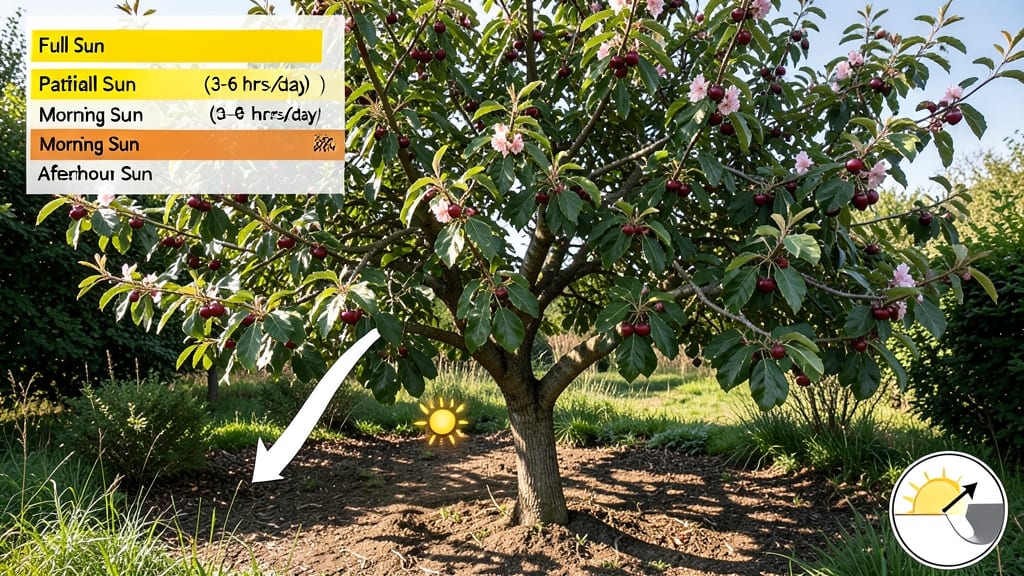
A cherry tree needs at least 6 to 8 hours of sunlight daily for peak fruit production and healthy growth 🍒 — without it, your harvest could be sparse or nonexistent.
If you're dreaming of a lush cherry tree heavy with sweet, juicy fruit, sunlight is the #1 factor you can't afford to get wrong. Too little and your harvest will be disappointing, while too much can stress the tree, leading to sunburn or poor fruiting.
Sweet cherries, like Bing or Rainier, thrive in full sun, while tart varieties such as Montmorency can tolerate slightly less but still need at least 6 hours daily. Young trees are more flexible, but mature trees demand consistent sunlight to reward you with abundant fruit.
Below, I’ll break down exactly how much sun your cherry tree needs by variety, how to adjust for partial shade, and what to watch for if the light isn’t quite right.


Optimal sunlight requirements for cherry trees by variety
Cherry trees are sun-worshippers at heart, but not all varieties crave the same amount of light. Sweet cherries like Bing and Rainier demand full sun exposure—at least 6-8 hours daily—to produce their signature sweet, juicy fruit.
Meanwhile, sour cherries such as Montmorency are slightly more adaptable but still thrive best with 5-7 hours of direct sunlight. The difference comes down to photosynthesis efficiency: sweet cherries need maximum energy for sugar production, while sour cherries can tolerate slightly more shade.
For dwarf cherry trees (like Stella® or Compact Stella), the sunlight rules remain the same, but their smaller stature makes positioning easier in smaller yards.
These 6-12 foot varieties can handle partial shade in hot climates, but fruit quality will suffer. Standard-sized trees (20-40 feet tall) absolutely require full sun to reach their full potential, with south-facing exposure being ideal in the Northern Hemisphere.
Here’s the science: cherry trees perform photosynthesis most efficiently at light intensities of 1,000-2,000 µmol/m²/s (measured on a sunny day).
Below 500 µmol/m²/s, fruit development slows dramatically, leading to smaller, less flavorful cherries. Excessive shade (under 4 hours of sun) can also trigger fungal issues like powdery mildew, as the tree’s leaves stay damp longer. The key?
Balance direct sunlight with afternoon shade in extreme heat zones to prevent leaf scorch.
🌱
If you’re planting in USDA Zones 5-7, aim for south-facing exposure to maximize sunlight during winter months when days are shorter. In Zones 8-10, afternoon shade (especially between 1-4 PM) can prevent leaf scorch during peak summer heat.
I’ve seen Bing cherry trees in Southern California thrive with morning sun and afternoon shade, producing fruit just as sweet as their full-sun counterparts.
Young cherry trees (1-3 years old) are more flexible with sunlight but still need at least 4-5 hours daily to establish strong root systems. Once established, they’ll demand more light. Transplant shock is worse in low-light conditions, so choose a permanent spot with full sun from day one.
For container-grown cherries, rotate pots weekly to ensure even sunlight exposure on all sides—this mimics natural light conditions and prevents lopsided growth.
Watch for these sunlight-related stress signs: Yellowing leaves (too much shade), brown leaf edges (sunburn), or small, hard cherries (insufficient light). In my Zone 6 garden, I’ve used light-reflective mulch (like white gravel) around the base of young trees to boost sunlight exposure by up to 15%.
It’s a small trick, but it makes a noticeable difference in fruit development.
For urban gardeners with limited space, consider semi-dwarf varieties like Lapins or Sweetheart. These thrive in 5-6 hours of sun and can even tolerate light afternoon shade, making them perfect for small backyards or patio containers. Just be prepared for a 20-30% reduction in yield
How to measure and adjust sunlight for your cherry tree
Measuring sunlight accurately is the first step to giving your cherry tree the perfect growing conditions. Start by observing your yard during the peak sunlight hours—typically between 10 AM and 4 PM—when shadows are shortest.
Use a sunlight tracker or even a simple timer and stake to mark how many hours of direct light your potential planting spot receives. Most cherry trees thrive with 6-8 hours of full sun daily, but young trees may need gradual acclimation to avoid sunburn.
If your yard has obstructed sunlight—like nearby buildings, tall trees, or mountains—consider planting a dwarf variety or positioning the tree where it gets morning sun and afternoon shade.
Even slight variations in sunlight exposure can affect fruit sugar content and overall yield. For example, sweet cherries often need slightly more light than sour cherries to ripen fully.
⚠️ callout-warning
- Poor fruiting: Less than 6 hours of sun = fewer cherries
- Weak branches: Leggy growth from stretching toward light
- Pest vulnerability: Shady trees attract more aphids and borers
Seasonal adjustments are key, especially if you live in a northern climate. In summer, your cherry tree might get 10+ hours of sun, but in winter, that can drop to just 2-3 hours.
Use seasonal pruning to thin out dense branches in late winter, allowing more light to penetrate the canopy. This also improves air circulation, reducing the risk of fungal diseases like brown rot.
For container-grown cherry trees, rotate the pot every 2-4 weeks to ensure even sunlight exposure on all sides. If your tree is in a partial shade spot, monitor the leaves for yellowing or purple tinges, which signal chlorosis (a nutrient deficiency caused by low light).
In such cases, consider a light supplement like a grow light during the winter months.
Pro tip: Use a sunlight meter or smartphone app to track lux levels (ideal range: 10,000–20,000 lux for full sun). If your readings are consistently below 5,000 lux, your cherry tree will struggle to produce quality fruit.
Pair this with well-draining soil and regular watering to maximize growth potential.
Remember, even the hardiest cherry tree varieties need consistent sunlight to thrive. If you’re unsure about your yard’s exposure, start with a small test plot or consult a local horticulturist for a site analysis.
With the right light conditions, your tree will reward you with abundant, flavorful cherries for years to come! 🍒