
Light Requirements
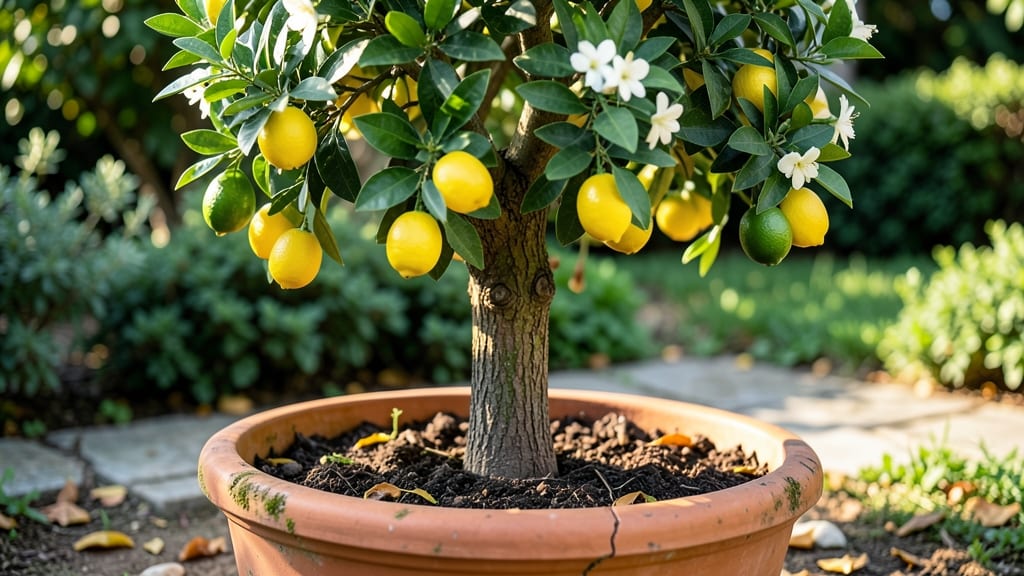
Your lemon tree needs full sun to produce the sweetest fruit, but too much blazing heat can scorch the leaves—here’s how to strike the perfect balance. 🌞 I’ve watched my citrus trees go from sad, sparse-leafed plants to heavy-fruited powerhouses by adjusting sunlight exposure, and the secret isn’t just about hours—it’s about timing and protection.
Most lemon trees thrive with 6-8 hours of direct sun daily, but in scorching afternoons, they need relief. I’ve learned to prune lower branches to improve airflow and use shade cloth (30-50%) during peak summer heat. The payoff?
Bright green leaves, fewer sunburnt patches, and fruit that tastes like summer all year. You’ll spot success when new growth emerges lush and vibrant, and the tree starts flowering consistently. The key is monitoring leaf color—yellowing means too much sun, while pale leaves signal insufficient light.
With these tweaks, your tree will reward you with harvests twice a year, even in hot climates. For container growers, move pots to shaded areas during heatwaves, and always use well-draining soil.
The right balance turns full sun from a risk into your tree’s superpower—more fruit, faster growth, and fewer headaches.
📚 In This Guide
- What you need
- Instructions
- Tips and common mistakes
- Wrapping up and next steps
What you need
- ● Lemon tree sapling or bare-root plant: Choose a Meyer lemon (hardier) or Eureka lemon (classic). Ensure it’s disease-free and well-rooted.
- ● Well-draining potting mix: 5–10 gallons, depending on pot size. Mix 60% potting soil, 20% perlite, and 20% coarse sand for optimal drainage.
- ● Large container or in-ground spot: Container: Minimum 15–25 gallons (18–24" diameter) with drainage holes. Fiberglass or ceramic pots retain moisture better.
- ● In-ground: Full sun (6+ hours daily) with 6–8 feet of space for mature growth. Test soil pH (ideal: 6.0–7.0).
- ● Slow-release citrus fertilizer: 10–10–10 NPK ratio (e.g., Miracle-Gro Citrus & Palm Food). Start with 1 tbsp per gallon of soil at planting.
- ● Mulch: 2–3 inches of organic mulch (e.g., straw or wood chips) to retain moisture and regulate soil temp.
- ● Gloves & pruning shears: Sterilized shears for trimming dead branches (sharp, bypass-style for clean cuts).
- ● pH test kit & lime: Adjust soil pH if needed (pelletized lime raises pH; sulfur lowers it).
- ● Drip irrigation or hose with spray nozzle: Water deeply 2–3 times/week (more in extreme heat).
- ○ Support stake (optional): For young trees in windy areas (4–5 ft bamboo stake).
- ● Citrus-specific pest control: Neem oil (for aphids/mites) or horticultural oil (store-bought).
Step-by-step guide to maximizing lemon tree growth in full sun
Here's how to transform your lemon tree into a fruit-bearing powerhouse with just a few strategic adjustments.
☀️ Step 1: Select and Prepare the Perfect Full-Sun Location
Lemon trees thrive in 6-8 hours of direct sunlight daily, but they need more during fruit production—aim for 8+ hours when possible. I always choose the south-facing side of the house or patio, where the morning sun warms the leaves gently before the intense afternoon heat. Avoid spots where afternoon shade cuts sunlight short—this is when fruit sets and needs maximum energy.
If growing in containers, place the tree where it gets unobstructed sun from late morning through early evening. Watch for nearby structures or trees casting shadows after 1 PM. You'll know you've got it right when the tree's leaves stay deep green (not yellowing) and new growth appears vigorous and upright rather than stretching toward light.
🪴 Step 2: Choose the Right Container and Soil Mix for Sun Exposure
For container-grown lemon trees, select a wide, shallow pot (at least 18-24 inches in diameter) with multiple drainage holes—this prevents waterlogging, which sun-stressed roots can't tolerate. I use unglazed terra cotta because it breathes better than plastic, helping roots stay cool in intense sunlight. Fill the pot with a well-draining mix of 50% potting soil, 30% perlite, and 20% compost—this mimics the fast-draining conditions lemon trees love in their native Mediterranean climate.
Before planting, soak the root ball in lukewarm water for 10-15 minutes to hydrate the roots without shocking them. Gently loosen any circling roots with your fingers—this encourages outward growth toward the sunlit edges of the pot. Plant at the same depth as the original container, with the soil line visible above the root flare.
💧 Step 3: Water Deeply and Strategically in Hot Conditions
Lemon trees in full sun dry out faster—water deeply 2-3 times per week (more in 90°F+ temperatures) until water runs freely from the drainage holes. I use the "finger test" to check moisture: stick your index finger 2 inches into the soil. If it feels dry, water; if damp, wait another day. Overwatering in hot sun leads to root rot, while underwatering causes leaf drop and stunted fruit.
Water early in the morning to let foliage dry before evening, reducing fungal risks. Avoid wetting leaves during peak sun (10 AM–4 PM), as this can cause leaf scorch. Instead, water at the base of the tree using a slow-release hose or drip irrigation—this keeps roots hydrated without stressing the plant.
✂️ Step 4: Prune for Sun Penetration and Airflow
Prune in late winter or early spring (before new growth) to open the canopy and let sunlight reach the inner branches. Remove dead, crossing, or inward-growing branches first—these block light and trap humidity. Then, thin out 20-30% of the foliage to improve airflow, which is critical in full sun to prevent powdery mildew and sunburn on young leaves. Use clean, sharp pruners and make cuts just above a leaf node or outward-facing bud.
After pruning, fertilize lightly with a balanced citrus fertilizer (6-6-6 or 8-3-9 ratio) to support new growth. You'll notice healthier, glossier leaves within 4-6 weeks—this means the tree is now better equipped to handle full sun and produce more fruit. Avoid heavy pruning in summer; the tree needs all its energy for photosynthesis and fruit development.
🌿 Step 5: Protect and Support Fruit Development in Intense Sun
When fruit begins to set, shade young lemons from direct afternoon sun (1 PM–5 PM) using lightweight shade cloth (30-50% coverage). This prevents sunburn, which causes white, leathery patches on the fruit. I drape a breathable fabric over a hoop or trellis near the tree, leaving room for airflow. Remove the shade as the fruit matures to encourage full ripening in the sun.
Support heavy branches with soft ties or stakes to prevent splitting under the weight of lemons. Harvest fruit when it turns fully yellow and yields slightly to gentle pressure. You'll know the tree is thriving when it produces new blossoms within 2-3 months of harvest—that’s your sign it’s ready for another cycle of sun-powered fruit production.
Tips & tricks for lemon tree full sun success
Here's what nobody tells you about pushing lemon trees to their full potential in blazing sunlight.
Location Precision: That 6-8 hours of sun isn't just about duration—it's about quality. I've seen trees get enough sunlight but still struggle because they missed the critical morning warmth. Position your tree where it catches the first rays of sun (around 7-8 AM) and holds them until at least 4 PM. If you're in a climate with intense afternoon sun (like 90°F+), consider a 30% shade cloth during those peak hours to prevent leaf scorch while still getting plenty of morning light.
Container Material Matters: Terra cotta pots aren't just about aesthetics—they're essential for heat dissipation. The porous material helps regulate root temperature in full sun conditions. If you must use plastic, add a layer of reflective mulch around the base to deflect some of that intense heat away from the roots. Pro tip: Elevate your container slightly (using bricks or pot feet) to improve airflow underneath, which prevents fungal issues that thrive in hot, stagnant conditions.
Watering Strategy: The 2-3 times per week guideline works, but timing is everything. I've learned the hard way that watering at midday can cause leaf burn. Instead, use a drip irrigation system set to run for 20 minutes in the early morning (before 8 AM). This gives roots time to absorb moisture while keeping foliage dry during peak sun hours. For container trees, I add a handful of water-absorbing crystals to the soil mix—they release moisture slowly and help maintain consistent hydration.
Pruning Timing: Late winter pruning (before new growth) is ideal, but if you're dealing with a mature tree that's already producing fruit, wait until after harvest. The 20-30% foliage reduction should include any branches that are growing inward or rubbing against each other—these are prime spots for disease in full sun conditions. After pruning, I always spray the cuts with diluted horticultural oil to prevent fungal infections from taking hold in the fresh wounds.
Pro Tips for Lemon Tree Full Sun
- Here's what nobody tells you about pushing lemon trees to their full potential in blazing sunlight.
- Location Precision: That 6-8 hours of sun isn't just about duration—it's about quality.
- Container Material Matters: Terra cotta pots aren't just about aesthetics—they're essential for heat dissipation.
Frequently asked questions
How much full sun does a lemon tree really need daily?
A lemon tree thrives with 6–8 hours of direct sunlight daily, but more is better in warmer climates (up to 10+ hours). In hot zones, afternoon shade prevents leaf scorch. Monitor your tree—if leaves yellow or crisp, it’s either too much sun or underwatered.
How long does it take for a lemon tree to bear fruit in full sun?
Patience is key! Dwarf varieties may produce fruit in 2–3 years, while standard trees take 3–5 years. Full sun speeds up maturity, but consistent care (water, fertilizer, pruning) is critical. Pro tip: Hand-pollinate flowers (use a small brush) to boost fruit set!
Will my lemon tree survive full sun in winter?
Lemon trees are tropical—they hate frost (<32°F/0°C). In winter, move potted trees indoors (near a sunny window) or mulch heavily. Outdoor trees in cold zones need winter protection (burlap wraps, microclimates). If leaves drop, it’s likely cold stress, not sunburn.
Can I grow a lemon tree in full sun indoors?
Yes, but location is everything. Place it south-facing, 3–6 feet from a window (or use grow lights for 12+ hours/day). Rotate the pot weekly for even growth. Indoor trees rarely fruit due to low light, but they’ll thrive as lush foliage plants with proper care.
Why are my lemon tree leaves turning yellow in full sun?
Yellow leaves usually signal overwatering, underwatering, or nutrient deficiency. Check soil moisture—it should be dry 1–2 inches down. Full sun can also cause leaf scorch (brown edges). Adjust watering, fertilize with citrus-specific food, and prune damaged leaves to encourage new growth.
What’s the best lemon tree variety for full-sun containers?
Dwarf varieties like ‘Meyer’ or ‘Improved Meyer’ excel in containers with full sun. They’re hardier, compact, and productive. Avoid standard types—they outgrow pots quickly. Choose a 15–25 gallon container with drainage holes and use well-draining citrus soil.
Wrapping up and next steps
Growing a lemon tree in full sun is totally doable—even for beginners! 🌞 With the right soil, sunlight, and care, you’ll enjoy a thriving tree bursting with juicy lemons year-round. Remember, consistency is key: water wisely, prune regularly, and protect your tree from pests to keep it happy and productive.
Ready to take the next step? Start small! Plant your lemon tree in a sunny spot, monitor its progress, and soon you’ll be harvesting fresh lemons for your favorite recipes. Happy growing! 🍋✨