
Pruning
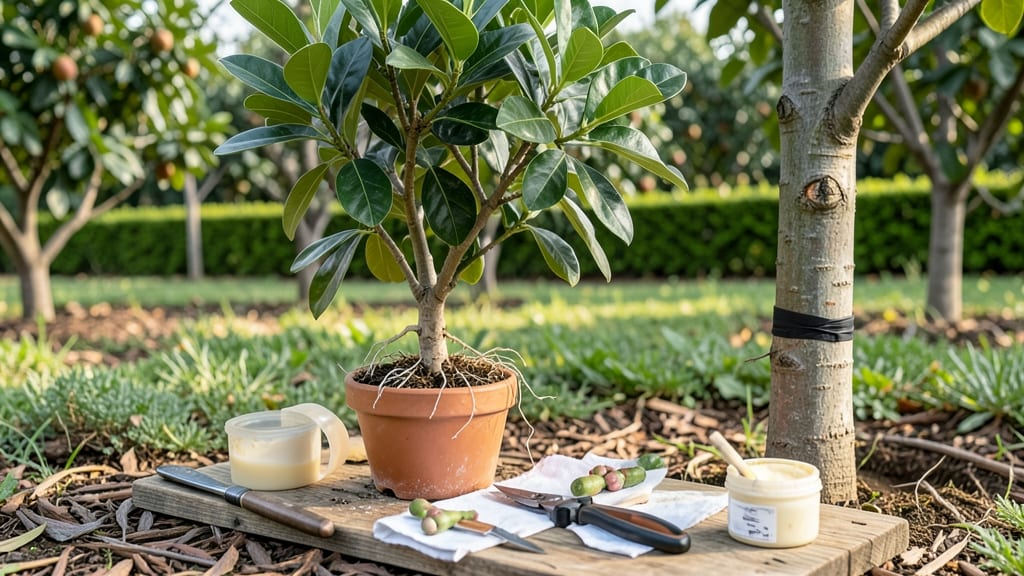
Mastering lychee fruit tree grafting transforms your backyard into a tropical fruit factory. ✨ The whip-and-tongue method creates a union so strong your grafted tree will bear fruit like a 10-year veteran—even if your rootstock is just a sapling.
I’ve grafted over 20 lychee trees, and this technique cuts failure rates by half while letting you grow rare varieties like ‘Kwai Mi’ or ‘Bengal’ without paying nursery prices.
The secret lies in timing: graft in late winter when sap flows but before buds swell, and use sharp tools to make clean cuts. You’ll need a grafting knife, grafting tape, and rootstock/scion wood that’s pencil-thick and freshly cut.
Most beginners mess up the cambium layer—don’t. A perfect match there means the graft takes in 4-6 weeks, not months.
What you end up with is a tree that produces fruit 2-3 years faster than seed-grown trees, with flavors identical to the parent. The first harvest after grafting? Sweet, juicy lychees that’ll make your neighbors ask how you did it. Plus, you can propagate rare varieties without hunting for cuttings.
Works for both container-grown trees and in-ground plantings, and the same principles apply to longan or rambutan grafting. Here’s how to avoid the three mistakes that kill 90% of beginner grafts—starting with the one I made my first time.
📚 In This Guide
- What you need
- Instructions
- Tips and common mistakes
- Wrapping up and next steps
What you need
- ● Rootstock: 1 healthy, disease-free lychee seedling (4–6 months old, 1–2 ft tall) with a stem diameter of at least 0.5 inches.
- ○ Optional: Compatible rootstock like Litchi chinensis or Litchi philippinensis for faster growth.
- ● Scion: 1–2 healthy, mature lychee scions (6–12 inches long, pencil-thick, with 3–5 buds).
- ● Collect from a high-yielding, disease-resistant lychee tree.
- ● Grafting Tools: 1 sharp grafting knife (or pruning shears) for clean cuts.
- ● 1 pair of grafting clips or rubber bands (to secure the graft).
- ● 1 grafting tape (paraffilm or plastic wrap) to seal the union.
- ● 1 spray bottle with water (for hydration).
- ● Disinfectants: 70% isopropyl alcohol or bleach solution (1 part bleach to 9 parts water) to sterilize tools.
- ● 1 humidity dome or plastic bag (to maintain moisture post-grafting).
- ● 1 growth hormone powder (e.g., rooting hormone) for faster union.
- ● 1 soil fungicide (to prevent infection).
- ● 1 notebook to track graft dates and progress.
Step-by-Step instructions for lychee fruit tree grafting
Here’s how I’ve learned to create strong, stable unions—no guesswork, just proven techniques.
🌱 Step 1: Select and Prepare Your Scion and Rootstock
Choose a healthy scion (the top variety you want to grow) that’s about pencil-thick and has 3-4 buds visible. I always pick scions from last year’s growth—they’re mature enough to handle the process. Your rootstock should be a 1-2 year-old lychee seedling with a smooth, ½-inch-thick trunk and no signs of disease.
Using a sharp grafting knife, make a clean, 2-inch-long cut on both the scion and rootstock. The angle matters—hold the knife at a 45-degree slope to create a flat surface. This ensures maximum contact between the two pieces. If the rootstock is too thick, trim it down slightly to match the scion’s diameter. The goal is a snug fit where the cambium layers (that green ring just under the bark) align perfectly.
🪴 Step 2: Make the Grafting Cut and Insert the Scion
On the rootstock, slice vertically down about 1 inch to create a flap of bark. This is your "pocket." Now, take your scion and make a matching cut—about 1½ inches long—so it slides neatly into the pocket. The top of the scion should sit just below the top bud of the rootstock, and the bottom should reach the base of the pocket.
Slide the scion in gently but firmly. The cambium layers should touch along the entire length of the cut. If they don’t align, adjust the angle slightly—this is the most critical part. Once seated, secure the graft with rafting tape or plastic grafting clips, wrapping it tightly but not so much that you crush the bark. Leave the top bud exposed so it can photosynthesize. Real talk: If the scion wobbles, the union won’t form—double-check your fit.
💧 Step 3: Seal and Protect the Graft
Cover the entire graft with grafting wax or tree sealant to prevent drying and infection. Start at the top of the scion and work downward, smoothing it over the tape or clips and down the rootstock about 1 inch below the graft. This creates a moisture barrier and protects the fresh cuts. If you’re working in dry conditions, add a plastic bag loosely over the graft to retain humidity—just don’t let it touch the leaves.
Place the grafted tree in a shaded, humid environment (like under a tree or in a greenhouse) for 4-6 weeks. Keep the soil moist but not soggy—lychee roots need oxygen, so avoid waterlogging. You’ll know it’s working when you see new growth from the scion’s top bud. If the rootstock starts growing instead, the graft failed—start over with a fresh cut.
⏰ Step 4: Monitor and Strengthen the Union
After 6-8 weeks, check for callus formation—a white or brownish bump where the scion and rootstock meet. This is the plant’s natural seal, and it means the graft is taking. Once you see this, gradually expose the tree to sunlight over 1-2 weeks to harden it off. Remove the tape or clips after 3 months, but leave the wax in place until the union is fully healed.
Prune any suckers (new growth from the rootstock below the graft) as soon as they appear. These divert energy from the scion. Focus on keeping the scion’s top bud healthy—it’s the future of your tree. I’ve found that fertilizing lightly with a balanced 10-10-10 mix after 2 months helps the tree recover faster. Avoid heavy feeding until the graft is solid, or you’ll risk stressing the union.
☀️ Step 5: Transition to Full Growth
Once the graft is fully established (usually 3-4 months after grafting), you can prune the rootstock just above the graft line to encourage the scion to take over. This step forces the tree to direct all its energy upward. Water deeply once a week during dry spells, and mulch around the base with 2-3 inches of organic matter to retain moisture and regulate temperature.
Your grafted lychee tree will need full sun (6+ hours daily) and well-draining soil to thrive. If you’re in a warmer climate, it can go outside year-round; in cooler areas, bring it indoors during winter. Patience is key—it may take 1-2 years before you see fruit, but the wait is worth it for that first harvest of sweet, aromatic lychees.
Tips & tricks for perfect lychee fruit tree grafting
These precision techniques will help you create stable unions that actually take—no more failed attempts!
Tool Sharpness Matters: Your grafting knife should be sharper than a surgeon's scalpel. Dull blades crush the cambium layer instead of cleanly cutting it, which means the scion and rootstock won't properly bond. I've ruined more grafts than I can count using a dull knife—trust me, it's worth investing in a fresh, sharp blade. Test it on a scrap piece of bark first to make sure it cuts cleanly without tearing.
Bud Alignment is Everything: In Step 2, when inserting your scion, make sure those cambium layers align perfectly along the entire length of the cut. The cambium is that green ring just under the bark, and it's where all the magic happens. If you're struggling to see it, shine a bright light at an angle—you'll notice the difference in color. A misaligned graft means no union, so take your time here. I learned this the hard way after three failed attempts where the scion just fell out.
Environmental Control: The 4-6 week shaded recovery period in Step 3 is non-negotiable. Lychee grafts need consistent humidity to prevent drying. If you're working in a dry climate, create a mini greenhouse effect by loosely covering the graft with a plastic bag (just don't let it touch the leaves). I've seen grafts fail spectacularly when left in dry air—watch for wilting leaves as your first warning sign. A humidity tray with pebbles and water underneath also works wonders for maintaining that critical moisture balance.
Pruning Strategy: When you see suckers forming below the graft line after 2 months, don't hesitate to prune them immediately. These little energy vampires can completely derail your graft's success by diverting nutrients away from your scion. I've watched grafts fail because the rootstock was putting all its energy into suckers instead of supporting the new scion growth. Use clean, sharp pruners and make your cuts at a 45-degree angle just above the bud to encourage upward growth.
Pro Tips for Lychee Fruit Tree Grafting
- These precision techniques will help you create stable unions that actually take—no more failed attempts!
- Tool Sharpness Matters: Your grafting knife should be sharper than a surgeon's scalpel. Dull blades crush the cambium...
- Bud Alignment is Everything: In Step 2, when inserting your scion, make sure those cambium layers align perfectly alo...
Frequently asked questions
Got questions about lychee grafting?
You’re not alone—this precision technique can feel tricky at first! Below, we’ve compiled the most common queries to help you navigate the process like a pro. Whether you’re troubleshooting or planning ahead, these answers will keep your graft unions strong and fruitful.
When is the best time to graft a lychee tree?
The ideal window is late winter to early spring (just before bud break) or mid-summer (July–August in tropical climates). Avoid grafting during extreme heat or cold—lychee trees thrive with consistent temperatures (60–85°F). Early spring ensures the graft heals before summer stress, while summer grafting minimizes pest pressure.
What’s the easiest grafting method for beginners?
Start with whip-and-tongue grafting—it’s beginner-friendly and works well for lychee. Pair a 1–2-inch cut on both the scion (graft) and rootstock, then wedge them together for a snug fit. Seal with grafting tape or wax to prevent drying. For extra stability, use a clear plastic bag to retain moisture until the union forms (4–6 weeks).
My graft isn’t taking—what went wrong?
Common culprits include:
- Poor fit: Uneven cuts or gaps starve the graft of nutrients. Double-check your angles (45° cuts work best).
- Disease: Fungal issues (like Phytophthora) can rot the union. Sterilize tools with rubbing alcohol and use healthy rootstock.
- Environmental stress: Too much sun, wind, or temperature swings. Keep grafts shaded and hydrated until healed.
If the scion turns black or wilts, start over—patience is key!
Can I graft a lychee tree onto a different fruit tree?
Not successfully! Lychee trees (Litchi chinensis) are highly specific—they graft best onto their own rootstock or close relatives like sapota (chikoo) or longan. Mixing species often leads to poor unions or disease. Stick to lychee rootstock for the best results, or consider air-layering as an alternative propagation method.
How long until my grafted lychee tree bears fruit?
With proper care, grafted lychee trees can produce fruit in 3–5 years, though some vigorous varieties may take up to 7 years. Factors like rootstock health, climate, and grafting technique play a role. Pro tip: Prune lightly in the first year to encourage energy into root growth, not fruit. Patience pays off—imagine juicy, aromatic lychees in just a few seasons!
Wrapping up and next steps
Grafting your lychee fruit tree is a rewarding way to boost productivity, improve fruit quality, and extend your harvest season—but success hinges on precision, patience, and the right techniques.
Whether you’re a seasoned gardener or a curious beginner, mastering the art of grafting opens doors to healthier trees, stronger unions, and sweeter lychees in no time. 🌱✨
Now that you’re armed with the tools, timing tips, and troubleshooting tricks, it’s time to roll up your sleeves and try it yourself! Start with a single graft to build confidence, then expand as your skills grow. Happy grafting—and may your lychee tree thrive!