
Pruning
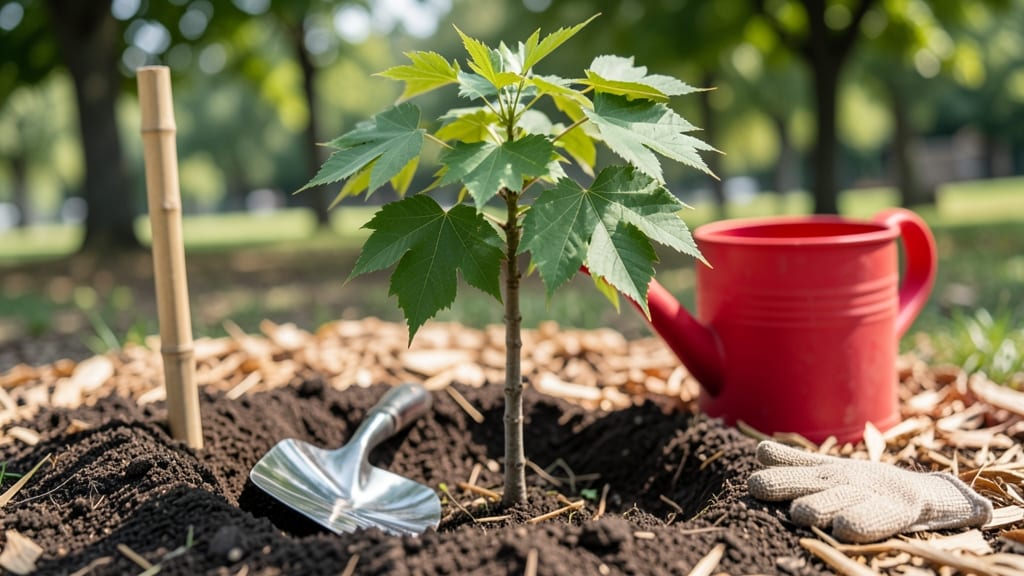
Caring for maple tree saplings starts with strategic pruning that builds roots stronger than the trunk. 🌳 I’ve watched saplings go from scraggly to sturdy by focusing on the right cuts at the right time—no fancy tools, just sharp pruners and a little patience.
The key is removing competing branches early to direct energy downward. Young maples need 6-12 inches of water weekly (deep soaks, not light sprinkles) and full sun—even shade-loving varieties thrive best with morning sunlight.
Mulch keeps roots cool in summer and insulated in winter, but never pile it against the trunk. By next spring, you’ll see a tree with a balanced canopy and deep roots—no more flopping branches or weak growth.
The first year sets the foundation for decades of strong growth, and the pruning scars heal surprisingly fast on young wood. Winter’s the only tricky season: wrap young trunks in burlap if your zone gets below 15°F to prevent sunscald.
Saplings handle cold better than you’d think, but a little protection goes a long way for long-term health.
📚 In This Guide
- What you need
- Instructions
- Tips and common mistakes
- Wrapping up and next steps
What you need
- ● Maple tree sapling: Choose a 1-3 year-old sapling (1–3 ft tall) with a healthy root ball (at least 6–12 inches in diameter).
- ● Pruning shears: Sharp, bypass-style shears (for clean cuts) or anvil-style for thicker branches (if needed).
- ● Gloves: Heavy-duty gardening gloves (to protect from sap and thorns).
- ○ Pruning sealant: Optional but helpful for larger cuts (e.g., Tanglefoot Tree Wound Pruning Sealer).
- ● Mulch: 2–4 inches of organic mulch (e.g., wood chips or straw) to retain moisture and regulate soil temp.
- ● Watering can or hose: With a gentle spray nozzle for deep watering.
- ● Stake & ties: Only if transplanting (use biodegradable stakes to avoid root damage).
- ● Root stimulator: A mycorrhizal fungi powder to boost root growth (e.g., Mycorrhizal Inoculant).
- ● Soil test kit: To check pH and nutrient levels (ideal range: 6.0–7.0).
- ● Tree collar spray: For young saplings in high-traffic areas (e.g., Tree Tanglefoot).
- ● Notebook & pen: To track pruning dates and growth progress!
Strategic pruning for maple tree saplings
Here’s how to nurture your young maple into a sturdy, healthy tree with minimal effort.
🌱 Step 1: Water Deeply and Consistently
New saplings need 1-2 inches of water per week, especially in their first year. Water at the base—not overhead—to encourage deep root growth. I like to use a soaker hose for 20-30 minutes to saturate the soil without runoff. Check moisture by sticking your finger 2 inches deep; if it feels dry, water again.
Maples hate soggy roots, so avoid waterlogging. If your soil drains poorly, mix in 2-3 inches of compost around the root zone to improve aeration. Mulch with 3 inches of wood chips (keep it 6 inches away from the trunk) to retain moisture and block weeds.
☀️ Step 2: Provide Full Sun and Shelter
Maple saplings thrive in full sun (6+ hours daily), but young trees need protection from harsh winds. If planted in an exposed area, stake the sapling with 2-3 wooden stakes and soft ties (not wire) to prevent toppling. I use tree ties made from fabric—they’re gentle on bark and won’t cut as the tree grows.
Watch for leaf scorch (brown edges) in hot afternoons—this means the sapling needs more shade. If needed, drape lightweight shade cloth (30-50%) over the top for a few hours daily. Remove it by late afternoon to allow sunlight for photosynthesis.
✂️ Step 3: Prune for Structure and Airflow
Prune only in late winter or early spring (before buds swell) to avoid disease. Remove dead, crossing, or inward-growing branches first—these compete for nutrients and block sunlight. Use clean, sharp pruning shears and make cuts just outside the branch collar (the swollen area where the branch meets the trunk).
For saplings under 6 feet tall, limit pruning to no more than 25% of the canopy. Over-pruning stresses young trees. If you see suckers (shoots at the base), snip them off immediately—they drain energy from the main trunk. Always sterilize your tools with rubbing alcohol between cuts to prevent fungal spread.
🌿 Step 4: Monitor for Pests and Disease
Inspect leaves weekly for aphids, spider mites, or scale (common on young maples). Treat infestations early with a hose spray (for aphids) or neem oil solution (1 tsp per quart of water). Avoid chemical sprays—they can harm beneficial insects and the tree’s bark.
Watch for tar spots (black fungal spots on leaves) or anthracnose (yellowing leaves). Improve airflow by thinning dense branches and remove infected leaves immediately. If the soil stays wet for days, raise the mulch slightly to prevent root rot.
⏰ Step 5: Fertilize Sparingly in Year 2
Skip fertilizer the first year—young roots are sensitive to salts. In early spring of the second year, apply a balanced, slow-release fertilizer (10-10-10) around the root zone. Use only ½ the recommended dose to avoid burning. Water the area thoroughly before and after applying.
I like to top-dress with compost instead of synthetic fertilizer—it improves soil structure over time. Avoid high-nitrogen fertilizers; they promote leafy growth at the expense of root development. If the sapling grows too fast, it’s a sign of over-fertilization—cut back on applications.
Tips & tricks for perfect maple tree sapling care
Nurturing a maple sapling into a strong, healthy tree takes patience—and these small adjustments make all the difference.
Watering Wisdom: The 20-30 minute soaker hose session is your best friend, but timing matters too. Water in the early morning to give roots time to absorb moisture before evaporation. If you're using a regular hose, aim for a slow, steady stream rather than a quick blast—this prevents soil compaction. I've seen saplings struggle when water pools around the base, so always check for standing water after watering.
Pruning Precision: When you're pruning in late winter, focus on making clean cuts just outside the branch collar—the swollen area where branches meet the trunk. This helps the wound heal faster and prevents disease. I learned this the hard way when a jagged cut led to a fungal infection. Also, never remove more than 25% of the canopy at once—young maples are delicate, and over-pruning can shock the tree into decline.
Pest Prevention: That weekly leaf inspection isn't just about spotting problems—it's about catching them early. I've found aphids hiding on the undersides of leaves, and by the time I noticed them on top, they'd already spread. For stubborn infestations, try a mix of 1 tsp neem oil per quart of water with a drop of dish soap as an emulsifier. This combo works better than straight neem oil alone, and it's safe for beneficial insects when used as directed.
Fertilizer Strategy: That first-year fertilizer ban isn't just about avoiding salt damage—it's about letting roots establish properly. I've seen saplings with lush leaves but shallow roots because someone over-fertilized too early. When you do apply that half-dose 10-10-10 in year two, scratch it into the top inch of soil rather than piling it on the surface. This prevents fertilizer burn and makes nutrients more accessible to developing roots.
Pro Tips for Maple Tree Sapling Care
- Nurturing a maple sapling into a strong, healthy tree takes patience—and these small adjustments make all the differe...
- Watering Wisdom: The 20-30 minute soaker hose session is your best friend, but timing matters too. Water in the early...
- Pruning Precision: When you're pruning in late winter, focus on making clean cuts just outside the branch collar—the ...
Frequently asked questions
Got questions about nurturing your maple tree sapling? You’re not alone—growing a healthy young tree takes patience and know-how! Below, we’ve rounded up the most common queries to help you avoid pitfalls and prune like a pro.
How often should I prune a young maple sapling?
Prune your sapling once a year, ideally in late winter or early spring (before buds swell). Avoid heavy pruning in fall—it stresses the tree and invites disease. Focus on removing dead, diseased, or crossing branches (no more than 25% of the canopy at a time). For saplings under 3 feet tall, minimal trimming is key!
Can I prune a maple sapling in winter?
Yes, but with caution! Late winter (February–March) is the best time—the tree is dormant, and you can see its structure clearly. Avoid pruning during extreme cold (<20°F) or when snow is heavy. If you must prune in winter, use sharp tools and sterilize cuts to prevent fungal infections. Pro tip: Wait until the ground thaws to check for hidden damage!
What’s the best way to prune a mapling sapling to encourage strong roots?
Use the “open-center” pruning method for saplings: Remove branches that grow inward or rub against others to reduce competition. Cut just outside the branch collar (the swollen area where the branch meets the trunk) at a 45° angle. Avoid topping—it stunts growth. For saplings, prioritize structural balance over aesthetics!
Why is my maple sapling’s new growth dying after pruning?
This could signal over-pruning, disease, or environmental stress. Check for:
- Too many cuts (stick to 10–20% of the canopy max).
- Dirty tools spreading bacteria (sterilize with rubbing alcohol!).
- Pests (aphids, borers)—inspect leaves and bark.
- Underwatering post-prune (keep soil moist but not soggy).
Are there alternatives to pruning for shaping a young maple?
Yes! For minimal intervention, try:
- Tie branches gently to stakes to guide growth (use soft tree ties).
- Thin out dense foliage by hand-picking small branches (no cuts needed).
- Mulch properly (2–3 inches of organic mulch) to protect roots and reduce stress.
Wrapping up and next steps
Caring for your maple tree sapling with strategic pruning isn’t just about shaping—it’s about setting the foundation for a thriving, resilient tree. 🌳 By focusing on root development, removing dead branches, and promoting airflow, you’re investing in long-term health and beauty.
With patience and the right techniques, your sapling will grow into a stunning centerpiece for years to come!
Ready to take the next step? Grab your pruning shears and schedule your first session—your future maple tree will thank you! For extra guidance, explore our pruning checklist or connect with local arborists to refine your approach.