
Pruning
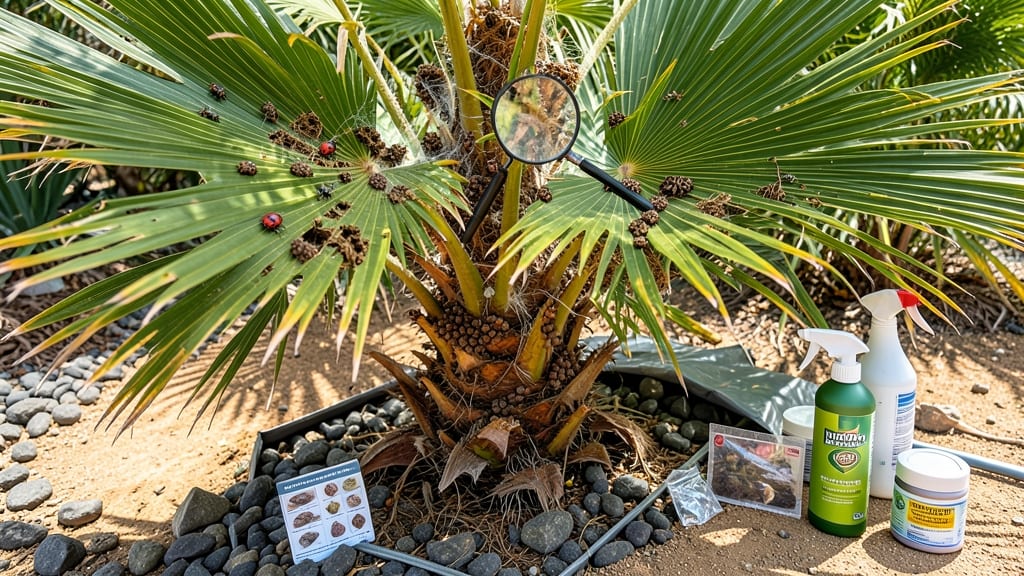
Palm tree pests can turn your tropical oasis into a sad, brown skeleton in weeks. 🌴 I’ve watched healthy palms turn into hollow shells from just one weevil, and the key to saving yours is acting fast—before the damage spreads.
These silent destroyers (weevils, mites, scale) don’t just weaken your tree; they can kill it in months if ignored.
The good news? Most pests leave clear clues—yellowing fronds, sawdust-like frass, or sticky residue on trunks. My first palm nearly died because I missed the tiny weevil holes until it was too late.
Now I check monthly, and I’ve saved three trees using just a flashlight and a magnifying glass. Prevention is easier than cleanup, and it starts with proper watering and pruning.
You’ll learn how to spot early signs, use targeted sprays (neem oil, horticultural oil) that actually work, and even set traps that catch weevils before they lay eggs. The right approach depends on the pest, but the goal is always the same: stop the spread before your palm’s health collapses.
Let’s get your tree back to thriving.
Whether you’re dealing with a single infestation or want to protect your entire grove, these methods work for both small yards and large landscapes. The secret is consistency—treat once, monitor, and repeat until the pests are gone for good. Your palm’s future depends on it.
Root Causes Of Palm Tree Damage
Palm trees, with their iconic tropical allure, can quickly become a pest magnet if left unchecked. Understanding why these critters target your palms is the first step in protecting your investment. Below, we break down the science behind the most common culprits and the conditions that invite them in.
Palm trees thrive in warm, stable climates, but extreme weather or sudden shifts can weaken their defenses, making them prime targets for pests. Here’s how:
- Drought Stress:
When soil moisture drops below 30%, palm trees enter survival mode, diverting energy away from pest resistance. Rhynchophorus ferrugineus (red palm weevil) and Thrips species exploit this by tunneling into weakened fronds or crowns, where the tree’s natural defenses are compromised.
- Flooding or Waterlogging:
Excessive moisture suffocates roots, creating anaerobic conditions that attract fungal pathogens (like Phytophthora) and sap-sucking insects (e.g., Aspidiotus scale). These pests thrive in damp, decaying organic matter, turning stressed palms into a buffet.
- Temperature Swings:
Cold snaps (below 32°F) or heatwaves (above 100°F) shock palm metabolism. Mealybugs and palm aphids detect these metabolic slowdowns and cluster in protected areas (e.g., leaf axils or under fronds) to feed undisturbed.
💡 Pro Tip: Monitor soil moisture with a moisture meter and mulch with wood chips (not fresh bark) to stabilize temperature and retain humidity without inviting fungal pests.
A palm tree’s health is directly tied to its diet. When nutrients are imbalanced, pests move in like vultures.
| Deficiency/Excess | Pests Attracted | Why It Happens |
|---|---|---|
| Potassium (K) Deficiency | Palm mite (Tenuipalpidae) | Low potassium weakens cell walls, making fronds softer targets for mites that burrow into tissues. |
| Nitrogen (N) Excess | Scale insects (Coccidae) | Over-fertilization promotes lush, sticky new growth—scale insects’ favorite snack. Their honeydew also attracts sooty mold, further stressing the tree. |
| Magnesium (Mg) Deficiency | Thrips (Thripidae) | Yellowing fronds (from Mg deficiency) reduce chlorophyll, making palms more susceptible to thrips, which feed on sap and transmit viruses. |
🎯 Actionable Fix: Conduct a soil test every 2–3 years and adjust fertilizers with micronutrient blends (like chelated iron) to avoid imbalances.
Pests don’t just target weak trees—they exploit structural flaws and human-made openings. Here’s how palms get compromised:
- Open Wounds from Pruning:
Improper pruning (e.g., cutting into the vascular bundles of palm trunks) creates entry points for bacterial wilt (Ralstonia solanacearum) and ambrosia beetles. These pests carry pathogens that clog xylem vessels, killing the tree within weeks.
- Dead or Dying Fronds:
Fronds that remain attached after dying (“skirt”) trap moisture and debris, creating a microclimate for mealybugs and fungal spores. Palmetto weevils also lay eggs in rotting frond bases.
- Cracks in Trunk or Buttress:
Natural or storm-induced cracks expose the heartwood, attracting wood-boring beetles (like Xyleborus) and termites. These insects tunnel into the cambium layer, disrupting nutrient transport.
✨ Prevention Tip: Seal pruning cuts with pruning sealant (containing copper-based fungicides) and remove dead fronds within 3–6 months to deny pests a foothold.
By addressing these root causes—whether through climate management, proper nutrition, or smart pruning—you can starve out pests before they become a full-blown infestation. The key? Act before the damage starts.
Targeted Fixes for Common Palm Tree Pests
Palm trees are stunning additions to any landscape, but pests can quickly turn them into a maintenance nightmare. The good news? Most issues have practical, effective solutions—whether you prefer chemical control, organic methods, or a mix of both.
Below, we’ve mapped out cause-specific fixes, ranked by severity, along with prevention tips to keep your palms thriving long-term.
---
**🚨 Act fast—this pest can destroy a palm in weeks. Palm weevils thrive in stressed or injured trees, tunneling through the heart until the tree collapses. If you spot sawdust-like frass, wilting fronds, or a foul odor, you’re likely dealing with an infestation.
#### 🛠️ How to Treat It 1. 🔪 Prune and Inspect 🌿 - Remove all fronds and inspect the trunk for larvae or weevils. Look for small holes, chewed tissue, or a mushy center. - Burn or bag infested fronds (do not compost)—weevils can survive in soil.
2. 💉 Apply Systemic Insecticide 💊 - Imidacloprid (systemic spray) or fipronil (soil drench) are the most effective for weevils. - How to apply: - Mix 1 tsp imidacloprid per gallon of water and spray directly into the trunk holes (use a syringe or drill small holes). - For severe cases, inject a concentrated dose into the crown shaft (hire a pro if unsure).
3. 🐝 Introduce Beneficial Predators 🐜 - Parasitic wasps** (like Baeus spp.) lay eggs in weevil larvae. Release them at dusk when weevils are active. - Nematodes (Steinernema carpocapsae) can also target larvae—apply every 4-6 weeks during warm months.
4. **🌱 Replace if Necessary 🪓 - If the tree is past saving, remove it immediately to prevent spread. Plant weevil-resistant varieties like Mediterranean fan palms or pygmy date palms in its place.
#### 💡 Prevention Tips - 🌡️ Avoid overwatering—weevils love moist, rotting tissue. - 🛡️ Seal trunk wounds with pruning sealant to block entry points. - 🕵️ Monitor regularly—check for new frass or wilting every 2 weeks in peak season (spring/summer).
---
😤 Tiny but devastating—these mites suck sap, causing yellowing and frond death. If your palm’s fronds turn yellow, brown, or crispy at the tips, mites are likely the culprit. They thrive in hot, dry conditions and multiply rapidly.
#### 🛠️ How to Treat It 1. 🚿 Blast Off with Water 💦 - Hose down fronds with strong water pressure (50+ PSI) to dislodge mites. Do this every 3-5 days for 2 weeks.
2. 🧴 Apply Horticultural Oil or Soap 🧼 - Neem oil (2%) or insecticidal soap smothers mites on contact. - Mix: 1 tbsp neem oil + 1 tsp dish soap per quart of water. Spray undersides of fronds (where mites hide) at dawn or dusk.
3. 💊 Use Miticides for Heavy Infestations 🎯 - Abamectin (Avid) or Bifenthrin (Talstar) are highly effective but should be a last resort. - Follow label instructions—overuse can harm beneficial insects.
4. 🌿 Encourage Natural Predators 🐝 - Ladybugs, lacewings, and predatory mites** (Phytoseiulus persimilis) eat red palm mites. - Purchase from garden centers and release weekly during outbreaks.
#### 💡 Prevention Tips - 💧 Water deeply but less often—mites love drought-stressed palms. - 🍃 Mulch around the base to retain moisture and deter mites. - 🌡️ Avoid broad-spectrum pesticides—they kill predator insects that keep mites in check.
---
**🤢 Scale insects leave a honeydew residue that attracts sooty mold. If your palm has white bumps on fronds/stems and a black, fuzzy coating, scale is likely the problem. They weaken trees by sapping sap.
#### 🛠️ How to Treat It 1. 🧽 Scrape Off Visible Scale 🧽 - Use a soft brush or cloth dipped in rubbing alcohol (70%+) to physically remove clusters. - Best time: Early morning when scale is dormant.
2. 🍋 Spray with Oil or Soap 🍋 - Dormant oil spray (applied in winter) suffocates eggs and adults. - Recipe: 1 tbsp horticultural oil + 1 tsp castile soap per gallon of water. Spray thoroughly, including undersides of fronds.
3. 💉 Use Systemic Insect Growth Regulators (IGRs) 🐛 - Buprofezin or imidacloprid disrupts scale’s life cycle. - Apply as a soil drench (follow label rates) for long-term control.
#### 💡 Prevention Tips - 🌿 Prune regularly to improve airflow and reduce hiding spots. - 🕵️ Inspect new plants before adding them to your landscape. - 🌡️ Time sprays right—apply oil sprays in late fall/winter when scale is most vulnerable.
---
No matter the pest, healthy palms resist attacks better. Use these proactive strategies:
| Issue | Solution | Frequency | |--------------------------|---------------------------------------|---------------------| | Overwatering | Water deeply 2-3x/week (check soil moisture) | Seasonal adjustment | | Nutrient Deficiency | Apply slow-release palm fertilizer (high in potassium) | Every 3-4 months | | Physical Damage | Seal cuts with pruning sealant | Immediately after pruning | | Poor Drainage | Amend soil with sand/perlite | Once at planting |
--- 🎯 Final Tip: Act at the first sign of trouble—most palm pests are easier to treat early than after they’ve taken hold. When in doubt, consult a local arborist for a customized spray schedule tailored to your climate!
Would you like a DIY spray recipe chart** for quick reference? Let us know!
Frequently asked questions
What are the most destructive pests for palm trees?
The worst offenders are red palm weevils (which can kill a tree in weeks), palm mites (causing yellowing fronds), and scale insects (leaving sticky honeydew). These pests thrive in stressed palms, so proper care is your first defense.
How do I tell if my palm has a weevil infestation?
Look for sawdust-like frass near the trunk base, wilting fronds that turn brown, or a foul odor from rotting tissue. Tap the trunk—if it sounds hollow, larvae are likely inside. Act within 24 hours for best results.
Are there organic ways to treat palm pests?
Yes! For mites, use neem oil spray (1 tbsp per quart of water) or horticultural oil applied at dawn. For scale, scrub with rubbing alcohol (70%) and introduce beneficial predators like ladybugs. These methods work best when combined with regular monitoring.
Can I save a palm tree if it's already dying from pests?
It depends on the pest and damage. For weevils, if the heart is intact, systemic insecticides like imidacloprid may still work. However, if the trunk is hollow or the crown is completely dead, removal is often the only option. Prevention is always easier than revival!
How often should I inspect my palm trees for pests?
Check your palms monthly during growing seasons (spring/summer) and every 6 weeks in winter. Focus on frond undersides, trunk bases, and any wounds—these are prime hiding spots. Early detection saves trees!