
Trees
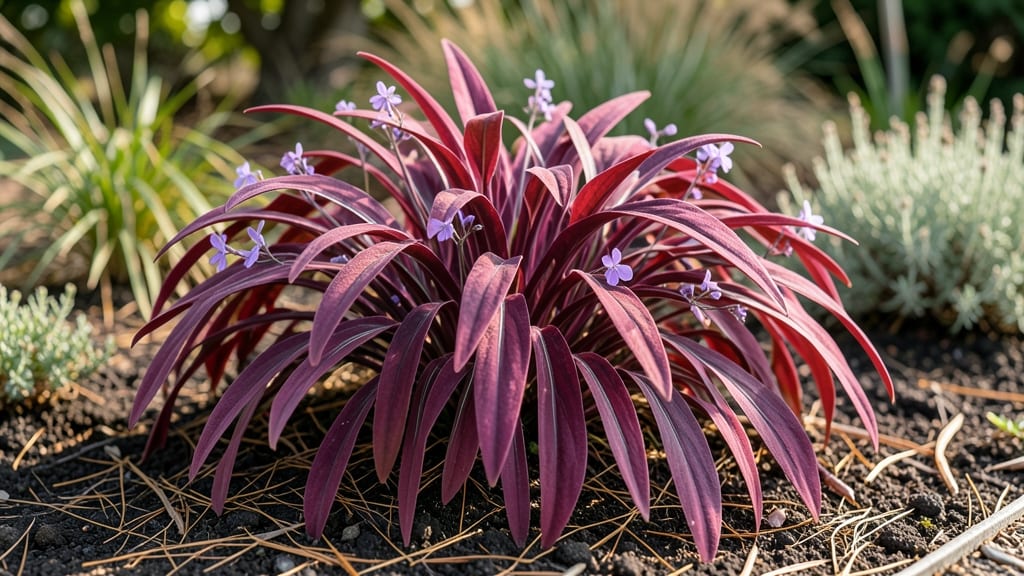
Your Purple Heart tree leaves could be the most stunning feature of your landscape—if you know the secret to keeping them vibrant year-round. 🌿 This tree thrives on full sun and well-drained soil, but even the hardiest plants need the right care to maintain that signature purple hue through every season.
Most people overlook watering consistency, but Purple Heart trees actually prefer slightly dry soil once established. I learned this the hard way when mine developed yellowing leaves after a summer downpour—turns out, soggy roots are the enemy of that rich purple color.
The key is deep watering every 1-2 weeks, adjusting for your climate.
Pruning at the right time makes all the difference. Cut back leggy branches in late winter or early spring before new growth appears, and you'll see fresh, deep purple leaves emerging within weeks. This also prevents the tree from becoming too dense, which can lead to disease and dull foliage.
If your leaves are losing their vibrancy, check for pests like spider mites or scale insects—common culprits that suck the life out of foliage. A strong spray of water usually knocks them off, and healthy leaves bounce back faster than you'd expect.
With the right care, your Purple Heart will be the talk of the neighborhood.
Understanding Leaf Color Shifts
The striking purple heart tree (Lagerstroemia) leaves can shift from vibrant green to deep purple, pink, or even red—especially in cooler months. While this stunning color change is part of its natural charm, understanding the why behind it helps you nurture your tree for year-round beauty.
Here’s a breakdown of the key factors:
Purple heart trees thrive in warm climates, but when temperatures dip—especially in fall and winter—their leaves undergo a stress-induced pigment shift. Here’s how it works:
- Chlorophyll Breakdown: As daylight shortens and temps drop, the tree’s chlorophyll (the green pigment responsible for photosynthesis) gradually degrades.
This reveals anthocyanins—the red, purple, and blue pigments—already present in the leaves. - Cold Hardening: In regions with mild winters, purple heart trees may retain their leaves longer, intensifying their color as a protective response.
However, frost or sudden freezes can cause rapid color shifts (or even leaf drop) due to cell damage. - Actionable Tip: 🌡️ If you live in a colder zone, mulch the base of the tree in late fall to insulate roots and reduce stress.
Avoid overwatering in winter, as soggy soil can worsen cold sensitivity.
Purple heart trees are drought-tolerant, but watering habits and soil conditions play a huge role in leaf coloration:
- Underwatering: When roots struggle to absorb moisture, the tree may produce more anthocyanins as a stress signal, leading to deeper purples.
However, severe drought can also cause leaf scorch (brown edges) or premature drop. - Overwatering: Soggy soil deprives roots of oxygen, triggering nutrient deficiencies (like iron or magnesium).
This can cause yellowing between veins (chlorosis), which may later turn purplish as other pigments dominate. - Soil pH Matters: Purple heart trees prefer slightly acidic to neutral soil (pH 6.0–7.0).
If your soil is too alkaline (pH >7.5), the tree may struggle to absorb iron, leading to purple-tinged leaves as a deficiency symptom. - Actionable Tip: 💧 Test your soil’s pH and amend with sulfur (to lower pH) or lime (to raise pH) if needed.
Water deeply 1–2 times per week (less in winter) and ensure well-draining soil.
Purple heart trees love full sun (6+ hours/day), but too much or too little light can alter leaf color:
- Insufficient Sunlight: Leaves may produce less chlorophyll, causing them to appear lighter green or pale purple as the tree stretches toward light (a condition called etiolation). - Intense Afternoon Sun: In hot climates, leaf scorch (brown/purple patches) can occur if the tree isn’t acclimated.
Young trees or those newly planted are most vulnerable. - Actionable Tip: 🌿 If your tree is in a new location, gradually introduce it to full sun over 2–3 weeks. For container-grown trees, ensure they’re in a bright, sheltered spot to avoid heat stress.
While purple heart trees are relatively pest-resistant, fungal infections and insects can trigger color changes:
- Powdery Mildew: A white, powdery fungus that thrives in humid conditions can cause leaves to yellow or develop purple spots as the tree fights the infection. - Scale Insects or Spider Mites: These sap-sucking pests weaken the tree, leading to stunted growth and purple-tinged leaves due to nutrient starvation. - Actionable Tip: 🛡️ Monitor your tree for webbing (mites), sticky residue (scale), or white powder (mildew).
Treat with neem oil or horticultural oil in early spring to prevent outbreaks.
Not all purple heart trees exhibit the same color intensity—and that’s normal!
- Young Trees: Often have lighter green leaves that deepen in purple as they mature (3–5 years old).
- Cultivar Differences: Some varieties, like Lagerstroemia ‘Natchez’ (white flowers, purple leaves), naturally have more pronounced pigmentation than others.
- Actionable Tip: 🌱 If you want darker purple leaves, choose a known cultivar like ‘Tuscarora’ or ‘Muskogee’—these are bred for vibrant foliage year-round.
Urban trees often face air pollution or heavy metals in soil, which can alter leaf pigmentation:
- Ozone or Smog: These pollutants can damage leaf cells, causing purple-brown discoloration (similar to scorch). - Heavy Metals (Lead, Copper): Contaminated soil may prevent the tree from absorbing nutrients, leading to purple or necrotic leaf edges. - Actionable Tip: 🌳 If your tree is near a busy road, consider installing a barrier (like a hedge) to reduce pollution exposure.
For soil toxicity, test and amend with organic matter to improve nutrient uptake.
Purple heart trees shift colors due to a mix of natural seasonal changes, environmental stress, and care habits. By monitoring water, sunlight, soil health, and pests, you can encourage vibrant purple foliage—not just in fall, but all year long! 🌿✨
Fixing purple heart tree leaf issues
If your purple heart tree (Lagerstroemia indica) isn’t thriving, don’t panic—most problems have simple fixes! Whether it’s yellowing leaves, wilting branches, or pests, these solutions will help restore your tree’s vibrant, year-round color.
Below, we break down common issues and their fixes, plus prevention tips to keep your tree healthy for seasons to come.
Cause: Purple heart trees need balanced care—too much water, poor soil, or lack of nutrients can turn leaves yellow or brown.
How to Fix It: 🔥 Test Your Soil – Use a soil test kit to check pH (ideal: 5.0–6.5) and nutrient levels. Purple heart trees prefer slightly acidic, well-draining soil. 🍳 Amend the Soil – Mix in compost or a slow-release fertilizer (like a 10-10-10 blend) in early spring to replenish nutrients. 👨🍳 Adjust Watering – Water deeply but infrequently (1–2 inches per week). Avoid soggy soil—purple heart trees hate "wet feet." 🥘 Prune Damaged Leaves – Trim yellow or brown leaves to encourage new growth. Use clean, sharp pruners to avoid spreading disease.
💡 Prevention Tips: ✔ Mulch around the base (2–3 inches) to retain moisture and regulate temperature. ✔ Avoid over-fertilizing—too many nutrients can burn roots.
Cause: Spider mites, scale insects, or fungal diseases (like powdery mildew) can stress your tree, causing leaf discoloration or drop.
How to Fix It: 🔥 Identify the Problem – Check for:
- Tiny webs (spider mites)
- Sticky residue (aphids/scale)
- White powder (powdery mildew)
🍳 Treat Infestations –
- Mild cases: Spray leaves with neem oil or insecticidal soap (follow label instructions).
- Severe cases: Use horticultural oil or a systemic insecticide (like imidacloprid) for stubborn pests.
👨🍳 Fungal Issues? – Prune affected branches and apply a fungicide (like copper-based sprays) if powdery mildew appears. 🥘 Encourage Beneficial Insects – Ladybugs and lacewings eat pests naturally. Plant companion flowers (like marigolds) nearby to attract them.
💡 Prevention Tips: ✔ Inspect leaves regularly during growing season (spring–fall). ✔ Avoid overhead watering to reduce fungal spores.
Cause: Purple heart trees are semi-evergreen but can suffer in harsh winters—freezing temps or drying winds cause leaf edges to brown.
How to Fix It: 🔥 Protect Young Trees – Wrap the trunk in burlap or use tree guards to shield from wind. 🍳 Water Deeply Before Freeze – Moist soil insulates roots better than dry soil. 👨🍳 Prune Damaged Branches – In late winter, trim back dead or scorched branches just above healthy growth. 🥘 Apply Mulch – Add a 3-inch layer of mulch around the base (but not touching the trunk) to insulate roots.
💡 Prevention Tips: ✔ Choose a sheltered planting spot if you live in a cold climate. ✔ Avoid late-season fertilizing—it encourages tender new growth vulnerable to frost.
Cause: Purple heart trees love heat but can suffer in extreme conditions—wilting or leaf drop may occur if roots are stressed.
How to Fix It: 🔥 Check Drainage – If soil stays soggy, amend with sand or perlite to improve aeration. 🍳 Water Deeply in Droughts – Soak the root zone (not just the surface) every 7–10 days in hot weather. 👨🍳 Provide Shade – If leaves look sunburned, temporarily shade the tree with a cloth or move potted trees to partial sun. 🥘 Adjust Fertilizer – In extreme heat, reduce nitrogen (which encourages leafy growth over roots).
💡 Prevention Tips: ✔ Plant in well-draining soil with full sun (6+ hours daily). ✔ Group trees with similar water needs to simplify care.
✨ Prune for Airflow – Thin out dense branches to reduce humidity (which encourages disease). ✨ Monitor Year-Round – Purple heart trees are low-maintenance but benefit from seasonal check-ins. ✨ Repot Potted Trees – If grown in containers, refresh soil every 2–3 years to prevent nutrient depletion.
With these fixes, your purple heart tree should bounce back with its signature vibrant foliage—whether it’s purple, red, or green! 🌿💜
Frequently asked questions about purple heart tree leaves
Why do my purple heart tree leaves turn brown at the edges?
Brown edges usually mean leaf scorch, often caused by too much sun, underwatering, or poor soil drainage. Purple heart trees love full sun but need consistent moisture—water deeply 1-2 times per week and mulch to retain soil moisture. If your tree is in a hot, exposed spot, provide afternoon shade until it acclimates.
Can I grow a purple heart tree in a pot?
Yes! Just choose a container with drainage holes and use well-draining potting mix. Purple heart trees thrive in pots if you repot every 2-3 years to refresh the soil. Keep the pot in full sun and water when the top 1-2 inches of soil feel dry—containers dry out faster than ground soil.
How do I encourage deeper purple leaves?
For richer purple foliage, plant in full sun (6+ hours daily) and ensure slightly acidic soil (pH 6.0-7.0). Avoid over-fertilizing with nitrogen—too much promotes green growth. Instead, use a balanced fertilizer in early spring. Some cultivars like 'Tuscarora' naturally have deeper purple leaves.
Are purple heart tree leaves toxic to pets?
No, purple heart tree leaves are non-toxic to cats and dogs. While they won't cause poisoning, some pets may experience mild stomach upset if they eat large amounts. If you're concerned, place the tree where your pet can't reach it, but there's no need for special precautions.
When should I prune my purple heart tree for best leaf color?
Prune in late winter or early spring before new growth appears. This encourages vibrant foliage by removing dead branches and improving airflow. Avoid heavy pruning in summer—it can stress the tree and dull leaf color. Always use clean, sharp tools to prevent disease spread.