
Plants
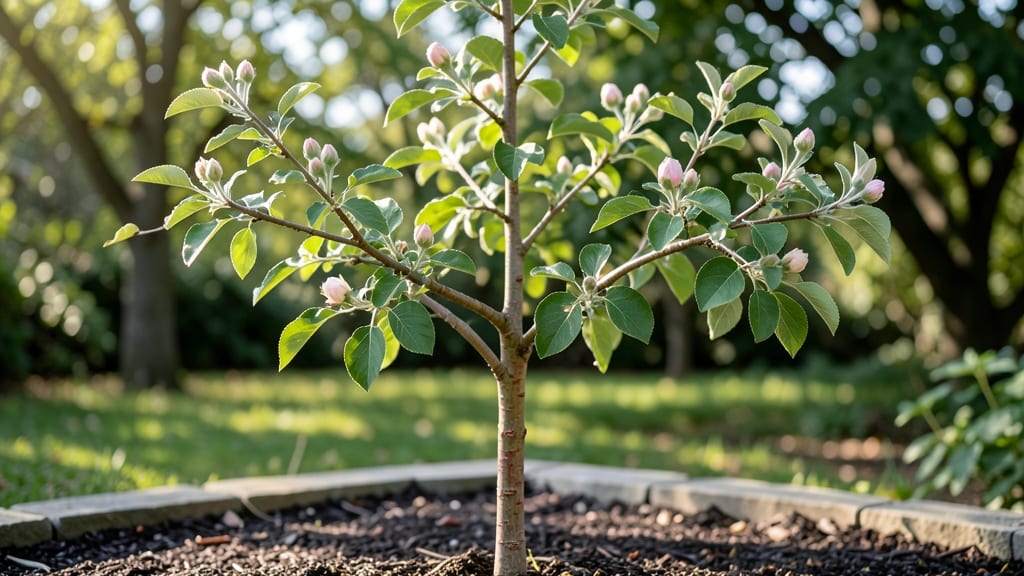
A young apple tree looks like a slender sapling with smooth, thin bark and small, bright green leaves that grow in tight clusters. Its branches form a V-shape, and it maintains a single central trunk before gradually developing a wider spread as it ages.
A young apple tree's most distinctive feature is its leaves, which start small and oval-shaped with serrated edges, often appearing reddish when new before turning deep green. 🌿 The bark remains smooth and silvery-gray for several years, unlike older trees that develop rougher textures.
What sets it apart from other saplings is the way its branches grow outward in a V-pattern, creating that classic apple tree silhouette even at early stages.
During its first few years, you'll notice rapid vertical growth—some varieties can reach 6 feet tall by age three—while developing a stronger central leader trunk. The leaves' arrangement in clusters along the branches helps distinguish it from trees like cherry or pear, which have more spaced-out foliage.
Pay attention to these details when identifying young trees in your yard or nursery.
💡 In This Article
- Identifying Young Apple Tree Leaves and Bark Features
- Growth Stages of a Young Apple Tree: What to Expect Year by Year
Identifying young apple tree leaves and bark features
The leaves of a young apple tree are its most distinctive identifier, starting as small, oval-shaped foliage measuring about 1-2 inches long with finely serrated edges. 🌿 New leaves often emerge with a reddish or bronze hue, thanks to anthocyanin pigments that protect tender tissue from sunlight.
As they mature, they transition to a vibrant green, creating a striking contrast against the tree's smooth, silvery-gray bark. This color progression helps distinguish apple saplings from other fruit trees like cherry or plum, which typically have darker green leaves from the start.
The bark of a young apple tree remains remarkably smooth and thin, often with a slightly waxy texture that reflects light. Unlike older trees that develop rough, furrowed bark, young specimens maintain this silvery-gray appearance for 3-5 years.
This smoothness isn't just visual—it's functional, protecting the tree's delicate vascular system while allowing for flexible growth. The bark's subtle sheen also makes it easier to spot in shaded areas where other trees might blend into the background.
What truly sets apple saplings apart is their leaf arrangement. Apple leaves grow in tight clusters along the branches, a pattern called "fascicled" growth, where multiple leaves emerge from the same point. 🍏 This creates a dense, bushy appearance even in young trees.
In contrast, trees like pear or peach have more spaced-out leaves along their branches. The leaf undersides also have fine hairs, a characteristic that helps with moisture retention and pest resistance during the tree's early, vulnerable growth stages.
When comparing apple trees to other fruit-bearing saplings, pay attention to these key differences:
- Leaf shape: Apple leaves are oval with serrated edges (like a jagged saw), while cherry leaves are more elongated and smooth-edged
- Color progression: Apple leaves start reddish, while plum leaves remain dark green from emergence
- Bark texture: Apple bark stays smooth longer than pear bark, which develops small lenticels (pores) earlier
- Branch pattern: Apple's V-shaped branching is more pronounced than the horizontal growth of peach trees
The combination of these features makes young apple trees particularly easy to identify once you know what to look for. 🔍 For example, a 1-year-old apple sapling might have leaves only 1 inch long, while a 3-year-old specimen could have leaves approaching 3 inches with more defined serrations.
This gradual change in leaf size provides another clue about the tree's age during its early development stages.
One common mistake is confusing apple saplings with crabapple trees, which share similar leaf characteristics but have much smaller fruit and more compact growth habits.
Crabapple leaves often have more pronounced serrations and a slightly waxy coating that gives them a different sheen. 🍎 Understanding these subtle differences can help gardeners make accurate identifications when selecting trees for their orchards or landscapes.