
Companion Plants
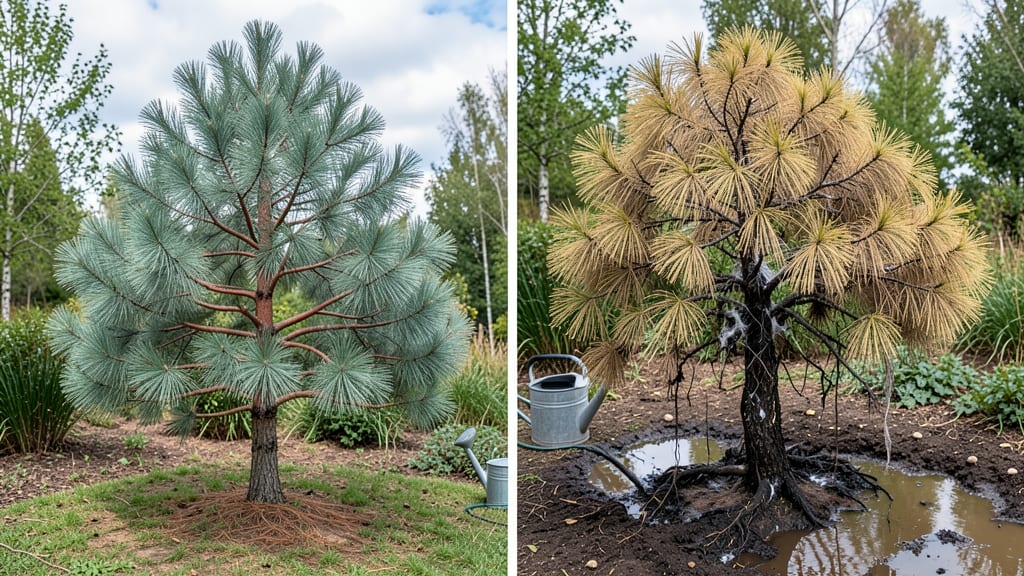
An overwatered pine tree looks like a sad, soggy mess—droopy branches, yellowing needles, and roots that smell like wet socks. 🌲 I’ve seen it happen after a week of heavy rain or when well-meaning gardeners water every other day.
The needles turn yellow at the tips first, then brown, and eventually drop off, leaving bare patches where green should be.
The real giveaway is the soil: it stays clumpy and smells rotten when you dig in. Healthy pine roots should be firm and white, but overwatered ones turn mushy and dark brown, like overcooked pasta.
If you pull back the bark near the base, you might even see fungus growing—another red flag.
Fixing it starts with letting the soil dry out completely between waterings. Move the tree to a spot with better drainage, and consider adding sand or gravel to the soil mix. Prune any dead branches, but avoid cutting healthy ones—pines don’t handle stress well when they’re already struggling.
With the right care, your pine can bounce back. It might take a few months, but new growth will start pushing through once the roots dry out. Just don’t overdo it—pines prefer their soil on the drier side once they’re established.
Root Causes Of Overwatering
When your pine tree starts showing signs of distress—like drooping needles or yellowing tips—overwatering is often the unseen villain. But why does this happen? Let’s break down the key factors that lead to soggy roots and stressed trees, so you can fix the problem before it’s too late. 🌧️🌱
Pine trees thrive in well-draining soil, but when water can’t escape, roots suffocate. Clay-heavy or compacted soil traps moisture, preventing oxygen from reaching the roots—a condition called anaerobic stress. Without oxygen, roots can’t absorb nutrients or grow properly, leading to:
- Root rot: Fungal pathogens like Phytophthora or Pythium thrive in waterlogged conditions, breaking down root tissues.
- Nutrient lockout: Excess water dilutes soil nutrients, starving the tree even if you’re fertilizing.
- Toxic buildup: Overwatering leaches vital minerals (like nitrogen) but leaves harmful salts behind, burning roots.
Actionable fix: Amend soil with organic matter (compost, pine bark fines) or plant on a slope to improve drainage. If your yard has heavy clay, consider raised beds for pines.
Even if your soil drains okay, watering on a schedule (rather than by need) is a common mistake. Pine trees in containers or sandy soils dry out faster, but many gardeners assume they need daily hydration—especially in hot climates. Signs of overwatering confusion include:
- Mushy, black roots: Healthy roots are firm and white; overwatered roots turn slimy and rot.
- Needle discoloration: Yellow or brown tips signal the tree is struggling to photosynthesize due to poor root function.
- Slow growth or dieback: The tree “shuts down” to conserve energy, focusing on survival over new growth.
Actionable fix: Water deeply but infrequently—aim for 1–1.5 inches per week (including rain) and let the top 2–3 inches of soil dry out between waterings. Use a moisture meter to check.
Pine trees in pots are highly susceptible to overwatering because containers lack the natural drainage of garden soil. Roots circle tightly, creating a root-bound effect that traps moisture. Add to this:
- Small pot size: A 5-gallon container for a mature pine means roots have no room to escape excess water.
- Poor pot materials: Plastic pots retain moisture longer than terracotta or fabric grow bags.
- Lack of drainage holes: Even with holes, water can pool if the saucer isn’t emptied regularly.
Actionable fix:
- ✅ Use pots with drainage holes + a saucer (empty saucers after watering).
- ✅ Repot every 2–3 years to refresh soil and prevent root circling.
- ✅ Choose fast-draining mixes (e.g., 60% pine bark, 30% perlite, 10% compost).
Your pine tree isn’t just reacting to your watering—it’s also affected by local conditions that can amplify overwatering risks:
| Factor | Why It Matters | Solution |
|---|---|---|
| High humidity | Slows evaporation, keeping soil wet longer. Fungal diseases (like root rot) spread faster. | Space trees 6–10 feet apart for airflow; avoid mulching too deeply (keep 2–3 inches from trunk). |
| Shady spots | Reduces transpiration (water loss through leaves), so roots stay soggy. | Plant pines in full sun (6+ hours/day); if shade is unavoidable, use gritty, fast-draining soil. |
| Heavy rainfall | Natural watering can drown roots if soil can’t absorb it quickly. | Install swales or French drains to divert excess water; avoid planting in low-lying areas. |
Pro tip: 🌡️ If your area gets consistent rain, skip watering entirely—pines are drought-tolerant once established!
Understanding these causes is the first step to saving your pine. Next, we’ll cover how to diagnose overwatering early—before the damage becomes permanent.
Revive Your Pine Tree: Step-by-Step Fixes
Overwatering can turn your pine tree into a soggy, stressed mess—but don’t panic! With the right approach, you can nurse it back to health and prevent future waterlogging woes.
Below, we’ve mapped out practical solutions based on the root causes of overwatering, plus pro tips to keep your pine thriving long-term.
Yellowing needles are often the first sign of overwatering, but they’re also the easiest to address.
🔥 Step 1: Stop Watering Immediately - Why? Pine trees hate soggy roots.
Let the soil dry out completely before watering again. - How? Skip your next watering session and wait until the top 2–3 inches of soil feel dry to the touch (use a finger or a moisture meter). - Pro Tip: 💡 If your tree is in a container, lift it to check the weight—if it feels light, it’s dry enough.
🍳 Step 2: Improve Soil Drainage Pine trees need well-draining soil to thrive.
If your tree is in the ground: - Amend the soil with coarse sand, perlite, or pine bark fines (mix into the top 6–12 inches). - For potted pines, repot into a terracotta or fabric pot with fast-draining mix (50% pine soil, 30% perlite, 20% sand).
👨🍳 Step 3: Prune Damaged Needles (If Needed)
- When? Only trim brown or mushy needles—never healthy green ones.
- How? Use clean, sharp pruners to snip dead needles at the base. Avoid over-pruning, as pines are slow to recover.
⏰ Prevention: Water Deeply but Infrequently
- Water deeply (soak the root zone) once every 1–2 weeks in dry climates, or once every 3–4 weeks in rainy seasons.
- Avoid shallow watering—this keeps the surface wet while roots stay dry.
- Mulch properly: Apply 2–3 inches of organic mulch (pine straw or wood chips) to retain moisture without suffocating roots.
Droopy needles mean root suffocation—time to give those roots some breathing room.
🔪 Step 1: Loosen Compacted Soil
- For in-ground pines: Gently aerate the soil around the root zone with a fork or trowel (avoid damaging roots).
- For potted pines: Check for root rot—healthy roots are white/firm; mushy or black roots need trimming.
🥘 Step 2: Transplant If Necessary (Last Resort)
If your pine is in poorly draining soil (like clay) and refuses to improve:
- Dig it up carefully (best in early spring or fall).
- Trim 1/3 of the roots (if they’re circling or rotten).
- Repot in fresh, fast-draining soil and place in partial sun.
🌡️ Step 3: Monitor Humidity & Airflow
- Pines hate humidity—ensure good air circulation around the tree.
- Avoid overhead watering (use drip irrigation or soaker hoses instead).
- Prevention: 🎯 If you live in a humid climate, consider a small fan near potted pines to improve airflow.
If your pine’s roots are soft, black, or smelly, it’s suffering from severe root rot—but there’s still hope!
✨ Step 1: Trim the Rotten Roots
- Sterilize pruners with rubbing alcohol.
- Snip away all mushy, discolored roots (keep only firm, white roots).
- Pro Tip: 💡 If more than 50% of roots are rotten, the tree may not recover—consider replacing it.
🍎 Step 2: Repot in Fresh, Sterile Soil
- Use a clean pot (or dig a new hole if in-ground).
- Disinfect the soil with a 3% hydrogen peroxide solution (1 part peroxide to 3 parts water) before repotting.
- Mix in fungicide (like mycorrhizal inoculant) to prevent future rot.
🔥 Step 3: Adjust Watering & Environment
- Water lightly (just enough to keep soil slightly moist, not soggy).
- Move to a sunnier spot (pines need full sun to partial shade).
- Prevention: 🌡️ Never let pines sit in standing water—ensure pots have drainage holes and slopes in garden beds.
Once your pine is back on track, prevent overwatering with these easy habits:
| Issue | Fix | Prevention Tip |
|---|---|---|
| Poor drainage | Amend soil + raise planting bed | Use gravel or sand under pots |
| Overly frequent watering | Check soil moisture weekly | Water only when top 2" is dry |
| Container root bound | Repot every 2–3 years | Choose one size larger pot each time |
| High humidity | Improve airflow | Space plants apart or use a fan |
Final Thought: 🌟 Pines are tough once they’re healthy—they just need the right balance of water, sun, and soil. With these fixes, your tree should bounce back in 4–8 weeks.
Keep an eye on it, and soon you’ll have a lush, vibrant pine that’s the star of your garden!
Frequently asked questions
Can an overwatered pine tree recover?
Yes, with prompt action! If caught early (yellowing needles, droopy branches), stop watering immediately and let the soil dry completely. For severe cases (mushy roots, brown needles), trim rotten roots, repot in fresh, fast-draining soil, and avoid watering until the soil is bone-dry. Most pines bounce back in 4–8 weeks with proper care.
How can I tell if my pine tree has root rot?
Check for these signs: roots that are mushy, black, or smell foul (like wet socks), while healthy roots stay firm and white. Dig gently near the base—if you see white fungal growth or roots falling apart when touched, it’s root rot. Act fast by trimming affected roots and improving drainage.
Why do pine needles turn brown after overwatering?
Overwatering suffocates roots, cutting off the tree’s nutrient supply. Without proper hydration and nutrients, needles lose their green pigment first, turning yellow, then brown. The tips brown because they’re the oldest part of the needle and most sensitive to stress—like a plant’s "early warning system."
Is it better to underwater or overwater a pine tree?
Pines prefer underwatering over overwatering! They’re drought-tolerant once established and handle dry spells better than soggy soil. Water deeply once every 1–2 weeks (or less in rainy climates) and let the top 2–3 inches of soil dry out between waterings. Yellowing from thirst is easier to fix than root rot!
Can I save a pine tree with black needles?
Black needles usually mean severe rot or fungal infection—often irreversible. However, if only the tips are brown (not black), prune those and improve drainage. For black needles, check roots: if more than 50% are rotten, the tree may not recover. In this case, consider replacing it or using it as a cutting for propagation.