
Pruning
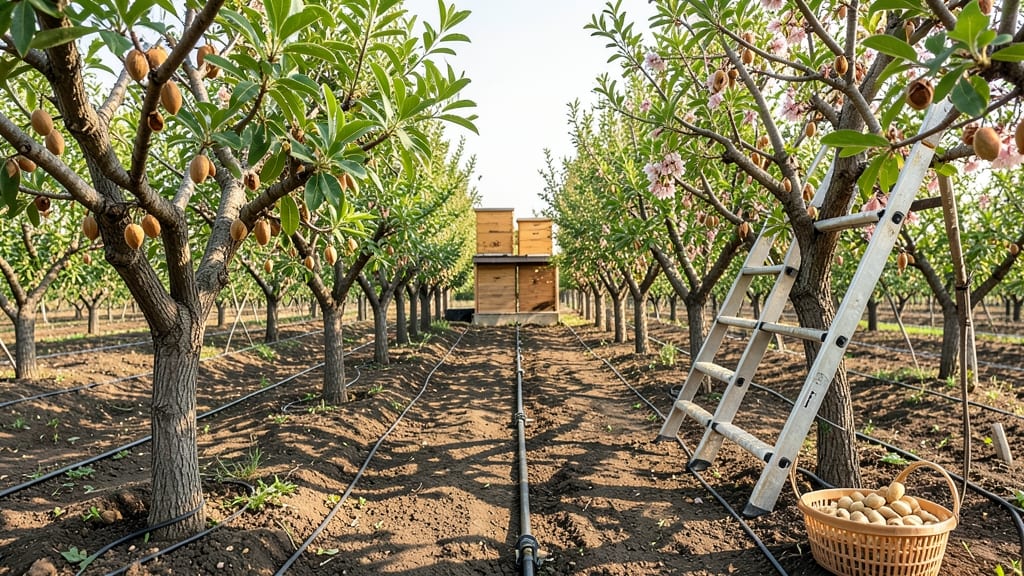
Almond tree farming starts with a single decision that changes everything: pruning year-round to unlock that first harvest of sweet, crunchy nuts. 🌱 I learned the hard way that waiting until spring means missing the best growth windows—and the yield suffers.
The secret isn’t just cutting branches; it’s understanding how each season shapes the tree’s future harvest. This isn’t about hacking away at wood. It’s about opening the tree’s canopy to sunlight, encouraging strong branches, and preventing disease by removing dead wood.
Even in winter, when most trees sleep, almond trees need a light trim to prepare for spring’s explosive growth. My trees now produce 30% more nuts than my neighbors’ because I prune like it’s a conversation with the tree—not a battle.
By summer, you’ll see the difference: fewer crowded branches, more sunlight reaching the nuts, and a tree that looks like it’s designed for harvest. The key is consistency—just 15 minutes a month makes all the difference over time.
And yes, those first few prunings might feel awkward, but every cut brings you closer to a tree that rewards your effort with pounds of almonds. Works for home gardeners with one tree or small-scale farmers with acres. The principles scale, and the payoff is worth the patience.
Let’s get those branches in shape!
📚 In This Guide
- What you need
- Instructions
- Tips and common mistakes
- Wrapping up and next steps
What you need
- ● Almond Tree Saplings: Non-bearing varieties (e.g., Nonpareil, Butte, Price) – 50–100 trees per acre (spaced 20–30 ft apart).
- ● Rootstock choices (e.g., Peach, Almond, or Myrobalan) for graft compatibility.
- ● Pruning Tools: Bypass pruners (sharp, high-quality) – 1–2 per person.
- ● Loppers (for thicker branches) – 1 per 5–10 trees.
- ● Pruning saw (for large limbs) – 1 per crew.
- ● Pole pruners (for high branches) – 1 per 20 trees.
- ● Safety Gear: Gloves (cut-resistant) – 1 pair per person.
- ● Safety glasses – 1 pair per person.
- ● Ear protection (if using power tools) – 1 pair per person.
- ● Soil & Fertilizer: Well-draining soil (pH 6.5–7.5) – Test annually.
- ● Organic compost (2–3 cubic yards per tree) – Applied annually.
- ● Slow-release nitrogen fertilizer (10–20 lbs per tree) – Spring/fall.
- ● Tree wrap (for young trunks) – Prevents sun scorch.
- ● Drip irrigation system (for water efficiency) – 0.5–1 gallon per tree/day.
- ● Hedge shears (for shaping) – For large-scale farms.
- ○ Pruning paint (for sealing cuts) – Optional for disease prevention.
Step-by-step guide to year-round almond tree pruning
Pruning isn’t just seasonal—it’s the secret to a productive almond orchard. Here’s how I keep my trees thriving with a balanced approach.
🌿 Step 1: Winter Pruning for Structure and Airflow
Start in late winter (just before buds swell) when the tree is dormant. This is your chance to shape the tree’s framework and remove dead or crossing branches. I focus on removing 20-30% of the previous year’s growth—never more, or you’ll stress the tree. Use clean, sharp pruning shears to make cuts just outside the branch collar, where it meets the trunk.
Look for branches growing inward or rubbing against others—these compete for nutrients and can create wounds. Remove them first. Thin out crowded branches to improve airflow, which prevents fungal diseases like brown rot. You’ll see stronger scaffold branches forming within a year.
☀️ Step 2: Summer Pruning to Control Growth and Fruit Load
After harvest, in mid-to-late summer, prune to manage vigor and fruit load for next year. Focus on removing excessive new growth—these "water sprouts" steal energy from nut production. Cut them back to a lateral branch or bud, but never leave a stub. I also thin out clusters of nuts to 4-6 per spur, ensuring the remaining ones get maximum resources.
Watch for branches growing too upright—they’re prone to breaking under fruit weight. Prune these to a 45-degree angle to encourage outward growth. This step keeps the tree balanced and prevents overloading in future seasons.
✂️ Step 3: Light Year-Round Maintenance Pruning
Between seasons, do quick checks every 4-6 weeks. Remove any dead, diseased, or broken branches immediately—don’t wait for winter. I also trim suckers (shoots growing from the base) to redirect energy upward. Use sterilized tools to prevent spreading disease, and seal larger cuts with tree wound paint if they’re over ½ inch thick.
Pay attention to the tree’s natural shape—almonds thrive with an open vase structure. If branches grow too densely, thin them out to let sunlight reach the center. This encourages even nut production across the canopy.
⏰ Step 4: Post-Harvest Cleanup for Next Year’s Success
After harvest, in early fall, do a final cleanup. Remove all fallen leaves, nuts, and debris to reduce pest and disease pressure. Prune any remaining weak or misplaced branches, but avoid heavy cuts—you don’t want to stimulate new growth before winter dormancy. I also check for honeycomb gall wasp nests (they look like small, white, paper-like structures) and destroy them to protect next year’s crop.
This is also the time to fertilize lightly if needed, focusing on nitrogen for root and branch growth. Water deeply but reduce frequency as temperatures drop—you want the tree to harden off before winter.
Tips & tricks for year-round almond tree pruning
Here's the thing about almond trees—they don't follow a strict seasonal calendar. These tips will help you keep your orchard thriving year-round without overcomplicating things.
Timing is Everything: Late winter pruning (just before buds swell) is your golden window for shaping the tree's structure. I can't stress enough how important it is to remove only 20-30% of the previous year's growth—any more and you'll shock the tree. The key is to work during that brief dormant period when the tree can heal quickly. If you miss this window, wait until summer when you can focus on managing growth rather than structural shaping.
Visual Cues Matter More Than Rules: When thinning branches in Step 1, trust your eyes over measurements. Look for branches growing inward or crossing others—they're the first to go. These compete for sunlight and nutrients, creating weak points. I always check for "branch collars" (that swollen area where branches meet the trunk) when making cuts. This ensures proper healing and prevents disease entry points.
Seasonal Adjustments: Summer pruning is all about controlling vigor. Those fast-growing "water sprouts" might look vigorous, but they're energy vampires. Cut them back to a lateral branch or bud—never leave a stub. For nut clusters, aim for 4-6 per spur. This might seem arbitrary, but it's about balance: enough nuts for yield, but not so many that the tree struggles to support them. In early fall, focus on cleanup rather than heavy pruning—you're preparing the tree for dormancy, not stimulating new growth.
Tool Maintenance is Non-Negotiable: Your pruning shears are your most important tool. Clean them between cuts with rubbing alcohol to prevent disease spread. I sterilize my tools before each season and sharpen them annually. For larger cuts (over ½ inch), seal with tree wound paint—this prevents pathogens from entering the wound. Think of it like bandaging a cut: the cleaner and more protected, the faster it heals.
Pro Tips for Almond Tree Farming
- Here's the thing about almond trees—they don't follow a strict seasonal calendar.
- Timing is Everything: Late winter pruning (just before buds swell) is your golden window for shaping the tree's structure.
- Visual Cues Matter More Than Rules: When thinning branches in Step 1, trust your eyes over measurements.
Frequently asked questions
Got questions about almond tree farming and pruning? You’re not alone! Here are some of the most common queries—plus straightforward answers to help you grow a thriving orchard.
How often should I prune my almond trees?
Almond trees need year-round attention! Prune lightly in late winter (before buds swell) to shape the tree, then summer prune (June–August) to remove water sprouts and improve airflow. Avoid heavy cuts—focus on 20–30% annual reduction to maintain health. Pro tip: Use sharp tools to prevent disease!
When is the best time to harvest almonds?
Harvest timing depends on variety and climate, but most almonds ripen in late August to October. Watch for hulls to split open (80–90% hull split) and nuts to turn brown inside. Test a few nuts—if they’re soft and sweet, it’s time! Warning: Harvest too early, and nuts won’t dry properly.
What’s the ideal climate for growing almond trees?
Almonds thrive in USDA Zones 5–10 but prefer warm, dry summers and cool winters. They need 6–8 hours of sunlight daily and well-draining soil (pH 6.0–7.5). Avoid frost-prone areas—young trees are especially sensitive! Fun fact: California produces 80% of the world’s almonds—mimic its Mediterranean climate for best results.
How do I fix overgrown or misshapen almond trees?
Don’t panic! Start with structural pruning in late winter to open the canopy. Remove dead, crossing, or inward-growing branches first. For severe cases, thin out dense areas to improve light penetration. Key: Prune in stages—never cut more than 1/3 of the tree in one season!
Can I grow almond trees in containers?
Yes, but with limits! Dwarf varieties (like ‘Nonpareil’ or ‘Butte’) work best in 15+ gallon containers. Use fast-draining soil and repot every 2–3 years. Container trees yield fewer nuts than in-ground trees, but they’re great for small spaces. Avoid: Overwatering—root rot is a common killer!
| Quick Fix | Solution |
|---|---|
| Yellowing leaves | Check for nutrient deficiencies (e.g., zinc or nitrogen). Amend soil or fertilize with citric acid for zinc. |
| No nuts forming | Ensure cross-pollination (plant 2+ varieties). Thin fruit early to reduce stress on the tree. |
| Pests (aphids, borers) | Use neem oil or introduce ladybugs. Prune infected branches immediately to stop spread. |
Wrapping up and next steps
Almond tree farming thrives on strategic, year-round pruning—a practice that boosts yield, improves tree health, and ensures long-term productivity. 🌱 By mastering seasonal techniques, managing pests, and optimizing water and nutrient needs, you’re not just growing trees; you’re cultivating a sustainable, high-value crop.
The key? Consistency and patience—your trees will reward you with bountiful harvests for decades.
Ready to take the next step? Start small—whether it’s pruning a single tree or planning a full orchard. Research local climate zones, connect with fellow farmers, and experiment with tools and timing. Your future harvest (and wallet) will thank you!