
Transplanting
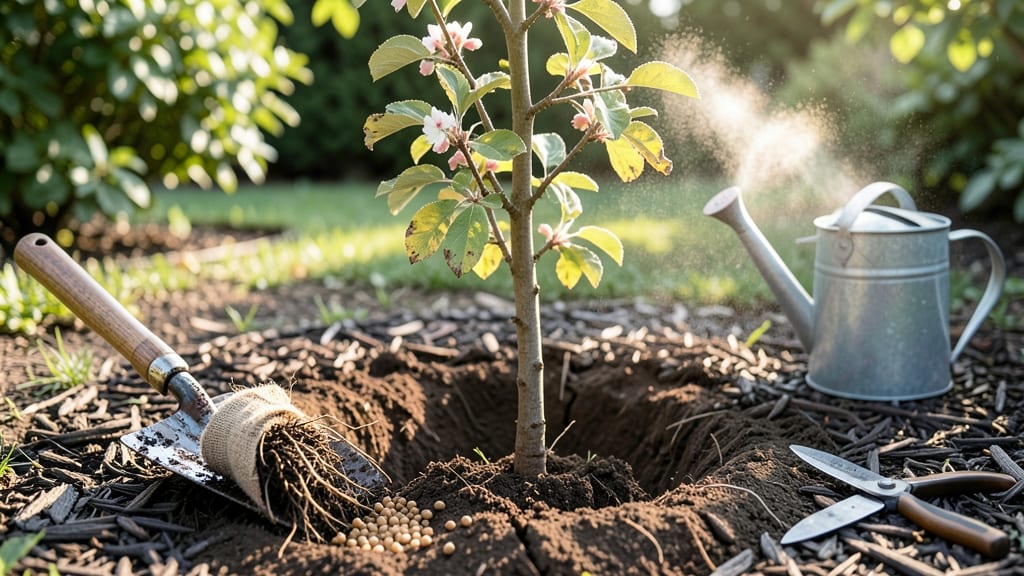
When your apple tree looks like it’s throwing in the towel after transplanting, don’t panic—apple tree transplant shock is fixable. 🌱 I’ve nursed back more than a few struggling trees by focusing on roots, water, and patience (yes, even the impatient ones).
The key is acting fast with the right care, and I’ll walk you through exactly what to do.
Transplant shock happens when roots get jostled, leaving your tree stressed and struggling to drink up water. You’ll spot it in droopy leaves, sudden leaf drop, or growth that just… stops. The good news? Most trees bounce back in 4-6 weeks with consistent care—no magic potions required.
Think of it like helping a friend recover from a rough move: good food, rest, and a little TLC go a long way.
Here’s where it gets simple: deep watering, strategic pruning, and a thick layer of mulch become your new best friends. Your tree will start showing signs of recovery within 2-3 weeks—new growth, firmer branches, and leaves that stop wilting by midday.
The secret isn’t complicated; it’s about giving your tree the exact conditions it needs to heal.
Whether you’re dealing with a newly planted tree or one that’s been struggling for weeks, these steps work for backyard orchards, container-grown apples, or even that stubborn tree you inherited with the house. Let’s get those roots back in business!
Root Stress Explained
Apple trees may seem resilient, but their roots are delicate systems that rely on balance. When you move an apple tree, even with the best intentions, transplant shock kicks in—often due to disruptions in three key areas: hydration, nutrient flow, and hormonal signals.
Let’s break down the science behind why your tree acts like it’s in survival mode after a transplant.
When roots are disturbed, they lose their hydraulic conductivity—the tree’s ability to absorb and transport water efficiently. Here’s why:
- Root Damage: Even minor root pruning during transplanting severs tiny root hairs and mycorrhizal fungi (beneficial soil microbes) that help absorb water.
These structures regenerate slowly, leaving the tree temporarily dehydrated. - Soil Compaction: If the new planting hole isn’t loose or if the soil is heavy clay, roots struggle to spread and access moisture.
Compacted soil restricts oxygen flow, forcing roots to work harder just to survive. - Transpiration Imbalance: Leaves keep photosynthesizing and releasing water vapor (transpiration) while roots can’t keep up.
This creates a water deficit, triggering stress hormones like abscisic acid (ABA), which signals the tree to conserve water—often by wilting or dropping leaves.
Actionable Insight: Mulch heavily around the base (but not touching the trunk) to retain moisture and reduce temperature fluctuations. Use hydration gels or root stimulants (like mycorrhizal inoculants) to jumpstart recovery.
Roots aren’t just water sponges—they’re nutrient mines. When transplanted, they lose access to: - Existing Soil Nutrients: The tree’s roots were adapted to the old soil’s nutrient profile.
A sudden switch (e.g., from rich loam to sandy soil) can cause deficiencies, especially in phosphorus and potassium, which are critical for root growth. - Microbe Disruption: Beneficial microbes in the old soil (like nitrogen-fixing bacteria) take time to re-establish.
Without them, the tree struggles to process nutrients like nitrogen, leading to stunted growth or yellowing leaves. - Root Pruning Shock: Severed roots release ethylene gas, a stress hormone that accelerates leaf drop and slows nutrient uptake.
This is your tree’s way of shedding non-essential parts to focus on root recovery.
Actionable Insight: Amend the planting hole with compost or well-rotted manure before transplanting. A slow-release fertilizer (high in phosphorus) can give roots a nutrient boost without overwhelming them.
Plants have a hormonal communication system—and transplanting throws it into chaos. Key disruptions include: - Auxin Imbalance: This hormone regulates root growth and cell division.
When roots are damaged, auxin production drops, leading to poor root regeneration and weak new growth. - Ethylene Overload: As mentioned, damaged roots release ethylene, which inhibits root growth and promotes leaf abscission (dropping).
It’s like the tree’s version of hitting the panic button. - Cytokinin Deficit: These hormones stimulate cell division in roots. After transplanting, cytokinin levels often plummet, slowing recovery. This is why some trees take weeks to show new root activity.
Actionable Insight: Apply rooting hormones (like IBA or NAA) to cut roots before planting to encourage faster regeneration. Avoid over-pruning—leave as much root mass intact as possible to maintain hormonal stability.
Even if the roots are intact, a sudden change in light, temperature, or wind exposure can amplify shock: - Sunburn Risk: If the tree was shaded in its old location but gets full sun after transplanting, leaves can scorch, increasing water loss. - Temperature Fluctuations: Moving from a sheltered spot to an exposed area can cause thermal stress, especially in young or stressed trees. - Wind Stress: Exposed roots and new growth are vulnerable to desiccation (drying out) from wind.
This forces the tree to divert energy from root recovery to protecting leaves.
Actionable Insight: Use shade cloth for the first 2–3 weeks if moving to a sunnier spot. Stake the tree to reduce wind rock, which can further damage roots.
Revive Your Apple Tree Fast
Transplant shock in apple trees isn’t a death sentence—it’s a temporary setback with clear fixes. Whether your tree is wilting, dropping leaves, or just looking stressed, these targeted solutions will help it bounce back stronger.
Below, we’ve mapped the most common causes of transplant shock to the best recovery strategies, plus prevention tips to keep your tree thriving long-term.
Cause: Damaged or exposed roots struggle to absorb water and nutrients. Fix:
- Trim carefully 🔪: Use sterilized pruners to snip any broken, mushy, or overly long roots (no more than 10% of the root ball). Focus on jagged edges—smooth cuts heal faster.
- Mulch like a pro 🌡️: Spread 2–4 inches of organic mulch (wood chips, straw) around the base, but keep it 6 inches away from the trunk. This locks in moisture and regulates soil temperature.
- Water deeply 💧: Soak the root zone (not just the surface) every 2–3 days for the first 2 weeks. Use a drip irrigation system or a slow-release hose to avoid runoff.
Prevention Tip: 💡 Before transplanting, water the tree deeply for 3 days to hydrate roots. Dig a wide, shallow trench around the root ball to minimize root damage during extraction.
Cause: Sudden exposure to harsh elements stresses the tree’s foliage and roots. Fix:
- Shade cloth to the rescue 🛡️: Install 30–50% shade cloth on the sunny side of the tree for the first 2–3 weeks. This reduces water loss through transpiration while the roots adjust.
- Windbreaks work wonders 🌬️: Temporary fencing or burlap screens can block strong winds. Even a few strategically placed stakes with fabric will help.
- Foliage spray 🌿: Mist the leaves with water (early morning or late evening) to keep them hydrated. A light application of anti-transpirant spray (like Wilt-Pruf) can also form a protective film.
Prevention Tip: ✨ Choose a transplant window during cooler months (late fall or early spring) to avoid peak sun and heat. If transplanting in summer, do it on an overcast day.
Cause: Waterlogged roots suffocate, while dry soil starves the tree. Fix:
- Test your soil 📊: Stick your finger 2 inches into the soil—if it’s soggy, your tree’s roots are drowning. Amend heavy clay soil with compost or sand to improve drainage.
- Adjust your watering 🚰: Switch to a schedule: water deeply 2–3 times per week (instead of daily light sprinkles). Let the top inch of soil dry out between waterings to encourage deep root growth.
- Raise the root ball 🏗️: If your tree is in a low spot, mound soil around the base to create a slight slope away from the trunk. This prevents water pooling.
Prevention Tip: 🔥 Plant your apple tree on a slight mound or in a raised bed if your yard has poor drainage. Avoid compacted soil—loosen it with a garden fork before transplanting.
Cause: Transplanted trees deplete energy reserves quickly and need a nutrient boost. Fix:
- Hold off on fertilizer 🚫🌱: Wait 4–6 weeks before applying any fertilizer. New roots are fragile, and excess salts can burn them.
- Use a root stimulator 🌱💥: Apply a mycorrhizal fungus or seaweed-based rooting hormone (like Rootone) to the roots before replanting. These natural additives help roots establish faster.
- Slow-release organic matter 🍄: After 6 weeks, mix a balanced organic fertilizer (10-10-10 or compost) into the top 6 inches of soil. Avoid synthetic fertilizers—they can shock the system further.
Prevention Tip: 💪 Before transplanting, give your tree a pre-transplant feeding 2–3 weeks ahead with a low-nitrogen fertilizer (like 5-10-10) to build up reserves.
Cause: Stress weakens defenses, inviting pests (aphids, borers) or fungal infections. Fix:
- Inspect regularly 🔍: Check leaves, bark, and soil for signs of pests (holes, webbing) or disease (black spots, oozing sap). Early detection is key!
- Neem oil spray 🌿: Mix neem oil with water and spray it on leaves to deter pests and fungi. Reapply every 7–10 days until the threat passes.
- Prune infected branches ⚔️: Remove and destroy any heavily damaged or diseased limbs immediately. Sterilize your pruners with rubbing alcohol between cuts.
Prevention Tip: 🎯 Plant pest-resistant apple tree varieties (like ‘Liberty’ or ‘Enterprise’) and keep the area around the tree weed-free to reduce hiding spots for pests.
Final Pro Tip: 🌟 Patience is key! Monitor your tree’s progress and adjust care as needed. Most apple trees show signs of recovery within 4–6 weeks if given the right conditions.
Frequently asked questions about apple tree recovery after transplanting
How long does it typically take for an apple tree to recover from transplant shock?
Most apple trees show signs of recovery within 4-6 weeks with proper care. You’ll notice new growth, firmer leaves, and less wilting by 2-3 weeks if you’re watering deeply, mulching correctly, and protecting it from stress. Young trees or those transplanted in extreme heat may take slightly longer—up to 8 weeks—but they’ll still bounce back with patience.
Why are my apple tree’s leaves turning yellow after transplanting?
Yellowing leaves usually signal nutrient deficiencies or root stress. After transplanting, roots struggle to access phosphorus and potassium, which are critical for leaf health. Hold off on fertilizer for 4-6 weeks, then apply a balanced organic fertilizer. If yellowing persists, check for waterlogged soil—roots need oxygen to function properly.
Can I transplant an apple tree in summer, or should I wait for fall?
Summer transplanting is riskier because of heat and drought stress, but it can work if you take precautions. Choose an overcast day and provide 30-50% shade cloth for the first 2-3 weeks. Water deeply every 2-3 days and mulch heavily. Fall (late September-October) is ideal—cooler temps and natural rainfall give roots time to establish before winter.
What’s the best way to prepare an apple tree for transplanting to minimize shock?
Start by watering the tree deeply for 3 days before moving it to hydrate the roots. Dig a wide trench around the root ball to minimize damage when extracting. Prune no more than 10% of the root mass and apply a rooting hormone before replanting. Amend the new hole with compost and avoid compacting the soil.
Should I prune my apple tree after transplanting to reduce stress?
Light pruning (removing only 20-30% of the canopy) can help reduce water loss while roots recover, but avoid heavy pruning. Focus on removing dead, damaged, or crossing branches. Never prune more than 1/3 of the tree’s foliage at once—this stresses the tree further. The goal is to balance growth with recovery.