
Diseases
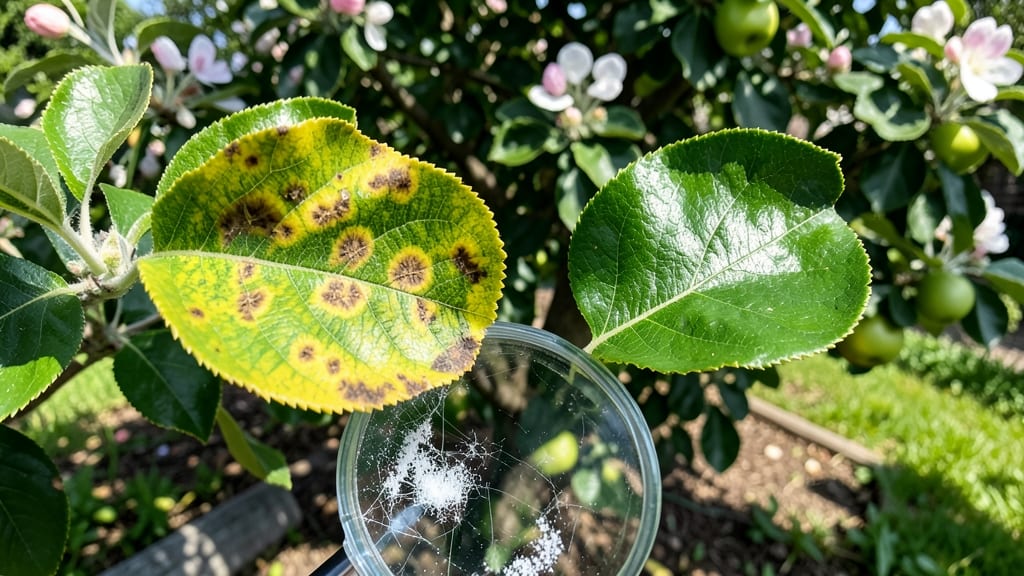
Yellow spots on your 🍎 apple tree leaves aren’t just an eyesore—they’re often a cry for help from your tree.
Waking up to yellow spots dotting your apple tree’s leaves can turn your gardening dreams into a frustrating mystery—but these unsightly marks often signal fixable problems.
Whether it’s a fungal infection like apple scab or something as simple as nutrient deficiency, understanding the cause is the first step to saving your tree.
Don’t let those spots spread unchecked. In this guide, I’ll walk you through the three most common causes, how to diagnose them quickly, and the fast fixes to restore your tree’s health—before it’s too late.
From organic sprays to pruning techniques, you’ll find the solutions tailored to your 🍎 apple tree’s needs, so you can enjoy a thriving orchard again in no time.
3 Most common causes of yellow spots on apple tree leaves
Yellow spots on your apple tree leaves aren’t just an eyesore—they’re your tree’s way of signaling trouble. These spots often appear as irregular patches or ring formations, and each cause has a unique look and treatment.
The good news? Most issues are treatable with the right diagnosis. Let’s break down the three most common culprits so you can act fast and save your tree’s health.
First, fungal diseases like apple scab and powdery mildew are the top offenders. These pathogens thrive in damp conditions and leave behind telltale signs: olive-green or yellow spots with fuzzy or scaly textures.
Without treatment, they can spread rapidly, weakening your tree and reducing fruit yield. The key to stopping them? Early detection and proper fungicide application.
Next, nutrient deficiencies, particularly iron chlorosis, often cause yellowing between leaf veins while keeping the veins green. This condition is common in alkaline soils or when iron isn’t available to the roots.
Unlike fungal issues, chlorosis doesn’t spread but can stunt your tree’s growth if left unchecked. Soil testing and targeted amendments can restore your tree’s health in no time.
Finally, environmental stress—like sunburn, pest damage, or extreme temperatures—can also trigger yellow spots. Sunburn, for example, causes brown or yellow patches on leaves exposed to harsh afternoon sun, while pests like mites leave behind speckled or stippled patterns.
Adjusting your tree’s environment or introducing natural predators can often resolve these issues.
Now that you’ve spotted the differences, let’s dive deeper into each cause. Apple scab, for instance, starts as tiny yellow spots that grow into olive-green lesions with black fruiting bodies. This fungal disease loves wet springs and can defoliate your tree if untreated.
The key to prevention? Proper spacing between trees for airflow and applying dormant oil in late winter to kill overwintering spores.
If you notice white powdery residue on leaves, powdery mildew is likely the culprit. Unlike apple scab, this fungus thrives in hot, dry conditions and spreads quickly. Prune your tree to improve air circulation and avoid overhead watering, which can worsen the issue.
A mix of baking soda spray (1 tbsp baking soda + 1 quart water + drop of soap) can also help control mild infestations organically.
For iron chlorosis, the yellowing typically starts on new leaves and progresses upward. This deficiency is more common in alkaline soils (pH above 7.0) or when iron is locked out due to high calcium levels.
Test your soil’s pH and amend it with elemental sulfur or chelated iron if needed. Mulching with compost
How to diagnose & confirm the problem: Step-by-Step guide
Diagnosing yellow spots on apple tree leaves starts with a methodical approach. Grab your magnifying glass and examine the affected leaves closely—this simple tool reveals hidden clues like fungal spores or pest activity you might miss with the naked eye.
Focus first on the leaf surfaces and undersides, as many diseases and pests leave distinct markings there.
Look for irregular yellow patches that may have dark borders (common in fungal issues like apple scab) or powdery white residue (a telltale sign of powdery mildew).
If the spots appear greasy or sticky, aphids or other sap-sucking pests could be the culprit. Document your findings with a camera—comparing photos over time helps track progression.
- 🌿 Step 1: Inspect Leaf Surfaces – Check for oily residue, fuzzy growth, or dark spots with a magnifying glass.
- 🌿 Step 2: Flip Leaves Upside Down – Look for spores, webbing, or tiny eggs on undersides.
- 🌿 Step 3: Test Soil pH – Use pH strips (ideal range: 6.0–7.0) to rule out nutrient deficiencies.
- 🌿 Step 4: Check for Environmental Stress – Assess sun exposure, watering patterns, and nearby trees (e.g., cedar trees may spread rust).
- 🌿 Step 5: Compare with Healthy Leaves – Note differences in color, texture, and growth patterns.
Don’t overlook the soil around your apple tree. Conduct a simple soil test using pH strips (available at garden centers for under $5). A pH below 6.0 or above 7.5 can hinder nutrient uptake, leading to chlorosis (yellowing between leaf veins).
Amend the soil with lime (to raise pH) or sulfur (to lower pH) if needed, following package instructions.
If you spot orange pustules on leaves or branches, you’re likely dealing with cedar apple rust, a fungal disease that requires immediate action. Similarly, black or velvety growth suggests sooty mold, which thrives on honeydew from pests.
In these cases, prune infected branches 12 inches below the damage to prevent spread, then dispose of clippings in the trash—not your compost bin.
When in doubt, consult a local arborist or your cooperative extension service. They offer free or low-cost diagnostics and can prescribe targeted treatments. Bring leaf samples in a paper bag (plastic traps moisture and accelerates decay) and describe the timeline of symptoms.
This helps professionals narrow down the issue faster.
Remember, early detection is key. The sooner you identify and address the problem, the better your apple tree’s chances of recovery. Keep a gardening journal to track treatments and outcomes—this helps you refine your approach next season.
With the right tools and a little patience, you’ll have your tree thriving in no time! 🌱