
Trees
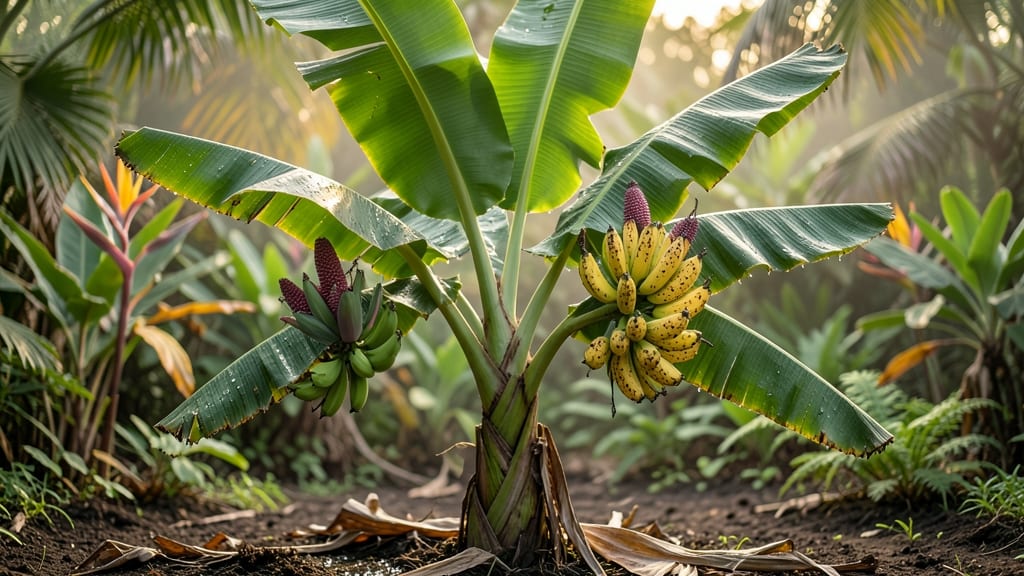
Banana trees thrive in tropical and subtropical climates with warm temperatures year-round, high humidity, and consistent rainfall between 40-100 inches annually. They require protection from frost and strong winds, preferring USDA zones 10-12 or similar equatorial conditions for optimal growth and fruiting.
Banana trees are tropical natives, so they demand steady warmth—any dip below 50°F can damage leaves, while temperatures above 95°F stress them without proper shade. 🌴 The real magic happens in the 75-85°F range, where growth and flowering peak.
Humidity above 60% prevents leaf scorch, while consistent moisture (but not soggy soil) keeps roots happy. In drier regions, morning misting or drip irrigation mimics their natural rainforest environment.
What's fascinating is how these trees adapt: younger plants handle slight temperature swings better than mature ones, which is why gardeners in cooler zones often start with dwarf varieties. The key isn't just heat—it's creating that equatorial stability where bananas feel at home year-round.
💡 In This Article
- Banana Tree Climate Requirements Explained
- Creating Ideal Banana Tree Conditions in Non-Tropical Areas
Banana tree climate requirements explained
Banana trees are tropical powerhouses that rely on three core climate factors: consistent warmth, high humidity, and abundant rainfall. Their ideal temperature range sits between 75-85°F, where photosynthesis and nutrient uptake peak. Below 60°F, growth slows dramatically, while above 95°F, leaves can scorch without proper shade.
The real secret lies in their heat tolerance adaptation—younger plants handle 5°F dips better than mature trees, which is why dwarf varieties thrive in marginal zones.
The humidity requirement—60% or higher—isn't just about moisture in the air.
Banana leaves have tiny pores called stomata that regulate water loss, but when humidity drops below 50%, these pores struggle to retain moisture, causing leaf edges to brown and crisp. 🌿 This is why tropical regions with 40-100 inches of annual rainfall create perfect conditions: the consistent moisture mimics their native rainforest environment where bananas evolved.
Even a 10% drop in humidity can trigger stress responses in the plant's vascular system.
Rainfall patterns matter just as much as quantity. Banana trees prefer even distribution—drought periods longer than 3 weeks can cause flower abortion (where potential fruit clusters dry up).
The roots develop a symbiotic relationship with soil fungi that helps absorb water, but this system breaks down when soil dries out completely. In regions with seasonal dry spells, mulching with organic matter helps retain moisture while preventing soil-borne diseases that thrive in waterlogged conditions.
Microclimates play a surprising role in banana cultivation. Even within tropical zones, elevation changes of just 1,000 feet can shift temperature ranges by 5°F—enough to affect flowering. Coastal areas often provide ideal conditions due to ocean breezes that moderate temperatures, while inland valleys may experience more extreme heat.
This is why commercial banana farms in USDA zones 10-12 often use shade cloths (30-50% coverage) to protect leaves from direct sun while maintaining airflow.
What most growers don't realize is how wind patterns impact banana trees. While they need airflow to prevent fungal diseases, sustained winds over 15 mph can physically damage the large leaves, reducing the plant's ability to photosynthesize.
This is why tropical regions with gentle trade winds (like Hawaii or Costa Rica) produce higher yields. In exposed areas, windbreaks made of bamboo or coconut fronds create natural barriers that mimic the protective canopy of their rainforest ancestors.
The most critical growth stage for climate sensitivity is flowering. Banana plants produce flowers in their pseudostems (the false trunk), and these inflorescences are extremely sensitive to temperature fluctuations.
A sudden drop below 70°F during this phase can cause flower abortion rates of up to 40%, while temperatures above 90°F without proper ventilation can lead to poor fruit set.
This is why commercial growers monitor microclimate conditions daily during the flowering window—a 5°F variation can mean the difference between a 100-pound bunch and a 20-pound one.
Here's the bottom line: bananas aren't just about heat—they're about stability. The plants evolved in environments where temperatures, humidity, and rainfall patterns changed very little throughout the year. Recreating this consistency, even in small garden plots, is what separates successful banana growing from frustrating failures. 🌍