
Trees
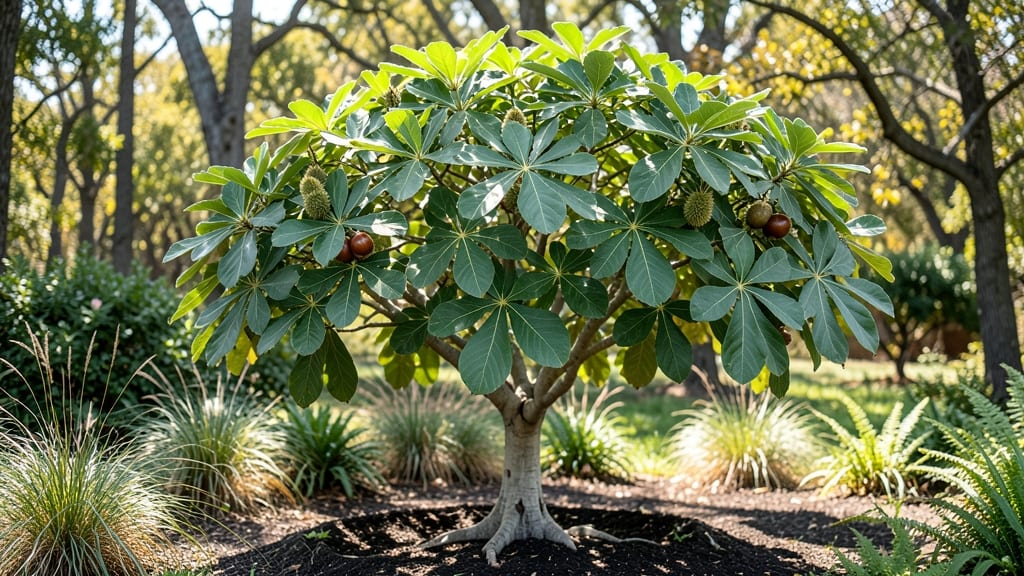
Native buckeye trees in Colorado thrive best in hardiness zones 5-7, featuring the California buckeye (Aesculus californica) and horse chestnut (Aesculus hippocastanum). These resilient trees showcase vibrant autumn foliage, adapt to Colorado’s dry conditions, and attract essential pollinators while demanding well-draining soil and partial shade in warmer areas.
Colorado’s buckeye varieties stand out for their adaptability and ornamental value. 🌳 The California buckeye, native to the state’s foothills, features glossy leaves and striking red seed pods, while the horse chestnut offers bold, palmate foliage that turns fiery in fall.
Both species play crucial roles in supporting local ecosystems, making them excellent choices for environmentally conscious landscaping. Their drought tolerance and ability to thrive in rocky soils align perfectly with Colorado’s rugged terrain.
For optimal growth, plant these trees in late fall or early spring when temperatures are mild. 💫 They prefer slightly acidic to neutral soil (pH 6.0-7.0) and benefit from mulching to retain moisture.
While they handle dry spells well, providing consistent watering during the first growing season helps establish strong root systems. Pairing them with native shrubs like serviceberry or elderberry creates a balanced, low-maintenance landscape that thrives in Colorado’s climate.
💡 In This Article
- Identifying Colorado’s Native Buckeye Tree Species
- Best Planting Zones and Soil Conditions for Buckeye Trees in Colorado
Identifying Colorado’s native buckeye tree species
The California buckeye (Aesculus californica) stands out with its glossy, dark green leaves that grow in clusters of 5-7 leaflets, each measuring 3-6 inches long. The tree’s most distinctive feature is its bright red, spiky seed pods that resemble miniature conkers, maturing in late summer.
These pods split open dramatically when dry, revealing 1-3 shiny brown seeds that were historically used by Native Americans as a food source. 🌿 In Colorado’s foothills, this species often reaches 15-25 feet tall with a rounded canopy, making it perfect for small yards or as a specimen tree.
In contrast, the horse chestnut (Aesculus hippocastanum), while not native to Colorado, has become naturalized and is prized for its palmate leaves with 5-7 leaflets radiating from a single point.
The leaflets are broader (4-8 inches) and have serrated edges, giving the foliage a more robust appearance. Its seed pods are green and spiky when young, turning brown and splitting open to reveal large, glossy horse chestnut seeds (often mistaken for conkers).
This species typically grows 40-70 feet tall, making it better suited for larger landscapes or as a shade tree.
Ecologically, both species play vital roles in Colorado’s ecosystems. The California buckeye’s seed pods provide food for wildlife like squirrels and birds, while its spring blooms attract pollinators like bees and butterflies.
The horse chestnut, though non-native, supports similar pollinator activity and offers late-season interest with its yellow-brown fall foliage. Both trees also help prevent soil erosion with their deep root systems, making them excellent choices for stabilizing slopes or restoring degraded areas. 🌱
One key difference lies in their growth habits: California buckeye grows more slowly and forms a denser canopy, while horse chestnut has a faster growth rate and more open branching structure.
This distinction is crucial for gardeners choosing between the two—California buckeye suits smaller spaces, while horse chestnut thrives in open areas where it can develop its full stature. Additionally, horse chestnut is more cold-hardy, tolerating temperatures down to -25°F, compared to California buckeye’s -15°F limit.
For identification in the wild, look for these distinguishing features:
- California buckeye: Glossy leaves, red seed pods, and shiny brown seeds
- Horse chestnut: Broader leaflets, green spiky pods, and large glossy seeds