
Diseases
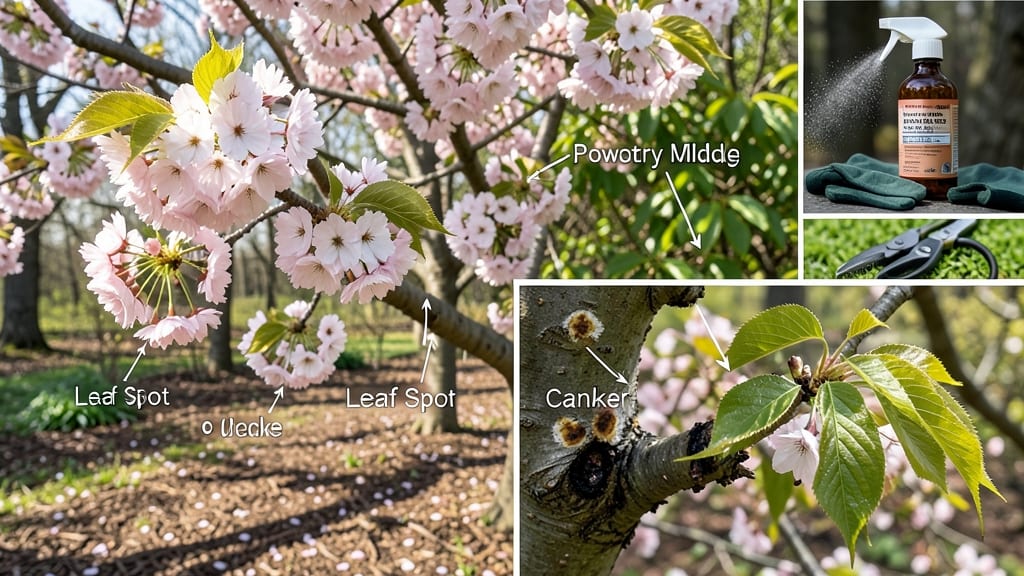
Your cherry blossom tree’s fading blooms might not be age—they could be black spot or powdery mildew creeping in. 🌸 I’ve watched these diseases turn vibrant spring canopies into sad, spotted messes, but early action can save your tree.
The key is spotting symptoms before they spread: dark spots on leaves, white powdery coatings, or sudden leaf drop. These fungal troublemakers thrive in damp, shady conditions, so proper spacing and airflow are your first line of defense.
Prune for sunlight, water at the base (never overhead), and clean up fallen leaves—those are disease hotels. A copper fungicide spray in early spring stops outbreaks before they start. By summer, you’ll see leaves stay glossy and blooms return in full force. The secret?
Catching signs early and acting fast—no more watching your tree’s glory fade to brown. Let’s turn those spots into prevention points.
Black spot shows up as dark, circular lesions with yellow halos, while powdery mildew looks like white dust on leaf undersides. Both weaken the tree over time, but neither is a death sentence.
The real damage happens when gardeners ignore the first warning signs—by then, it’s a battle, not a fix. Organic options like neem oil or baking soda spray work for mild cases, but severe infections need stronger fungicides. The goal?
Keep your tree’s immune system strong with balanced fertilization and proper pruning—healthy trees fight off diseases better than stressed ones.
Think of this as a spring checklist: inspect leaves weekly, spray preventatively, and prune in late winter. Your tree’s longevity—and those breathtaking blossoms—depend on it. The best time to act is now, before the next bloom season rolls around.
Root Causes Behind Cherry Blossom Struggles
Cherry blossom trees, with their delicate pink blooms and graceful branches, are stunning—but they’re also vulnerable to diseases like black spot and powdery mildew. Understanding why these issues arise is the first step to prevention.
Below, we break down the key factors that create the perfect storm for fungal infections, bacterial spread, or environmental stress in your cherry blossom.
Fungi thrive in specific weather patterns, and cherry blossoms are no exception. Black spot (Cercospora spp.) and powdery mildew (Podosphaera spp.) love:
- High humidity (70%+): Fungal spores germinate best when leaves stay damp for prolonged periods. Morning dew or afternoon showers create ideal breeding grounds.
- Moderate temperatures (60–80°F): Cool nights followed by warm days accelerate fungal growth. Powdery mildew, for example, spreads fastest when daytime temps hit 75–85°F.
- Poor air circulation: Dense foliage or overcrowded trees trap moisture, giving fungi a foothold. Shady spots under other trees worsen the problem.
💡 Pro Tip: Prune branches to improve airflow, and water early in the day to allow leaves to dry before evening.
While cherry blossoms need consistent moisture, excessive watering can drown roots and create soggy soil—perfect for fungal spores. Here’s how it happens:
- Waterlogged roots: Poor drainage (common in clay soil) prevents roots from absorbing oxygen, weakening the tree’s defenses. Weakened trees are far more susceptible to infections.
- Foliar splashing: Overhead irrigation (like sprinklers) splashes spores onto leaves, spreading diseases like black spot faster than wind or insects.
- Compacted soil: Heavy foot traffic or machinery compresses soil, reducing oxygen and promoting fungal growth at the root level.
✨ Actionable Fix: Test your soil’s drainage—dig a hole, fill it with water, and time how long it takes to drain. If it’s slower than 4 hours, amend with compost or sand.
A cherry blossom under stress is like an open invitation for pests and pathogens. Common stressors include:
| Deficiency | Symptoms | How It Invites Disease |
|---|---|---|
| Nitrogen (N) | Yellowing leaves (chlorosis), stunted growth | Weakens leaf structure, making them easier targets for fungal penetration. |
| Potassium (K) | Brown leaf edges, weak stems | Reduces the tree’s ability to resist fungal attacks (like powdery mildew). |
| Phosphorus (P) | Slow root growth, poor flowering | Limits energy for root repair, leaving the tree vulnerable to soil-borne pathogens. |
💪 Solution: Conduct a soil test and fertilize with a balanced 10-10-10 or 5-10-10 formula in early spring. Avoid high-nitrogen fertilizers late in the season, as they promote tender new growth—prime targets for black spot.
While we often blame fungi for diseases, insects and physical harm can create entry points for pathogens. For example:
- Japanese beetles: These pests chew leaves, creating wounds where Cercospora spores can latch on.
- Aphids: Their honeydew (sticky residue) fosters sooty mold, which blocks sunlight and stresses the tree.
- Mechanical damage: Pruning with dirty tools or hail scars can introduce bacterial or fungal infections.
🔪 Prevention: Use neem oil or insecticidal soap to deter pests, and sterilize pruners with 70% isopropyl alcohol between cuts.
By addressing these root causes—environmental conditions, water management, nutrition, and pest control—you can dramatically reduce the risk of black spot and powdery mildew in your cherry blossom. Early intervention isn’t just about treating symptoms; it’s about cutting off the disease at its source.
Quick Fixes for Cherry Blossom Tree Ailments
When your cherry blossom tree starts showing signs of distress—whether it's dark spots on leaves, fuzzy white coatings, or stunted growth—acting fast can make all the difference.
Below, we’ve mapped out practical, step-by-step solutions for the most common diseases, including black spot and powdery mildew, along with prevention tips to keep your tree thriving. 🌸🛡️
---
Black spot (Diplocarpon mali) thrives in damp, shady conditions, turning leaves into a Swiss-cheese mess of spots. Here’s how to tackle it:
#### 🔥 Step 1: Prune Infected Leaves - 👨🍳 Remove and destroy any leaves with black spots (don’t compost them—fungus can survive). - ⏰ Best time: Early morning or late afternoon to avoid spreading spores. - 🔪 Use clean, sharp pruners and disinfect them with rubbing alcohol between cuts.
#### 🌡️ Step 2: Improve Airflow & Sunlight - ✨ Thin out dense branches to allow sunlight to reach the center of the tree. - 🌿 Space trees 8–10 feet apart to reduce humidity buildup. - 💡 Pro tip: Avoid overhead watering—use drip irrigation or water at the base.
#### 🎯 Step 3: Apply Fungicide - 🍄 Organic option: Copper fungicide (spray every 7–10 days during wet seasons). - 💊 Chemical option: Systemic fungicides like chlorothalonil (follow label instructions). - ⏰ Timing matters: Start treatment before blooming season (late winter) and repeat every 2–3 weeks.
#### 🛡️ Prevention for Next Year - 🌱 Mulch properly: Keep mulch 3–4 inches away from the trunk to prevent moisture buildup. - 🍂 Clean up fallen leaves in autumn to remove overwintering spores. - 🌞 Plant in full sun—black spot hates dry, sunny conditions.
---
Powdery mildew (Podosphaera spp.) coats leaves in a chalky white film, weakening the tree. Here’s how to eliminate it:
#### 🧹 Step 1: Physical Removal - 👨🍳 Gently brush off mildew with a soft brush or hose (use low pressure to avoid damaging leaves). - 🌿 For severe cases: Prune heavily infected branches (sterilize tools between cuts!).
#### 🌿 Step 2: Boost Tree Health - 💪 Fertilize lightly with a balanced 10-10-10 fertilizer in early spring to strengthen growth. - 💧 Water deeply but infrequently—powdery mildew loves damp leaves, so water early in the day so foliage dries quickly.
#### 🍄 Step 3: Fungicidal Treatment - 🍯 Organic spray: Mix 1 tsp baking soda + 1 tbsp horticultural oil + 1 quart water (spray every 7–10 days). - 💊 Chemical control: Use neem oil or sulfur-based fungicides (avoid sulfur if temps exceed 90°F—it can burn leaves). - ⏰ Apply preventatively: Spray before symptoms appear if your area has a history of mildew.
#### 🛡️ Long-Term Prevention - 🌳 Choose resistant varieties like Prunus serrulata ‘Kanzan’ (less prone to mildew). - 🍂 Rake and dispose of fallen leaves in autumn. - 🌞 Plant in well-draining soil—waterlogged roots invite fungal growth.
---
No matter the issue, strong trees fight off diseases better. Follow these year-round tips to keep your cherry blossom healthy:
| Season | Task | Why It Helps | |-------------|-----------------------------------|------------------------------------------| | Spring | Apply pre-bloom fungicide | Stops spores before they take hold. | | Summer | Thin canopies for airflow | Reduces humidity and fungal spread. | | Fall | Remove all debris | Eliminates hiding spots for overwintering fungi. | | Winter | Mulch correctly (2–3 inches) | Protects roots without trapping moisture. |
--- 💡 Pro Tip: If diseases keep recurring, consider soil testing—nutrient deficiencies (like low phosphorus) can weaken trees, making them more susceptible to infections.
By combining quick fixes with preventative care, your cherry blossom tree can bounce back stronger—and put on a spectacular spring show for years to come! 🌸🌿
Frequently asked questions about cherry blossom tree diseases
What are the first signs of black spot on my cherry blossom?
Look for dark, circular spots with yellow halos on upper leaves—these appear first. As it spreads, leaves develop shot holes and may drop prematurely. Check undersides too, as spores often start there. Early detection is key to stopping its spread!
Can I save my tree if powdery mildew covers most leaves?
Yes, but act fast! Prune heavily infected branches first, then apply a mix of 1 tsp baking soda + 1 tbsp horticultural oil + 1 quart water every 7-10 days. For severe cases, use neem oil or sulfur-based fungicides. Healthy trees recover better—focus on improving airflow and sunlight too.
Why does my cherry blossom get diseases every year?
Recurring issues often mean poor growing conditions. Check for overcrowding (reduces airflow), overhead watering (keeps leaves wet), or nutrient deficiencies (weakens defenses). Test your soil and prune to open up the canopy—healthy trees fight diseases naturally!
Is it safe to use homemade sprays on cherry blossoms?
Yes, but with caution! Baking soda spray (1 tsp baking soda + 1 quart water + drop of dish soap) works for mild mildew, while neem oil (1 tbsp per quart of water) helps with black spot. Always test sprays on a small leaf area first, and avoid chemical sprays during bloom to protect pollinators.