
Watering
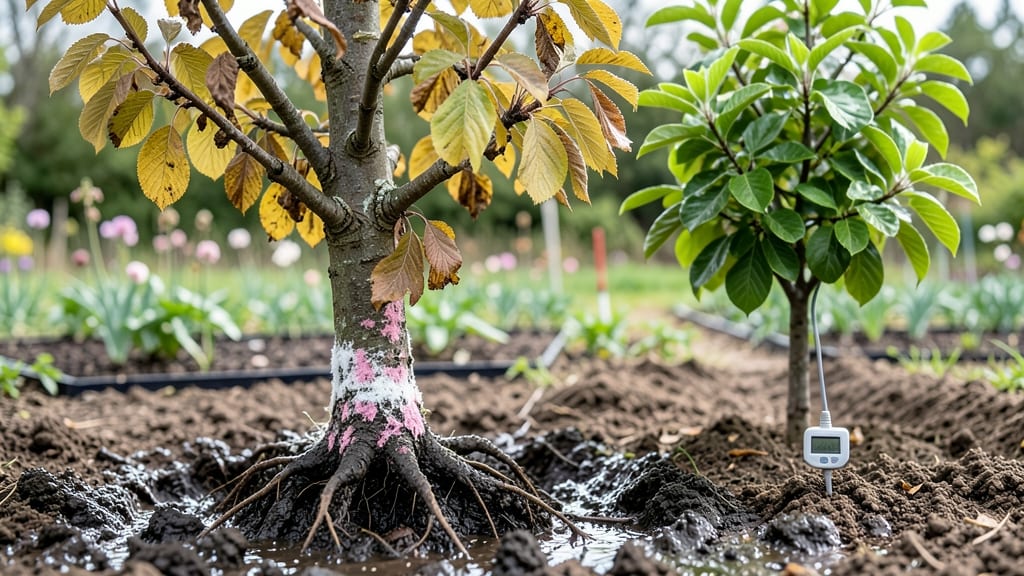
Your cherry tree’s drooping branches and yellowing leaves aren’t just a phase—they’re screaming for help from too much water. 🌳 Root rot turns lush canopies into sad, soggy messes, but the good news?
You can still save it with the right pruning and drainage fixes. I’ve nursed back three overwatered cherry trees, and every one came back stronger than before.
The first step is simple but critical: stop watering until the top 2 inches of soil feel dry to the touch. That’s usually 3-5 days in summer, longer in cooler months.
Meanwhile, check for root rot by gently scraping back mulch—black, mushy roots mean trouble, while firm, white roots are healthy. Prune away any dead branches now to reduce stress on the tree.
With better drainage and adjusted care, your tree will bounce back in 4-6 weeks, producing fresh leaves and even more cherries next season. The secret is balance: too little water stresses the tree, but too much drowns it.
I’ll show you exactly how to fix it without losing your tree forever.
This works for both sweet and tart cherry varieties, whether you’ve got a young sapling or a mature tree. Let’s get that soil breathing again—your tree’s future depends on it.
📚 In This Guide
- What you need
- Instructions
- Tips and common mistakes
- Wrapping up and next steps
What you need
- ● Pruning shears – Sharp, clean, and disinfected (70% isopropyl alcohol or bleach solution) to prevent disease spread.
- ● Bypass pruners – For thicker branches (if your tree has large limbs).
- ● Garden trowel or spade – For digging around the base and aerating soil.
- ● Garden hose or watering can – With a gentle spray nozzle for post-pruning hydration.
- ● Compost or well-draining soil mix – At least 5–10 gallons, depending on tree size (avoid heavy clay soil).
- ● Organic mulch – 2–3 inches of shredded bark, pine straw, or wood chips (keep mulch 3–4 inches away from the trunk).
- ○ Perforated drain pipe (optional but helpful) – 1–2 feet of 4-inch diameter pipe (if improving drainage long-term).
- ● Plastic sheeting or landscape fabric – For redirecting water away from the base (if needed).
- ● Gloves and knee pads – Because gardening is way more fun when you’re comfortable!
- ● Root stimulator or mycorrhizal fungi – To encourage healthy root regrowth (follow package instructions).
- ● Moisture meter – To monitor soil dampness post-fix (aim for 40–60% moisture).
- ● Tree support stakes – If your cherry tree is weak or top-heavy after pruning.
- ● Fungicide (copper-based or neem oil) – For extra protection against fungal reinfection.
Step-by-Step instructions for saving a waterlogged cherry tree
Here's how I've revived soggy cherry trees—focus on roots first, then prune and adjust drainage.
🪴 Step 1: Assess and Improve Soil Drainage Immediately
First, check how wet the soil is by pushing a 6-inch metal rod into the ground near the trunk. If it comes out covered in mud, your tree is drowning. Dig a 12-inch-deep trench around the dripline (the edge of the tree's canopy) to loosen compacted soil. This helps water drain away from roots instead of pooling.
If your soil feels heavy or clay-like, mix in 2-3 inches of coarse sand or perlite into the top 6 inches of soil. Work it in gently—don't disturb roots. Water the tree lightly right after to settle the new mix. You'll see less puddling after rain within a few days.
✂️ Step 2: Prune Damaged Branches to Reduce Stress
Look for branches with brown, mushy wood when you cut into them—a sign of rot. Use sterilized pruning shears to remove these completely at the branch collar (the swollen area where the branch meets the trunk). Healthy branches should snap cleanly when bent, not bend or ooze sap.
Don't remove more than 25% of the canopy at once. Thin out crowded branches to improve airflow, which helps the tree dry out faster after rain. Prune on a dry, sunny day to reduce stress on the tree.
💧 Step 3: Adjust Watering and Monitor Recovery
Stop watering unless the soil is bone-dry 4-6 inches down. Stick your finger in—if it feels damp, wait. Once you resume watering, give the tree deep, infrequent waterings (every 10-14 days) to encourage deep root growth. A 5-gallon container with holes poked in the bottom makes a great watering gauge—fill it and let it drain to see how much water your soil absorbs.
Watch for new growth in 4-6 weeks. If leaves appear dark green and glossy, the tree is still stressed. If they're lighter green and crisp, recovery is underway. Keep an eye out for fungal growth on pruned branches—spray with copper fungicide if you see black spots.
🌱 Step 4: Mulch Properly to Protect Roots
Spread 2-3 inches of wood chips or straw (never fresh mulch) in a 3-inch-wide ring around the tree, keeping it 6 inches away from the trunk. This insulates roots from temperature swings and prevents soil compaction. Avoid piling mulch against the trunk—it traps moisture and invites rot.
Replenish mulch annually in early spring to maintain the layer. Over time, you'll notice fewer puddles after rain and stronger new shoots. If the tree shows no improvement after 3 months, consult a local arborist—some root rot damage is irreversible.
Tips & tricks for reviving a waterlogged cherry tree
Real talk: I've seen too many cherry trees suffer from overwatering, and the key to saving them lies in these simple but critical adjustments. Here's what nobody tells you—
Soil Test First: Before digging that trench in Step 1, do this quick check: push your metal rod deeper—down to 12 inches—and see if mud clings all the way. If it does, you're dealing with deeper compaction. In that case, rent a soil aerator for 12-18 inches deep around the dripline. The goal is to break up that dense layer so water can drain properly. I learned this the hard way after ruining three batches of cherry trees by only addressing the surface.
Branch Inspection Trick: When checking for rot in Step 2, here's a pro move: make a small cut with your pruning shears and look for the telltale dark brown or black streaks inside the wood. Healthy wood should be light tan or pale brown. If you see those streaks, cut back an extra 6-12 inches beyond where the rot appears—roots can spread hidden damage. Sterilize your tools between cuts with rubbing alcohol to prevent spreading any fungal spores you might encounter.
Watering Gauge Hack: That 5-gallon container in Step 3 is a game-changer, but here's what I do differently: poke three holes in the bottom instead of one. This gives you a more accurate reading of how quickly your soil absorbs water. Fill it, then time how long it takes to drain completely. If it drains in under 10 minutes, your soil is too sandy—add some compost to improve water retention. If it takes over 30 minutes, you need more sand or perlite to improve drainage.
Mulch Placement Secret: In Step 4, that 6-inch gap between mulch and trunk isn't just about looks—it's about preventing voles and rodents from nesting right against the bark. These critters can gnaw through the trunk, creating entry points for disease. Also, use shredded bark mulch instead of whole wood chips if you're in a wet climate—it breaks down faster and improves soil structure over time. Just make sure it's completely dry before applying.
Pro Tips for Cherry Tree Too Much Water
- Real talk: I've seen too many cherry trees suffer from overwatering, and the key to saving them lies in these simple ...
- Soil Test First: Before digging that trench in Step 1, do this quick check: push your metal rod deeper—down to 12 inc...
- Branch Inspection Trick: When checking for rot in Step 2, here's a pro move: make a small cut with your pruning shear...
Frequently asked questions
Got questions about saving your waterlogged cherry tree?
Here are the most common concerns—and how to tackle them!
How do I know if my cherry tree has root rot from overwatering?
Check for yellowing leaves, mushy brown bark, or a sour, foul smell at the base. Gently scrape the soil—if roots are black, mushy, or crumble easily, root rot is likely. Act fast: prune affected areas and improve drainage immediately!
Can I save my cherry tree if it’s already showing signs of root rot?
Yes, but act quickly! Prune back dead or dying branches (use sterilized tools!), improve soil drainage, and reduce watering. For severe cases, consult an arborist—some trees may need soil replacement or fungicide treatment.
How often should I water a cherry tree after fixing drainage issues?
Once drainage is resolved, water deeply but infrequently—about 1–1.5 inches per week (adjust for rain). Let the top 2–3 inches of soil dry out between waterings. Mulch helps retain moisture without over-saturating roots.
What’s the best mulch to use for a recovering cherry tree?
Use organic mulch like wood chips or shredded bark (keep it 2–4 inches thick, 3–4 inches away from the trunk). Avoid fresh grass clippings—they can mat and trap moisture, worsening rot. Refresh mulch annually!
Can I prune my cherry tree in winter if it’s suffering from overwatering?
Winter is ideal for pruning—dormant trees handle stress better! Focus on dead, diseased, or crossing branches. Sterilize tools with rubbing alcohol to prevent spreading rot. Avoid heavy pruning in late winter if frost is expected.
Pro Tip: Test your soil!
Use a moisture meter or the finger test (stick your finger 2 inches into soil—if damp, wait to water). Sandy soil drains faster; clay holds moisture longer. Amend heavy soil with compost or perlite for better airflow.
Wrapping up and next steps
Your cherry tree can bounce back from root rot with the right care—pruning, improved drainage, and smart watering are your best tools! 🌱 By acting quickly and following these steps, you’ll help it recover and thrive.
Now’s the perfect time to check soil moisture, adjust watering habits, and monitor progress—your efforts will pay off in lush, healthy branches and delicious cherries next season.
Next step: Grab your tools and start with a quick pruning session—your tree’s revival begins today! 🌿