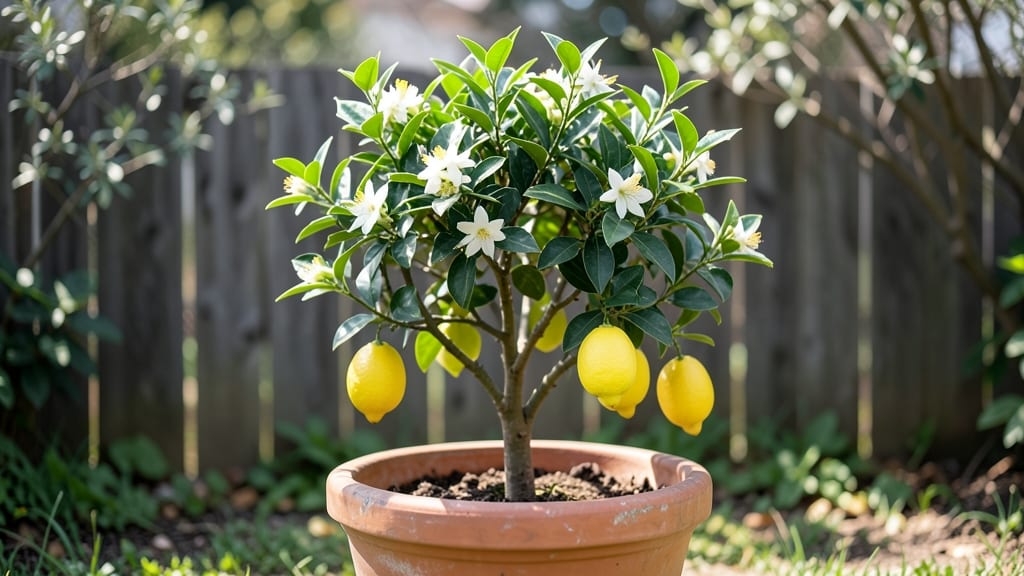
A dwarf lemon tree’s size at maturity can turn your patio into a citrus grove—or leave you with a cramped, overgrown mess.
Picture this: a 6-foot tree packed into a 15-gallon pot, its branches scraping your porch ceiling, while your Meyer lemons stay the size of marbles. That’s the difference between knowing your variety’s growth limits and guessing.
Some stay compact enough for a kitchen counter, while others stretch toward the sky, and picking the wrong one means wasted space or stunted fruit.
Below, I break down the exact height and spread ranges for the most popular dwarf varieties—like the Meyer and Improved Meyer—plus how container size, pruning, and sunlight play into whether your tree stays small or shoots up unexpectedly.
You’ll also learn the one pruning trick that keeps my 4-foot tree producing bushels of fruit without crowding my balcony.
Ready to pick the perfect variety for your space? Let’s dive into the numbers—and how to keep your dwarf lemon tree 🍋 from outgrowing its welcome.
4 ftto8 ft
0 ft
3 ft
6 ft
9 ft
12 ft
🌱
Dwarf Tree
Dwarf lemon tree size limits by popular variety (with height & spread data)
Choosing the right dwarf lemon tree variety is essential for small gardens or patio spaces. Some varieties stay compact at just 3 feet tall, while others can grow up to 6 feet with proper care.
The key difference lies in their genetic growth habits and how they respond to pruning and container size. I’ve grown several varieties myself, and the Meyer lemon and Improved Meyer are my top picks for beginners due to their manageable size and sweet fruit.
Container size plays a huge role in controlling height and spread. A 5-gallon pot works for the smallest varieties, but larger dwarf trees may need 15-20 gallons to thrive.
Root-bound trees often show signs like yellowing leaves or stunted growth, so upgrading your container can make a dramatic difference in fruit production. Let’s break down the most popular dwarf lemon tree varieties and their exact size limits.
| Variety |
Mature Height (ft) |
Mature Spread (ft) |
Ideal Container Size |
Fruit Size |
Cold Hardiness |
| Meyer Lemon |
4-6 ft |
3-4 ft |
15-20 gallons |
Medium (2-3 in) |
20-25°F |
| Improved Meyer |
5-7 ft |
4-5 ft |
20-25 gallons |
Large (3-4 in) |
20-25°F |
| Eureka Dwarf |
6-8 ft |
5-6 ft |
25-30 gallons |
Small (1.5-2 in) |
15-20°F |
| Ponderosa Lemon |
6-10 ft |
6-8 ft |
30+ gallons |
Very Large (4-5 in) |
15-20°F |
| Lisbon Lemon |
5-7 ft |
4-5 ft |
20-25 gallons |
Medium (2-3 in) |
20-25°F |
| Four Seasons Lemon |
4-6 ft |
3-4 ft |
15-20 gallons |
Small (1.5-2 in) |
20-25°F |
| Villafranca Lemon |
6-8 ft |
5-6 ft |
25-30 gallons |
Medium (2-3 in) |
How container size affects dwarf lemon tree growth (and when to upgrade)
Your dwarf lemon tree thrives in containers, but the right pot size directly impacts its growth rate and fruit production. A container that's too small restricts root development, while one that's too large can cause soil moisture issues.
Understanding this balance helps you avoid stunted growth or wasted space.
Most dwarf lemon varieties like Meyer lemons or Improved Meyer mature between 4-6 feet tall, but their container needs change as they grow. A 5-gallon pot works for young trees, but by year 3, you may need 15+ gallons to support full-size fruit production.
⚠️ callout warning
⚠️ Root Bound = Stunted Growth
Your dwarf lemon tree is root bound if you see:
- Roots circling the pot's bottom
- Yellowing leaves despite regular watering
- Reduced flowering or tiny fruit
- Soil drying too quickly (even with frequent watering)
Action: Upgrade to a pot 2-4 inches wider and deeper than the current one. Use fresh, well-draining soil with organic matter.
When repotting, choose a container with drainage holes to prevent root rot. Terracotta pots help regulate moisture, but fabric grow bags are ideal for air-pruning roots naturally. Always repot in spring before new growth begins to minimize stress.
For Meyer lemons, aim for a minimum 15-gallon pot by year 3. If your tree is 6+ feet tall but still in a 5-gallon pot, it’s time to upgrade. Larger containers hold more nutrient-rich soil, supporting bigger harvests and healthier foliage.
After repotting, place your tree in bright, indirect light for 1-2 weeks to reduce shock. Avoid fertilizing for 4-6 weeks to let roots establish. Prune any damaged roots during repotting to encourage new, healthy growth.
Remember, a larger container doesn’t mean bigger fruit instantly—it’s about giving roots the space to explore and absorb nutrients. With the right pot, your dwarf lemon tree will reward you with abundant, flavorful lemons for years. 🍋
★★★★★4.8(8 reviews)
|