
Pruning
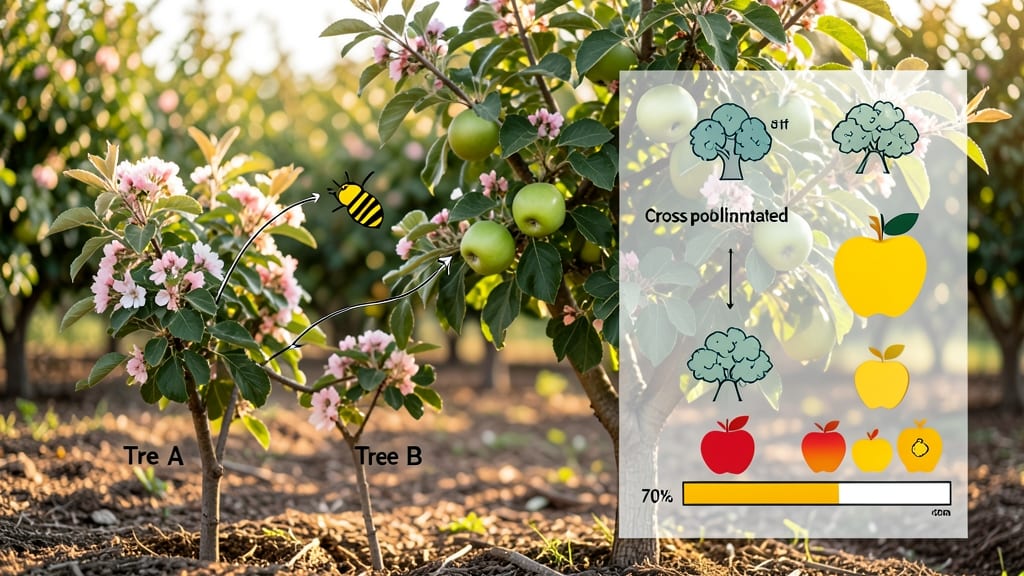
A Granny Smith apple tree pollination chart shows that pairing it with varieties like Golden Delicious, Gala, or Fuji creates successful cross-pollination for fruit production. These compatible partners must bloom within 50 feet during the same spring season, with timing being critical for optimal results.
A Granny Smith apple tree thrives when planted alongside other apple varieties that bloom simultaneously. 🌳 The key is matching bloom periods—most compatible partners like Braeburn or Honeycrisp share similar flowering windows, ensuring bees can efficiently transfer pollen.
I've found that urban gardeners often struggle with space, so choosing dwarf varieties like Fuji can solve this while maintaining pollination success. Local climate also plays a role: colder regions may need earlier bloomers to avoid frost damage during flowering.
For maximum yield, plant at least two different varieties within 50 feet of each other. This distance allows bees to visit multiple trees during their foraging trips. 🐝 If you're working with limited space, consider planting a crabapple tree nearby—its early blooms can attract pollinators before your main varieties flower.
Always check your local USDA hardiness zone for the most accurate bloom timing information.
💡 In This Article
- Best Cross-Pollinating Apple Varieties for Granny Smith Trees
- How to Plan Granny Smith Pollination for Maximum Yield
Best cross-pollinating apple varieties for Granny Smith trees
Granny Smith apple trees are self-unfruitful, meaning they need another apple variety blooming nearby to produce fruit. This is where the pollination chart comes into play—it maps out varieties that share similar bloom times and geographic compatibility.
For example, Golden Delicious blooms within a 3-5 day window of Granny Smith in most climates, creating an ideal pairing. The secret lies in their pollination group classification: both belong to Group 1, ensuring their flowers open and release pollen simultaneously for bees to transfer.
Let's look at the science: apple flowers contain both male and female parts, but pollen must come from a different tree for fertilization. 🌸 The most effective partners for Granny Smith include Braeburn (Group 5), Honeycrisp (Group 3), and Fuji (Group 3)—all of which bloom within a 7-day window of Granny Smith in USDA Zone 5-8.
What's fascinating is how temperature affects bloom timing: a 10°F difference in average spring temperatures can shift bloom periods by up to 2 weeks. This is why regional charts are essential—what works in California's mild climate may fail in New York's frost-prone springs.
For urban gardeners with limited space, consider dwarf varieties like Gala or Ambrosia, which bloom alongside Granny Smith while staying compact. The key measurement here is 50 feet—this distance ensures bees can efficiently visit multiple trees during their 30-minute foraging flights**.
In smaller spaces, planting a crabapple tree (like 'Centennial') can serve as a pollinator magnet, attracting bees that will then visit your Granny Smith.
Here's what most people overlook: not all compatible varieties produce equally well together. For instance, while McIntosh (Group 2) blooms with Granny Smith, its fruit quality may suffer when cross-pollinated with Granny Smith's tart profile.
The best pairings create balanced flavor development—think of it like a culinary partnership where both varieties complement each other's strengths. 🍏 For example, pairing Granny Smith with Pink Lady (Group 3) creates a sweet-tart balance that enhances both varieties' natural qualities.
Geographic zones also dictate success. In Zone 4, early bloomers like Cortland work better than late varieties, while Zone 9 gardeners can extend the season with Anna or Dorsett Golden.
Always check your local agricultural extension service for microclimate-specific recommendations—they often have detailed bloom calendars showing exact week-by-week timelines for your area.
Pro tip: When selecting varieties, consider fruit maturity dates too. Pairing Granny Smith (late September harvest) with Jonagold (Group 3) gives you a staggered harvest window. This not only maximizes pollination but also extends your fresh apple supply throughout fall.
The visual contrast of Granny Smith's bright green skin next to Jonagold's red-yellow blend also creates an appealing orchard display!