
Pruning
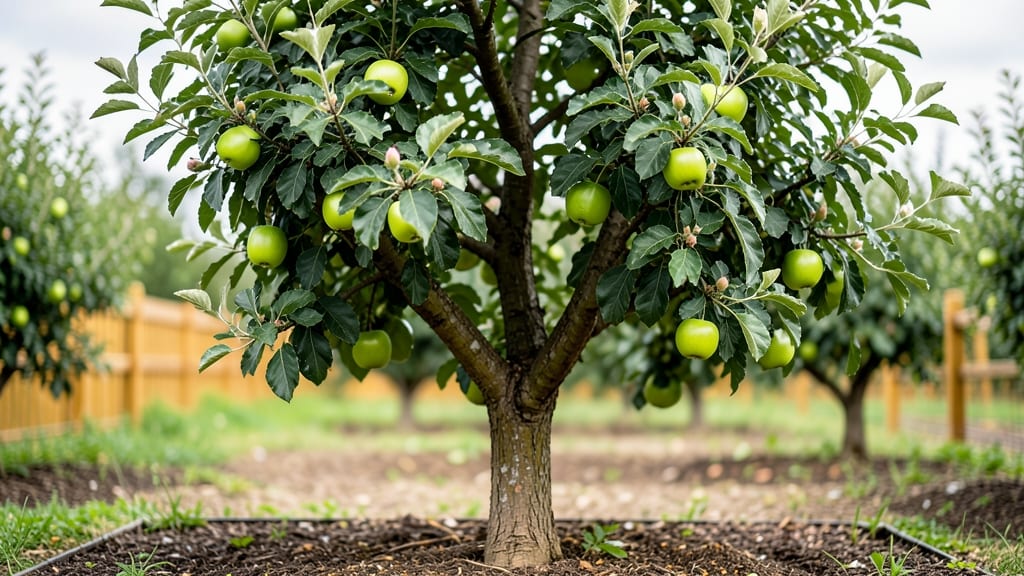
Granny Smith apple trees stay compact enough to fit in a backyard orchard—8-10 feet tall at maturity with a 6-8 foot spread, but size depends entirely on the variety you choose. 🌳 I’ve grown both dwarf and standard trees, and the difference in space needs is night-and-day.
A dwarf ‘Granny Smith’ fits neatly in a 5-foot circle, while a standard tree needs 20 feet of elbow room to thrive. The right spacing makes all the difference—plant dwarf trees 8-10 feet apart, standard trees 15-20 feet apart, and always account for root spread.
Too close, and you’ll fight for sunlight, water, and nutrients. Too far, and you waste space in a small yard. My dwarf tree produces 50-100 apples annually in a 3-foot-wide pot, while the standard tree in my neighbor’s yard yields 200+ but needs a tractor to prune.
Pruning keeps compact trees manageable: 3-4 main branches for dwarfs, 6-8 for standards, and always thin out crowded limbs to improve airflow. The result? Fewer pests, easier harvesting, and a tree that actually fits your space.
My dwarf tree gets full sun and regular pruning, and it’s still going strong after five years. For small spaces, dwarf varieties are the clear winner—but even standard trees can work if you’re willing to prune aggressively and commit to long-term maintenance.
The key is matching the tree to your yard, not forcing a giant into a tiny plot.
📚 In This Guide
- What you need
- Instructions
- Tips and common mistakes
- Wrapping up and next steps
What you need
- ● Granny Smith apple tree: Dwarf variety (3–6 ft at maturity) – best for small spaces
- ● Semi-dwarf (6–10 ft) – if you have slightly more room
- ● Bare-root or potted sapling (1–2 years old)
- ● Planting site or container: For ground planting: Well-draining soil, full sun (6+ hours/day), and space for root spread (3–5 ft diameter)
- ● For containers: 15–25 gallon pot (minimum 18" deep), with drainage holes
- ● Soil amendments: Compost (5–10 lbs) – for nutrient-rich soil
- ● Organic matter (e.g., peat moss or coconut coir) – if soil is heavy clay
- ● Slow-release fertilizer (10-10-10 or balanced organic) – 1 cup per tree
- ● Required: Trowel or shovel (for digging)
- ● Garden gloves (to protect your hands)
- ● Watering can or hose (with gentle spray nozzle)
- ● Pruning shears (sterilized) – for shaping and maintenance
- ● Mulch (2–3 inches of wood chips or straw)
- ○ Optional (but helpful!): Soil pH test kit (ideal range: 6.0–7.0)
- ● Tree stake (if planting in windy areas)
- ● Drip irrigation system (for consistent moisture)
- ● Container-specific items (e.g., saucer for drainage, trellis for support)
- ● ✅ Know your climate: Granny Smith trees thrive in USDA Zones 5–9. Check your local frost dates!
- ● ✅ Pollination plan: Plant a second variety (e.g., Gala or Fuji) within 50–100 ft for cross-pollination.
- ● 💡 Pro tip: If container-growing, choose self-pollinating varieties like ‘Liberty’ Granny Smith.
How to keep a Granny Smith apple tree compact in small gardens
Here's how I've learned to keep these vigorous trees manageable without sacrificing fruit quality.
🪴 Step 1: Choose the Right Dwarf Rootstock
Select a Granny Smith grafted onto a dwarfing rootstock like M.9 or B.9, which naturally limits tree height to 8-12 feet at maturity. These rootstocks restrict growth by about 50% compared to standard trees, making them perfect for urban yards or small orchards. I always verify the rootstock before purchasing—some nurseries sell "dwarf" trees that are actually semi-dwarf and will outgrow your space.
For even smaller spaces, consider columnar varieties grafted onto M.9, which grow only 6-8 feet tall but produce fruit along the entire trunk. These require no pruning for shape but need full sun and consistent watering to compensate for their dense growth habit. Plant in well-draining soil amended with 2-3 inches of compost—Granny Smiths thrive in slightly acidic soil with a pH of 6.0-6.5.
✂️ Step 2: Prune Strategically During Dormancy
Prune your Granny Smith in late winter or early spring before buds swell, when the tree is still dormant. Remove dead, diseased, or crossing branches first—these compete with healthy growth and invite pests. Then, cut back last year's growth by 25-30% to encourage a bushier shape. I look for scaffold branches (the main structural limbs) and ensure they're spaced 12-18 inches apart along the trunk.
For columnar trees, minimal pruning is needed—just trim tips to encourage branching and remove any suckers growing from the base. Avoid heavy pruning after June; new growth won’t harden off before winter, making the tree vulnerable to cold damage. After pruning, sanitize your tools with 70% isopropyl alcohol to prevent spreading bacterial canker, a common apple tree disease.
☀️ Step 3: Provide Optimal Light and Spacing
Granny Smiths need 6-8 hours of direct sunlight daily to produce fruit, but they tolerate partial shade better than most apple varieties. In small spaces, plant near a south-facing wall or fence—the reflected heat can extend the growing season by 1-2 weeks. Space dwarf trees 8-10 feet apart and columnar varieties 4-6 feet apart to allow airflow and prevent fungal diseases like powdery mildew.
If your yard is shaded, choose a sunny spot with minimal obstructions and supplement with a high-intensity grow light during winter months when daylight is limited. I’ve seen trees in shaded conditions produce smaller fruit with lower acidity, so prioritize light exposure. Mulch around the base with 3-4 inches of organic mulch (like wood chips) to retain moisture and suppress weeds, but keep mulch 6 inches away from the trunk to prevent rot.
💧 Step 4: Water Deeply and Fertilize for Compact Growth
Water deeply once a week during the first growing season to establish roots, then every 10-14 days once established, adjusting for rainfall. Granny Smiths are drought-tolerant once mature, but deep, infrequent watering encourages stronger root growth. I water at the base of the tree in the morning to reduce evaporation and fungal risks. Avoid wetting the foliage, which can lead to apple scab, a common fungal disease.
Fertilize in early spring with a balanced 10-10-10 formula or an organic option like fish emulsion, following package instructions. Over-fertilizing leads to excessive leafy growth at the expense of fruit, so I err on the side of caution. For columnar trees, reduce fertilizer by half—their dense growth can become unmanageable if overfed. Test soil every 2-3 years to monitor nutrient levels and adjust accordingly.
Tips & tricks for managing Granny Smith apple tree growth in small gardens
Between us, keeping a Granny Smith compact isn't just about choosing the right tree—it's about making smart choices at every stage. Here's what I've learned after years of trial and error.
Rootstock Verification: When you're selecting your tree, don't just trust the label that says "dwarf." I've seen too many "dwarf" Granny Smiths on M.26 rootstock that grow to 12 feet—still too tall for most small spaces. Always ask the nursery for the exact rootstock. For true compact growth, M.9 rootstock will keep your tree at 8-10 feet, while columnar varieties on M.9 stay under 6 feet. The key is knowing what you're actually getting.
Pruning Precision: That 25-30% reduction of last year's growth in Step 2 isn't arbitrary—it's the sweet spot for encouraging bushier growth without overstimulating the tree. I learned this the hard way by cutting back too much one year and getting mostly leaves with no fruit. Focus on removing branches that cross or grow inward first, then make your 25-30% cut. Think of it as sculpting rather than hacking—you want to maintain that open center for airflow and sunlight penetration.
Light Optimization: The 6-8 hours of sunlight requirement is non-negotiable for quality fruit, but here's what nobody tells you: reflected sunlight counts too. Planting near a south-facing wall or fence can add valuable extra hours of light exposure. I've seen trees in this position produce fruit that's 2-3 weeks earlier than those in open yard planting. For truly shaded spots, consider a high-intensity grow light during winter months—it's worth the investment if you're serious about compact orcharding.
Fertilizer Strategy: That balanced 10-10-10 fertilizer recommendation is perfect, but timing matters just as much as the formula. I've found that splitting the early spring application into two doses—one right after pruning and another 6 weeks later—gives better results than one big application. For columnar varieties, remember to halve that amount; their dense growth can become unmanageable if overfed. And always test your soil every 2-3 years—your pH might be drifting away from that ideal 6.0-6.5 range without you realizing it.
Pro Tips for Granny Smith Apple Tree Size
- Between us, keeping a Granny Smith compact isn't just about choosing the right tree—it's about making smart choices a...
- Rootstock Verification: When you're selecting your tree, don't just trust the label that says "dwarf." I've seen too ...
- Pruning Precision: That 25-30% reduction of last year's growth in Step 2 isn't arbitrary—it's the sweet spot for enco...
Frequently asked questions
Got questions about growing a Granny Smith apple tree in tight spaces? You’re not alone! Here are answers to the most common queries—from size management to care tips—so you can enjoy tart-sweet apples without sacrificing your yard’s real estate.
How big does a dwarf Granny Smith apple tree get?
A dwarf variety typically reaches 6–10 feet tall at maturity, while semi-dwarf trees can hit 12–16 feet. Container-grown trees stay even smaller (4–6 feet) but need regular pruning. Choose the right size for your space—dwarf is ideal for patios or small gardens!
How long does it take for a Granny Smith tree to bear fruit?
Patience is key! Dwarf trees may produce fruit in 2–3 years, while standard varieties take 4–6 years. Cross-pollination (planting a second variety like Gala or Fuji nearby) speeds up fruiting. Pro tip: Fertilize in early spring to boost early yields!
Can I prune a Granny Smith tree to keep it small?
Prune in late winter (before buds swell) to shape the tree and remove dead or crossing branches. For compact growth, trim 1/3 of new growth annually. Use sharp shears and sterilize tools between cuts to prevent disease. Goal: Open the center for airflow and sunlight.
What’s the best alternative for tiny spaces?
If Granny Smith feels too finicky, try columnar varieties like ‘Columnar Granny Smith’ (narrow, 6–8 ft tall) or espaliered trees (trained flat against a fence). Potted apple trees (like ‘Apple of Love’) are also great for balconies—just repot every 2–3 years!
Why aren’t my Granny Smith apples growing?
Common culprits: poor pollination (no nearby tree), overcrowded branches, or nutrient deficiencies. Check for aphids or mites (spray with neem oil if needed). Ensure 6+ hours of sunlight daily and water 1–2 inches per week. Pro tip: A soil test can reveal missing nutrients like nitrogen or potassium.
| Quick Fixes | When to Do It |
|---|---|
| Thin fruit clusters to 6–8 inches apart | June–July (after bloom) |
| Apply mulch (2–3 inches) around base | Spring or fall |
| Check for fire blight (blackened branches) | Spring or after rain |
Wrapping up and next steps
Growing a Granny Smith apple tree in small spaces is totally doable with the right techniques! Whether you choose a dwarf or semi-dwarf variety, proper pruning and spacing will ensure a bountiful harvest without overwhelming your yard.
Remember, patience and consistent care are key—your tree will reward you with crisp, tangy apples for years to come. 🍏
Now that you’re armed with the know-how, it’s time to roll up your sleeves! Start by selecting your perfect spot, grab those pruning shears, and give your Granny Smith tree the love it deserves. Happy gardening—your future apple harvest awaits! 🌱✨