
Pruning
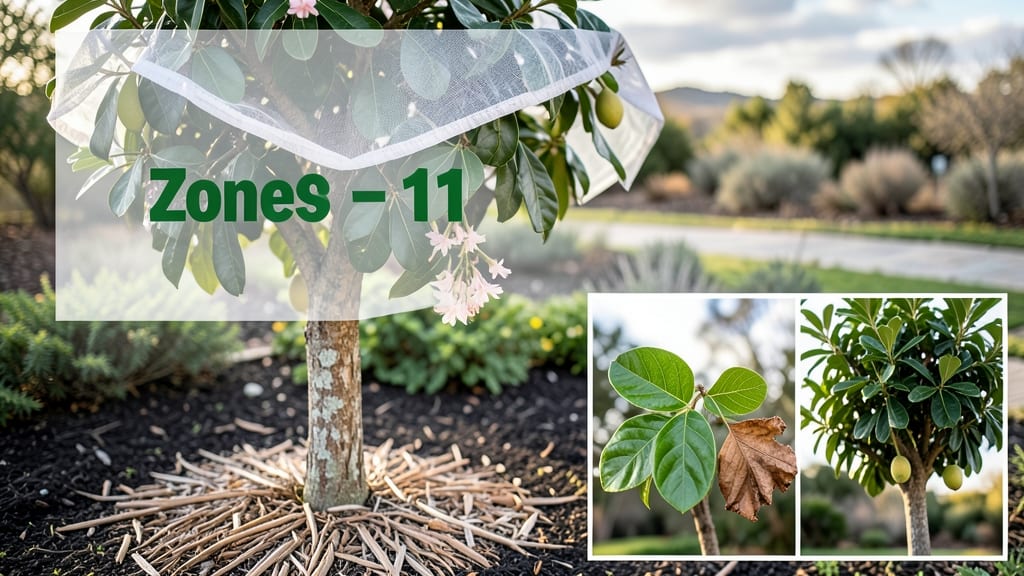
Guava tree cold hardiness depends on USDA Zones 9-11, where young trees require protection below 32°F and mature trees can tolerate brief dips to 28°F. Prolonged freezing causes leaf browning and bark cracking, often killing the tree. Mulching and windbreaks slightly improve cold resilience.
Guava trees are tropical by nature, which means their cold hardiness is limited compared to temperate plants. 🌱 The key difference between young and mature trees lies in their root systems—shallow roots in younger trees make them far more vulnerable to frost damage.
Even mature trees can't handle sustained cold below 28°F, though they may survive brief dips with proper protection. I've seen growers in Zone 8 successfully cultivate guavas using microclimates near south-facing walls or in large containers that can be moved indoors during winter.
One common misconception is that guavas can handle cold like citrus trees. While both are tropical, guavas are actually more sensitive to cold stress because their leaves don't have the same protective waxy coating.
When temperatures drop below freezing, the cellular damage becomes visible within 24-48 hours as brown patches on leaves or cracked bark. The good news? With strategic planning—like using frost cloths or even temporary greenhouses—you can push their limits by a few degrees.
💡 In This Article
- Understanding Guava Tree Cold Damage Mechanics
- Protecting Guava Trees in Cold Climates: Step-by-Step Strategies
Understanding guava tree cold damage mechanics
Guava trees suffer cold damage through a process called cytoplasmic freezing, where ice crystals form within plant cells rather than between them. This occurs at 32°F for young trees and 28°F for mature ones, but the real damage threshold is actually 24°F—where cellular membranes rupture permanently.
The leaves, being thin and less insulated, show the first signs: their waxy cuticle cracks, allowing moisture loss and bacterial invasion through open stomata.
The root system plays a critical role in vulnerability. Young trees have shallow roots (12-18 inches deep) that freeze solid when soil temperatures drop below 35°F, cutting off water and nutrient supply.
Mature trees with deeper roots (3-5 feet) can survive brief cold snaps because their root crowns remain slightly warmer. 🌡️ What's fascinating is how guavas lack true dormancy—they continue metabolic activity even in winter, making them more susceptible than deciduous trees that enter a protective rest state.
Frost (temperatures around 32°F) causes superficial damage like leaf browning, while prolonged cold (28°F or lower) triggers systemic shock. The bark, normally smooth and greenish-brown, develops vertical cracks that expose the vulnerable cambium layer underneath.
I've observed that guavas grown in containers freeze faster because their root balls cool more rapidly than in-ground plants—this is why container cultivation requires extra insulation.
Water content in the leaves also determines damage severity. Guavas have 75-80% moisture in their foliage, which expands when freezing, rupturing cell walls. This explains why overhead watering before a frost is disastrous—it increases the ice crystal formation rate.
The good news? Proper irrigation management can reduce leaf moisture slightly, giving cells a tiny buffer against freezing.
One often-overlooked factor is wind chill. While the thermometer might read 30°F, wind can make it feel like 20°F at tree height, accelerating damage.
This is why windbreaks (like bamboo screens or evergreen hedges) are so effective—they reduce air movement by 40-50%, creating a microclimate that's 3-5°F warmer near the tree.
Root insulation is equally critical. A 4-6 inch layer of organic mulch (straw or wood chips) maintains soil temperatures 5-10°F warmer than bare ground. The secret lies in the mulch's air pockets, which act as insulation—similar to how winter jackets trap body heat.
Without this protection, roots freeze solid within 24 hours of sustained cold.