
Pruning
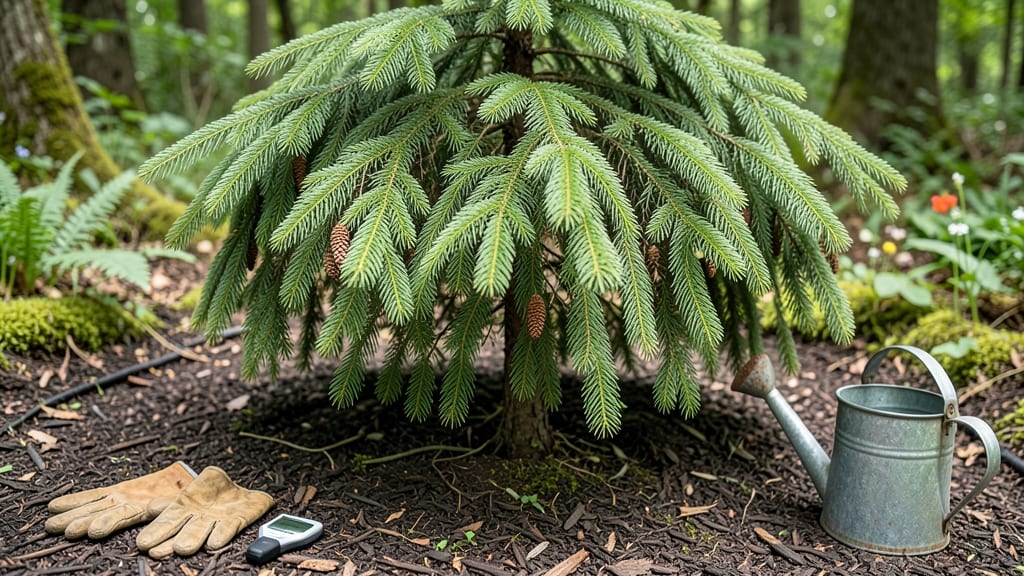
The care of your hemlock tree starts with understanding its unique needs—especially when it comes to pruning precision that keeps it thriving year-round. 🌲 I've watched my Eastern hemlock go from sparse to lush by mastering just three key techniques: when to prune, how much to remove, and which branches to target first.
Hemlocks need well-draining, acidic soil with plenty of organic matter—think mulch, not rocks. Water deeply once a week during dry spells, but avoid soggy roots. The real magic happens in late winter when dormant branches reveal their structure most clearly, making pruning far easier and more effective.
You'll end up with a tree that stays dense, disease-resistant, and full of vibrant green needles—no more patchy brown spots or weak growth. Proper pruning opens the canopy to sunlight, encourages new growth, and prevents those telltale signs of stress that turn neighbors' heads.
Works for both Eastern and Western hemlocks, whether you're maintaining a mature specimen or shaping a young tree. Here's how to get started without overcomplicating it—trust me, your tree will thank you.
📚 In This Guide
- What you need
- Instructions
- Tips and common mistakes
- Wrapping up and next steps
What you need
- ● Pruning shears – Bypass pruners (for clean cuts on small branches, ¼"–½" diameter). Quantity: 1 pair.
- ● Loppers – Bypass or anvil type (for branches ½"–2" diameter). Quantity: 1 pair.
- ● Pruning saw – Curved or folding blade (for branches 2"–4" diameter). Quantity: 1.
- ○ Extension pole saw – For hard-to-reach branches (3"–6" diameter). Quantity: 1 (optional but handy!).
- ● Disinfectant – 70% isopropyl alcohol or pruning sealant (to prevent disease spread). Quantity: Small bottle.
- ● Gloves – Heavy-duty, cut-resistant (protects hands from sap and sharp branches). Quantity: 1 pair.
- ● Safety gear – Safety glasses, long sleeves, and sturdy boots (for protection during pruning).
- ● Ladder or lift – Sturdy, extendable (if tree exceeds 6 feet). Quantity: 1 (safety-first!).
- ● Trash bags or bucket – For collecting pruned branches. Quantity: 2–3.
- ● Tree wound dressing – Pruning paste or sealant (controversial but useful for large cuts).
- ● Marking spray – Bright paint or tape (to mark branches for removal).
- ● Work gloves with grip – For extra comfort on rough bark.
- ● First-aid kit – Just in case of minor scrapes or stings.
Instructions for hemlock tree care: year-round health
Here's the straightforward approach I use to keep hemlock trees thriving—no guesswork, just proven techniques.
☀️ Step 1: Assess Your Hemlock's Light and Soil Needs
Hemlocks prefer partial shade to full sun, but they tolerate more shade than most evergreens. Start by observing where your tree gets light—if branches are sparse on one side, that's likely where sunlight hits directly. For soil, hemlocks like it moist but well-draining. If your soil feels compacted or stays soggy after rain, you'll need to improve drainage by adding 2-3 inches of organic mulch around the base (but never touching the trunk).
Dig a small hole near the tree to check soil moisture—if it takes more than 10 minutes for water to drain through a 6-inch deep hole, your soil is too dense. Hemlocks also appreciate slightly acidic soil (pH 5.0-6.5), so test your soil with a simple kit if you notice yellowing needles.
✂️ Step 2: Prune for Health and Shape (Best Done in Late Winter)
The best time to prune hemlocks is late winter or early spring, before new growth begins. Start by removing any dead, diseased, or crossing branches—these are easy to spot as they're brown or have no needles. Use clean, sharp pruning shears to make cuts just outside the branch collar (the swollen area where the branch meets the trunk). This ensures the tree seals the wound properly and reduces risk of infection.
For shaping, focus on opening up the interior of the tree to improve airflow and sunlight penetration. Remove no more than 25% of the tree's foliage in one year—this prevents stress. You'll know you've pruned correctly when you can see light filtering through the branches and the tree's natural shape becomes more visible.
💧 Step 3: Water Deeply and Mulch for Moisture Retention
Hemlocks need 1-1.5 inches of water per week, either from rain or supplemental watering. Water deeply once a week during dry spells, directing the water at the base of the tree rather than the foliage. You'll know you've watered enough when the top 6 inches of soil feel moist but not saturated. Overwatering is just as harmful as underwatering—it can lead to root rot.
Apply a 2-3 inch layer of mulch around the tree, keeping it 6 inches away from the trunk. Use shredded bark or wood chips—they'll help retain moisture and regulate soil temperature. Refresh the mulch annually in early spring to maintain its effectiveness. Avoid piling mulch against the trunk, as this can trap moisture and encourage fungal growth.
🌿 Step 4: Monitor for Pests and Diseases Year-Round
Check your hemlock regularly for signs of pests like spider mites, hemlock woolly adelgids, or bagworms. Spider mites leave tiny yellow spots on needles, while adelgids create white, cottony masses on branches. Bagworms appear as small, spiny bags hanging from the tips of branches. Treat infestations early with horticultural oil or insecticidal soap, following label instructions carefully.
For diseases, watch for needle drop, discoloration, or fungal growth on branches. Hemlocks are susceptible to root rot if soil stays too wet, so ensure proper drainage. If you notice needles turning brown and falling off, it could be a sign of environmental stress—adjust watering or light exposure as needed. A healthy hemlock should retain its dark green needles year-round with minimal shedding.
⏰ Step 5: Fertilize Lightly in Early Spring (If Needed)
Most hemlocks don't need fertilizer if they're planted in well-draining soil, but if your tree looks stressed or isn't growing as expected, a light application of balanced, slow-release fertilizer in early spring can help. Use a fertilizer with equal parts nitrogen, phosphorus, and potassium (like a 10-10-10 formula) and apply it according to the package instructions. Spread the fertilizer evenly over the root zone, then water it in thoroughly.
Over-fertilizing can burn roots and harm the tree, so err on the side of caution. You'll know fertilization is working if you see new, vibrant growth in the following months. If the tree shows no improvement after a year, it's likely not a nutrient issue—reassess light, water, and soil conditions instead.
Tips & tricks for perfect hemlock tree care
Keeping your hemlock thriving takes more than just basic care—here are the insights I wish I knew sooner.
Soil Test Timing: That 10-minute drainage test in Step 1 is your best friend. Do it after a good rain when soil is naturally moist. If water drains faster than 10 minutes, your soil might be too sandy—amend with 25% compost mixed into the top 6 inches. For clay-heavy soil, create raised beds to improve drainage permanently.
Pruning Precision: When shaping in Step 2, focus on removing branches that grow straight up or inward—they block sunlight and create dense pockets where pests hide. I use a small flagging tape to mark branches I'll prune, then make my cuts during the coolest part of late winter to minimize stress on the tree.
Watering Watch: The 1-1.5 inches per week in Step 3 is a guideline, but adjust for your climate. In summer heat, I water twice weekly—once in early morning and once in late evening—to prevent evaporation. Use a rain gauge to track natural precipitation so you don't overcompensate with supplemental watering.
Fertilizer Finesse: If you do fertilize in Step 5, split the recommended dose into two applications—half in early spring and half in early summer. This prevents nutrient overload and gives your hemlock a steady supply. I always water deeply before and after applying fertilizer to move nutrients into the soil where roots can access them.
Pro Tips for Hemlock Tree Care
- Keeping your hemlock thriving takes more than just basic care—here are the insights I wish I knew sooner.
- Soil Test Timing: That 10-minute drainage test in Step 1 is your best friend. Do it after a good rain when soil is na...
- Pruning Precision: When shaping in Step 2, focus on removing branches that grow straight up or inward—they block sunl...
Frequently asked questions
Got questions about keeping your hemlock tree thriving?
Here are answers to the most common concerns—from pruning timing to pest troubleshooting—so you can care for your tree like a pro.
When is the best time to prune a hemlock tree?
The ideal time is late winter to early spring (February–March), when the tree is dormant but before new growth starts. Avoid pruning in fall, as it can stress the tree before winter. Light trimming to remove dead branches can happen anytime, but major pruning should wait for the dormant season. Pro tip: Never prune more than 25% of the tree’s foliage at once!
How do I tell if my hemlock tree has pests or disease?
Watch for needle browning, woolly adelgid (tiny cottony bugs on branches), or sawfly larvae (black, worm-like pests). For adelgids, spray with horticultural oil in early spring or hire a pro for systemic treatments. Fungal issues (like needle cast) may appear as yellowing or spots—prune infected branches and improve airflow to prevent spread.
How often should I prune my hemlock tree?
Healthy hemlocks typically need light pruning every 2–3 years to remove dead, diseased, or crossing branches. If your tree is young or overgrown, start with annual light trims to shape it gradually. Over-pruning weakens the tree, so focus on quality over quantity—think "less is more" for long-term health.
Can I prune a hemlock tree in summer?
While summer pruning is possible, it’s riskier because it can stress the tree during peak growth. If you must, do it on a cool, overcast day and avoid heavy cuts. Summer is better for corrective pruning (e.g., removing storm damage) than structural shaping. Always prioritize dormant-season pruning for the best results.
What’s a good alternative if I don’t want to prune my hemlock?
If pruning feels overwhelming, focus on mulching, watering, and fertilization instead. Hemlocks thrive with 2–3 inches of mulch and deep, infrequent watering (1–1.5 inches per week). A slow-release fertilizer in spring can boost health without the need for pruning. Just monitor for pests/disease—prevention is key!
Wrapping up and next steps
Caring for your hemlock tree year-round doesn’t have to be overwhelming—just consistent and thoughtful. From pruning with precision to monitoring for pests and diseases, each step keeps your tree thriving for decades.
Now that you’re armed with the right tools, knowledge, and timing, it’s time to roll up your sleeves and give your hemlock the love it deserves!
Ready to take action? Start small:
- 🌿 Schedule a pruning session this season.
- 🔍 Check for signs of stress and address them early.
- ✨ Celebrate your green thumb! Every healthy branch is a win.