
Size
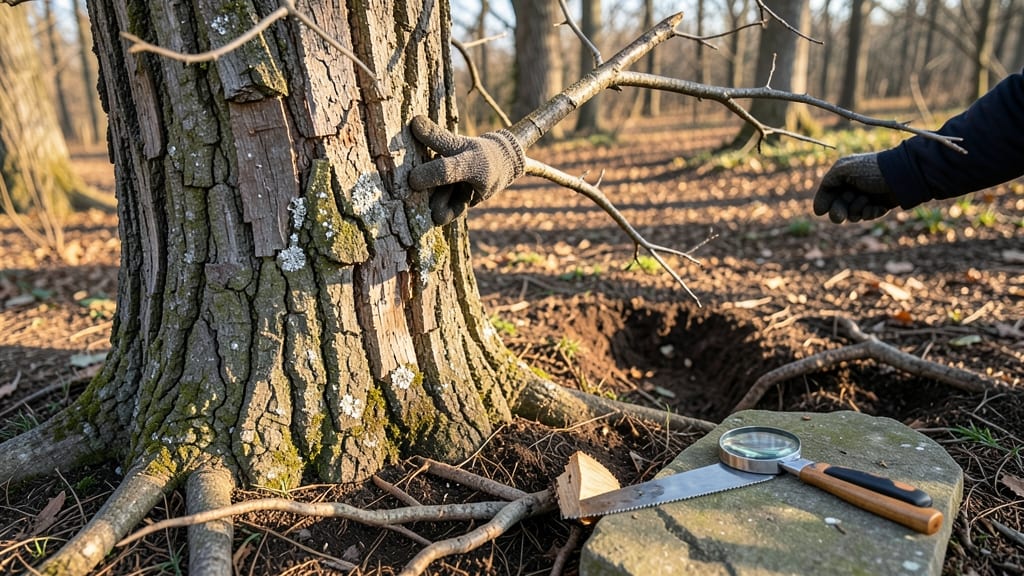
How can you tell when a tree is dead? That hollow sound when you tap a branch isn’t just eerie—it’s the first clue your tree might be dead. 🌳 I’ve watched neighbors panic over a single brown leaf only to discover their tree was just dormant, not dying. The truth? Most trees give away their health through subtle (or not-so-subtle) signs if you know what to look for.
Start with the bark: peeling, cracked, or oozing sap signals stress, but completely blackened, powdery bark means the tree’s beyond saving. Then test branches—if they snap like dry twigs instead of bending, that’s a red flag.
Even worse? No green leaves in spring after two years of bare branches. (Yes, even oaks and maples can fake dormancy for a season.)
Here’s the kicker: a tree can look dead but still be clinging to life—or vice versa. A single green shoot means there’s hope, but if the trunk is hollow or mushrooms sprout from the base, it’s time to call an arborist.
The good news? Catching these signs early can save your yard (and your sanity).
We’ll walk through five foolproof tests—from the scratch test to the sap check—and what to do next, whether that’s patient waiting or making tough calls. No guesswork, just answers.
Root Causes Of Tree Death
Trees don’t just wither away without reason—they succumb to death due to a mix of environmental stress, disease, and human activity. Understanding why a tree dies helps you prevent it from happening in the first place. Below are the most common culprits, explained in scientific detail with actionable insights.
Fungal infections and pathogens are among the most destructive forces in tree health. These microscopic invaders weaken a tree’s vascular system, blocking its ability to transport water and nutrients.
- How it happens:
- Fungi like Armillaria (honey mushroom) and Phytophthora thrive in moist, decaying wood. They enter through wounds (e.g., pruning cuts, storm damage) or root injuries.
- Bacterial infections (e.g., Xylella fastidiosa) clog xylem vessels, causing vascular wilt—a death sentence for many species like oaks and elms.
- Root rot (Phytophthora cinnamomi) thrives in waterlogged soil, suffocating roots and starving the tree of oxygen.
- Signs to watch for:
- Mushrooms or conks growing at the base or on the trunk.
- Sudden leaf scorch (brown edges) or premature leaf drop.
- Oozing sap or dark streaks under the bark.
- Prevention tips:
- ✨ Improve drainage—avoid planting trees in low-lying areas where water pools.
- 🔪 Prune properly—use clean, sterilized tools and make cuts at the branch collar to prevent fungal entry.
- 🌡️ Monitor soil health—test for pH imbalances or nutrient deficiencies that weaken defenses.
Trauma from storms, construction, or even human activity can deliver a fatal blow. Unlike slow-acting diseases, physical damage often causes instantaneous death or sets the stage for secondary infections.
- Common culprits:
- Storm damage: Lightning strikes carbonize the vascular tissue, while high winds snap trunks or tear bark, exposing the tree to pests and rot.
- Construction wounds: Root severing or girdling (removing a strip of bark around the trunk) cuts off nutrient flow, leading to girdling death within months.
- Animal activity: Beavers gnaw roots, while deer rub bark off young trees, creating entry points for disease.
- What to do:
- 🚨 Act fast—if a tree is uprooted or split, assess whether the cambium layer (the growth ring under the bark) is damaged. If it’s severed, the tree is likely doomed.
- 🛠️ Stabilize wounds—use tree wound paint or pruning sealant only on large wounds (small cuts should be left to heal naturally).
- 🌿 Support recovery—mulch heavily around the base to protect roots and water deeply to encourage regrowth.
Trees are resilient, but extreme or prolonged stress—like drought, heatwaves, or soil compaction—can push them past their limits. Unlike diseases, environmental factors often don’t kill immediately but weaken the tree over time.
| Stress Factor | How It Kills | Red Flags |
|---|---|---|
| Drought | Lack of water causes xylem cavitation—air bubbles form in the tree’s plumbing, blocking water flow. Leaves wilt, then die. | Brittle, curling leaves; no new growth in spring; bark splitting from dehydration. |
| Heat Stress | High temperatures denature enzymes in leaves, causing sun scorch. Roots may also overheat in compacted soil. | White or brown patches on leaves; premature leaf drop even with adequate water. |
| Soil Compaction | Heavy foot traffic or machinery crushes roots, reducing oxygen and water uptake. Compacted soil also traps water, leading to root rot. | Stunted growth; mushrooms sprouting at the base (sign of rot); yellowing leaves despite irrigation. |
Actionable fixes:
- 💡 Water deeply but infrequently—encourage deep root growth (1–2 inches per week in dry climates).
- 🌡️ Mulch correctly—use 3–4 inches of organic mulch (wood chips, bark) but keep it away from the trunk to prevent rot.
- 🔨 Aerate compacted soil—use a manual aerator or hire a professional to relieve pressure on roots.
Insects and borers may seem harmless, but they devour trees from the inside out. Some, like the emerald ash borer, can kill an entire species in a region within a decade.
- Notorious pests:
- Bark beetles (e.g., Dendroctonus): Females lay eggs under the bark, and their larvae tunnel through the phloem, disrupting nutrient transport.
- Sap-sucking insects (e.g., spider mites, scale insects): They weaken leaves by draining sap, reducing the tree’s ability to photosynthesize.
- Termites: While they prefer wood structures, some species attack living trees, especially those already stressed by drought.
- Tell-tale signs:
- ✨ Sawdust-like frass (borer droppings) at the base of the trunk or in cracks.
- 🕷️ Webbing or sticky residue (honeydew) on leaves from sap-suckers.
- 🌳 Sudden dieback—branches or entire sections of the tree turn brown and crispy overnight.
- Defense strategies:
- 🔍 Inspect regularly—look for entry holes (1/16"–1/8" diameter) or exit holes
Revive or Remove Dead Trees
Now that you’ve identified why your tree might be struggling or dead, it’s time to take action. The solution depends on the root cause—literally and figuratively. Below, we’ll break down practical steps to either nurse a dying tree back to health or safely remove it to protect your property.
Prevention tips are included to keep future trees thriving!
🔥 Fix Root Issues: Improve Soil & Water
If your tree is suffering from poor soil, overwatering, or drought, it might still have a chance. Start with these steps: - Test the soil (use a DIY kit or send a sample to a local extension office).
Amend compacted or nutrient-poor soil with compost or organic matter. - Adjust watering habits: - Overwatered trees? Let the soil dry out between waterings.
Improve drainage by adding mulch (2–4 inches) around the base (but keep it away from the trunk). - Underwatered trees? Water deeply once a week (or more in extreme heat) and check for signs of recovery in 4–6 weeks. - Prune dead branches to reduce stress and redirect energy to healthy growth.
> 💡 Pro Tip: Water at the drip line (outer edge of the tree’s branches) where roots often spread, not just at the trunk.
🍳 Address Pest or Disease Damage
If insects, fungi, or pathogens are the culprits, act fast: - For borers/beetles: Apply systemic insecticides (like imidacloprid) or beneficial nematodes to the soil.
In severe cases, consult an arborist for injection treatments. - For fungal diseases (like anthracnose or root rot): - Remove infected leaves/branches and sterilize pruning tools with rubbing alcohol. - Apply copper fungicide or baking soda spray (1 tsp baking soda + 1 quart water + a drop of dish soap) to prevent spread. - Avoid overwatering—fungi thrive in soggy conditions.
> ✨ Prevention: Space trees properly for airflow, avoid wounding bark during pruning, and sterilize tools between cuts.
👨🍳 Correct Environmental Stress
If sun scorch, pollution, or construction damage is the issue:
- Shade young trees temporarily with burlap or shade cloth if they’re struggling with sun exposure.
- Protect from construction by installing root barriers or tree wraps before digging begins.
- Mulch heavily (3–4 inches) to insulate roots from temperature swings.
🔪 Safe Removal Steps
A dead tree is a hazard—it can fall unexpectedly, damage property, or attract pests. Here’s how to remove it safely:
- Assess the risk:
- If the tree is leaning, cracked, or near structures, call a certified arborist—DIY removal is dangerous.
- For small, stable dead trees, proceed with caution.
- Gather tools:
- Chainsaw (with a sharp chain)
- Rope & pulleys (for sectioning large trees)
- Work gloves, safety glasses, and ear protection
- Ladder or stump grinder (for cleanup)
- Cut strategically:
- Notch the tree (make a 30° cut on the side facing the fall direction).
- Make the hinge cut (horizontal cut above the notch to create a pivot).
- Fell the tree by cutting through the hinge—step back immediately!
- Section the trunk and remove branches as you go.
- Grind the stump:
- Rent a stump grinder or dig it out manually (wear a mask—stumps are dusty!).
- Fill the hole with compost or plant a new tree in its place.
> 💡 Pro Tip: If the tree is too large or unstable, never climb it. Hire a pro—your safety isn’t worth the risk!
🌿 Prevention for Future Trees Want to avoid dead trees altogether?
Follow these long-term care tips: - Plant the right tree for your climate and soil (check local nursery recommendations). - Water deeply but infrequently—most trees prefer drought tolerance over constant moisture. - Prune correctly: - Remove dead, diseased, or crossing branches in late winter/early spring. - Avoid topping (cutting back to a stub)—it stresses trees. - Monitor for pests/disease yearly, especially after storms or extreme weather. - Avoid compacting soil around the base (e.g., don’t park heavy equipment nearby).
Final Thought: A dead tree isn’t always a loss—it can be a learning experience. By addressing the cause and taking preventive steps, your next tree can thrive for decades. 🌳💚
Frequently asked questions
1Can a tree still be alive if it has no leaves in winter?
Many trees naturally lose leaves during dormancy, especially in cold climates. Look for green buds in spring or a few remaining leaves—these are signs of life. Evergreens like pines or spruces should never be completely bare if healthy. If it's late spring and no new growth appears, that's a red flag.
2What does it mean if a tree's bark is peeling or cracked?
Peeling bark isn't always deadly—some trees like birch naturally shed it. But if the bark is blackened, powdery, or oozing sap, that's a serious warning. Deep cracks exposing the inner wood create entry points for pests and disease, accelerating decay. Check for mushrooms at the base or hollow-sounding wood when tapped.
3How do I test if a branch is dead?
Use the scratch test: Scrape the bark with your fingernail. Green underneath means life, while brown or black indicates death. For thicker branches, try the bend test—healthy branches bend slightly, while dead ones snap like dry twigs. If it's too large to test manually, look for no leaves or buds for at least two growing seasons.
4Are mushrooms growing at the base of my tree always a bad sign?
Not necessarily! Some mushrooms are harmless and just break down organic matter. But if you see conks (shelf fungi) on the trunk or honey mushrooms, these indicate advanced decay. Check for spongy or hollow wood when you tap the trunk—if it sounds hollow, the tree is likely dead or dying.
5What should I do if my tree is dead but still standing?
Remove it as soon as possible—dead trees are hazardous and attract pests. If it's small, you can cut it yourself with proper safety gear. For large trees, hire a certified arborist. Never climb a dead tree! After removal, consider planting a replacement tree in the same spot to maintain your landscape's health and aesthetics.
- 🔍 Inspect regularly—look for entry holes (1/16"–1/8" diameter) or exit holes