
Propagation
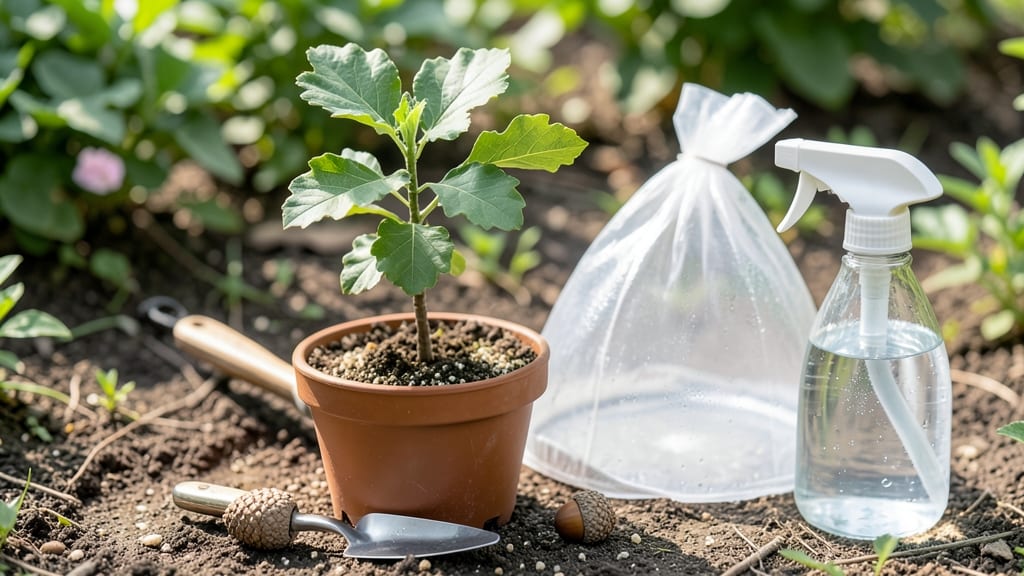
Starting an oak tree from an acorn means planting the seeds of a future forest in your own backyard. 🌱 The process begins with the right acorn—one that’s plump, heavy, and free of cracks—because not all acorns have the potential to grow into mighty oaks.
I’ve watched my own acorn seedlings take years to mature, but the reward of a towering oak in my lifetime makes every step worthwhile.
First, you’ll need to mimic nature’s timing by stratifying the acorn—placing it in a moist mix of sand and peat moss in the fridge for 90 days to break dormancy. This step is non-negotiable; without it, your acorn might never sprout.
Once stratified, plant it 2 inches deep in well-draining soil, keeping it consistently moist but never soggy. Patience is key—germination can take 6 months to a year, and growth will be slow at first.
As your seedling emerges, it’ll need full sun (at least 6 hours daily) and rich, slightly acidic soil to thrive. Expect 2-3 inches of growth per year in its early years—this isn’t a fast project, but every leaf is a step toward that centuries-old oak.
The real magic happens when you protect it from deer, rodents, and overwatering, letting it develop deep roots for long-term strength.
By year 5, you’ll see a 3-foot sapling—still small but undeniably an oak. The journey teaches more than gardening; it’s a lesson in time, resilience, and the quiet joy of nurturing something that will outlive you. Ready to begin?
📚 In This Guide
- What you need
- Instructions
- Tips and common mistakes
- Wrapping up and next steps
What you need
- ● Fresh acorns: Collect 20-30 mature acorns from a healthy oak tree (preferably white oak or red oak). Ensure they’re plump and free of cracks or mold. 🌰
- ● Well-draining potting mix: Use a high-quality seed-starting mix (or blend 50% peat moss/coir with 50% perlite/sand). Avoid garden soil—it can compact and suffocate roots!
- ● Small pots or seed trays: 3-4 inch diameter pots or a shallow tray with drainage holes. Plastic or biodegradable pots work well.
- ● Drainage material: Pebbles or small rocks (like perlite or coarse sand) to place at the bottom of pots for aeration.
- ● Spray bottle: For gently misting seeds to keep them moist without overwatering.
- ● Plastic wrap or humidity dome: To create a mini greenhouse effect and retain moisture.
- ○ Fertilizer (optional): A balanced, water-soluble fertilizer (5-5-5 or 10-10-10) for later stages, once sprouts appear.
- ● Gloves: To protect your hands from tannins in acorns (they can stain!).
- ● Small hand trowel or spoon: For planting seeds gently without damaging them.
- ● Label markers & tags: To track planting dates and acorn sources (oaks take years to grow!).
- ● Sunny location or grow lights: A spot with indirect light (6-8 hours/day) or a grow light setup for seedlings.
- ● Patience & a long-term plan: Oak trees can take 5-10 years to produce acorns—this isn’t a quick project! ☕🌳
- ● 🌡️ Stratification: If planting in fall/winter, acorns need cold stratification (60-90 days in moist sand or a fridge). Skip this if sowing in spring!
- ● ✨ Acorn prep: Soak acorns in water for 24-48 hours before planting to soften the shell and speed up germination.
- ● 🎯 Location scouting: Visit parks or forests—white oaks (lobes with rounded tips) are easier to grow than red oaks.
Step-by-step instructions for growing an oak tree from an acorn
Here's how to nurture an acorn into a mighty oak—this is where real forest-building begins.
🌱 Step 1: Select and Prepare the Acorn
Choose a large, plump acorn with a firm cap—these have the best germination rates. I look for ones that feel heavy for their size, indicating a well-developed seed inside. Remove the cap carefully, as it protects the seed from drying out during the stratification process.
Place the acorn in a small container of moistened peat moss or coconut coir (about 1 inch deep), ensuring the pointed end faces downward. This mimics the forest floor conditions that trigger germination. Keep it in a cool, dark place like a refrigerator for 60-90 days—this cold treatment breaks dormancy.
💧 Step 2: Stratify and Plant for Germination
After stratification, plant the acorn ½ inch deep in a 4-inch pot filled with a mix of 50% potting soil and 50% perlite. This blend ensures good drainage while retaining enough moisture for tender roots. Water gently until the soil is damp but not soggy—you want moisture to penetrate evenly without pooling.
Place the pot in a warm, bright location with indirect light. Germination can take 2-6 weeks, so be patient. You'll know it's working when you see a small sprout pushing through the soil—this is your first sign of life from what will become a centuries-old tree.
☀️ Step 3: Provide Care for the Seedling Stage
Once the seedling emerges, move it to a spot with dappled sunlight (morning sun is ideal). Young oak seedlings are sensitive to intense afternoon rays, which can scorch delicate leaves. Keep the soil consistently moist but never waterlogged—oaks hate soggy roots.
After the first true leaves appear (not the initial seed leaves), fertilize lightly with a balanced 10-10-10 fertilizer diluted to half strength. I use a spray bottle to apply it directly to the soil surface, avoiding the leaves. This encourages steady, healthy growth without overwhelming the tiny root system.
🪴 Step 4: Transplant and Gradually Harden Off
When the seedling reaches 6-12 inches tall (usually after 1-2 years), it's ready for its first transplant. Choose a location with partial shade and well-draining soil. Dig a hole twice as wide as the root ball but only as deep as the container—planting too deep can suffocate the roots.
Water deeply after transplanting to settle the soil and reduce shock. Over the next 2 weeks, gradually increase sunlight exposure. Start with 2 hours of morning sun daily, then add more time each week until it's getting full sun. This slow transition prevents leaf burn and helps the seedling adjust to outdoor conditions.
⏰ Step 5: Long-Term Care for Your Young Oak
For the first year after transplanting, water once a week during dry spells, giving 1 gallon per week to encourage deep root growth. After that, oaks become remarkably drought-tolerant, so reduce watering to every 2-3 weeks unless you're in an extreme drought.
Mulch around the base with 2-3 inches of wood chips, keeping it 6 inches away from the trunk to prevent rot. This mimics natural forest conditions and helps retain moisture. Avoid fertilizing after the first year—oaks grow best when left to develop naturally, without artificial nutrients.
Tips & tricks for growing an oak tree from an acorn
Here's what nobody tells you about turning an acorn into a towering oak—lessons from years of watching seedlings thrive (and occasionally fail).
Selection Matters: The acorn you choose makes all the difference. Look for ones that are plump, heavy for their size, and have a firm cap—these are your best bets for successful germination. I've found that acorns from mature oak trees (not fallen ones) have higher viability. If you're collecting from the ground, gather them fresh—they dry out quickly and lose viability within days. Store them in a cool, dry place until you're ready to start the stratification process.
Stratification Secrets: That 60-90 day cold treatment in the refrigerator isn't just arbitrary—it mimics winter conditions that break the acorn's natural dormancy. Don't skip it! I've tried planting acorns without stratification, and while some do sprout, they're often weak and less likely to survive long-term. Use a small container with moistened peat moss or coconut coir, and place it in a plastic bag to retain humidity. Check periodically to ensure the moss stays damp but not soggy.
Germination Patience: The 2-6 week wait for germination can feel like an eternity, but this is where true forest-building begins. Place your pot in a warm, bright spot with indirect light—think of it as creating a mini forest floor. If you're impatient, you can lightly cover the pot with plastic wrap to create a greenhouse effect, but be sure to remove it daily to prevent mold. Once you see that first sprout, resist the urge to move it—let it establish itself in its current environment before making any changes.
Sunlight Transition: When your seedling emerges, move it to dappled sunlight gradually. Young oak seedlings are sensitive to intense afternoon rays, which can scorch their delicate leaves. Start with morning sun only, then slowly increase exposure over weeks. I've seen seedlings go from vibrant green to crispy brown overnight when moved too quickly to full sun. Think of this as their first forest canopy—protecting them from harsh elements is crucial for their survival.
Pro Tips for How Do You Start An Oak Tree From An Acorn
- Here's what nobody tells you about turning an acorn into a towering oak—lessons from years of watching seedlings thri...
- Selection Matters: The acorn you choose makes all the difference. Look for ones that are plump, heavy for their size,...
- Stratification Secrets: That 60-90 day cold treatment in the refrigerator isn't just arbitrary—it mimics winter condi...
Frequently asked questions
Got questions about growing an oak tree from an acorn? You’re not alone! Here are some of the most common queries—and their straightforward answers—to help you on your journey.
How long does it take for an acorn to sprout?
With the right conditions (moisture, warmth, and patience!), an acorn can sprout in 4 to 12 weeks. Some may take longer, especially if stored improperly. Keep the soil consistently moist and in a warm spot (around 70°F) to speed things up. If nothing happens after 3 months, it might not be viable—don’t give up, though!
Can I use any acorn, or do I need a specific type?
While white oak and red oak acorns are the easiest to grow, you can try others like bur oak or pin oak too. Avoid acorns from southern live oak or scrub oak—they’re trickier to propagate. Always collect acorns from healthy, mature trees (not from the ground, as they may be less viable).
What’s the best time of year to plant an acorn?
The ideal window is late summer to early fall (August–October), mimicking nature’s timing. Planting in spring works too, but acorns stored over winter may lose viability. If you must plant in winter, stratify them first (see our tips section for how!). Avoid planting in extreme heat or frost.
Why isn’t my acorn sprouting? Troubleshooting tips!
Here’s a quick checklist if your acorn is playing hard to get:
Too dry? Acorns need constant moisture—not soggy, just damp like a wrung-out sponge.
Not warm enough? Use a seedling heat mat (60–70°F) or place near a sunny window.
Rotten or moldy? Discard it—fungus is a common killer.
Still in its shell? Some acorns won’t crack until they’re ready. Gently nick the shell if needed (but don’t overdo it!).
If all else fails, try another acorn—nature’s lottery has winners and losers!Can I grow an oak tree indoors first, then transplant outside?
Start indoors in a small pot with well-draining soil, keeping it in bright, indirect light. Once the seedling has 3–4 leaves and is at least 6 inches tall (usually springtime), acclimate it outdoors for a week before transplanting. Harden it off gradually to avoid shock—your future oak will thank you!
Wrapping up and next steps
Starting an oak tree from an acorn is a rewarding journey that blends patience with nature’s magic. 🌱 With the right tools, care, and a little time, you’ll witness the incredible transformation of a tiny seed into a towering giant.
Once your acorn sprouts and grows into a sturdy seedling, the next step is to transplant it into the ground—giving it a forever home in your garden or a local park.
So, roll up your sleeves, embrace the wait, and let your green thumb do its thing. Every gardener knows: great trees don’t grow overnight—but they’re worth every second! 🌳✨