
Planting
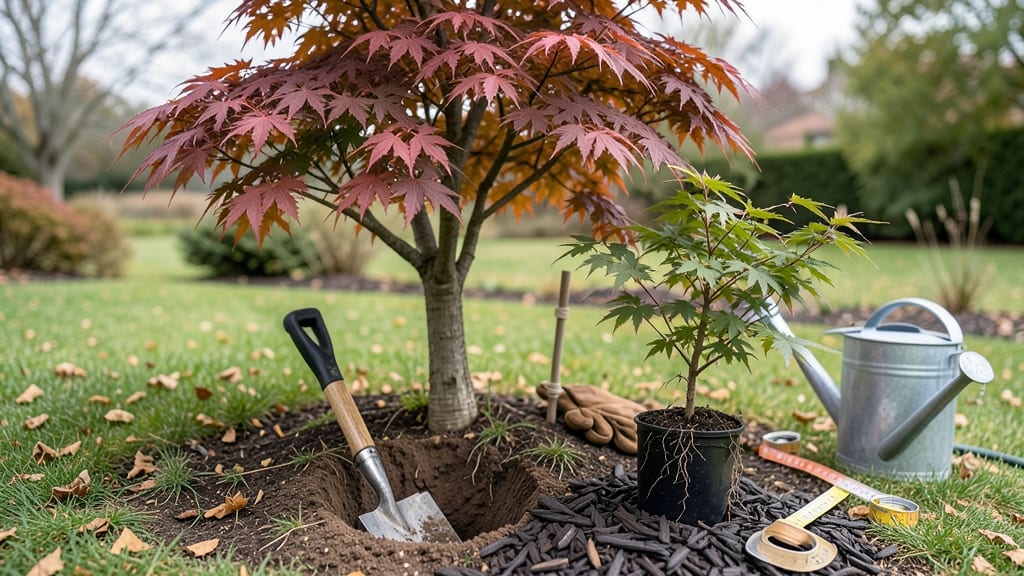
Planting a Japanese maple tree too close to your house can damage foundations, block sunlight, or even threaten your roof—but the right spacing ensures it thrives and enhances your yard safely.
You’ve probably seen stunning Japanese maples in gardens, their fiery foliage lighting up spring and fall—but their roots spread wider than you think.
A mature tree’s canopy might only reach 20 feet, but its roots can stretch 30 feet or more, putting nearby structures at risk if planted too near.
This guide breaks down the minimum safe distances based on your tree’s variety (dwarf, semi-dwarf, or standard), soil type, and even your home’s foundation material. We’ll also cover sunlight tricks to keep your maple happy without stealing light from your veggie patch.
By the end, you’ll know exactly where to dig—plus how to pair it with perennials or shrubs for a low-maintenance, high-impact garden design that works with your space, not against it.
Japanese maple spacing rules: minimum distance from house by tree size & variety
Japanese maples are prized for their stunning foliage, but their root systems spread far wider than their canopies. Planting too close to your house risks foundation cracks, drainage issues, or even roof damage from falling branches.
The key is understanding your tree’s mature size and root spread—not just its height.
Dwarf varieties (6-10 ft tall) need at least 8-10 feet from structures, while standard types (20-30 ft) require 20-30 feet of clearance. These distances account for both root expansion and canopy spread, which can exceed the tree’s height by 50%.
For example, a 15-foot semi-dwarf maple may have roots stretching 25 feet in all directions.
| Variety Type | Mature Height | Mature Width | Min. Distance from House | Root Spread | Soil Notes |
|---|---|---|---|---|---|
| Dwarf (e.g., 'Mikura' or 'Little Princess') | 6-10 ft | 6-10 ft | 8-10 ft | 12-15 ft | Well-draining, acidic |
| Semi-Dwarf (e.g., 'Bloodgood' or 'Emperor I') | 12-15 ft | 12-15 ft | 12-15 ft | 18-22 ft | Moist, loamy |
| Standard (e.g., 'Shishigashira' or 'Bullfinch') | 20-30 ft | 20-30 ft | 20-30 ft | 25-35 ft | Rich, organic |
| Weeping (e.g., 'Crimson Sentinel') | 15-20 ft | 12-18 ft | 15-20 ft | 20-25 ft | Avoid compacted soil |
For sloped yards, increase spacing by 20-30% to prevent erosion and root damage. Clay soil? Add 3-4 inches of compost to improve drainage before planting. If your home has a concrete foundation, plant at least 15 feet away—roots can lift slabs over time.
Pro tip: Use a tape measure and string line to mark planting zones before digging. For example, a 12-foot semi-dwarf needs a 12-foot radius from all structures, including driveways and utility lines. Always check local HOA or building codes—some areas require 25-foot clearances for large trees.
If space is limited, choose container-grown dwarf varieties like 'Dwarf Umbrella' (Acer palmatum 'Mikura'). These stay under 8 feet tall and can be planted 6 feet from walls with proper root pruning. Just remember: containers dry faster, so water daily in summer.
For foundation protection, install a French drain or root barrier (18-inch deep) if planting near sidewalks. Test soil pH (ideal: 6.0-6.5) and amend with peat moss if needed. A 3-foot mulch ring keeps roots cool and retains moisture.
Remember: Japanese maples hate transplant shock. Dig a hole twice as wide as the root ball but only as deep as the container. Backfill with native soil mixed with compost to encourage root expansion away from the house.
Finally, avoid planting near septic systems or irrigation lines. Roots can clog pipes or lift concrete over time. When in doubt, consult an arborist—they can assess your soil and home structure for custom spacing solutions. 🌳
Sunlight & wind exposure: best planting zones around your home
Your Japanese maple needs 4-6 hours of morning sunlight for vibrant foliage, but wind exposure can stress its delicate branches. The key is finding a microclimate sweet spot—where sunlight meets wind protection—without sacrificing your home's structural safety or other plants' growth.
East-facing spots are ideal for balanced light and shelter, while west-facing areas risk afternoon heat stress.
Low-lying spots near foundations or driveways are danger zones—roots may rot from poor drainage or freeze in winter. Instead, aim for slightly elevated ground with 3-5 feet of slope to improve airflow and prevent water pooling. This elevation also protects against foundation pressure from expansive roots.
Here’s how to compare your home’s zones for the perfect Japanese maple placement:
| Zone Type | Sunlight Hours | Wind Protection | Drainage Risk | Best For |
|---|---|---|---|---|
| East-Facing | 4-6 hours (morning) | Moderate (protected by house) | Low (elevated ground) | Dwarf/semi-dwarf varieties |
| West-Facing | 3-4 hours (afternoon shade) | High (exposed to wind) | Medium (watch for heat stress) | Standard varieties with stakes |
| South-Facing | 6+ hours (full sun risk) | Low (direct wind) | High (dry soil) | Avoid unless pruned heavily |
| North-Facing | 2-3 hours (limited light) | High (protected) | Low (moisture retention) | Only for shade-tolerant cultivars |
For wind protection, plant your Japanese maple 15-20 feet from walls and use bamboo fencing or shrubs as a windbreak if needed. The root spread of mature trees can reach 20-30 feet, so avoid planting near sidewalks or utility lines.
A 3-foot mulch ring around the base also improves drainage and retains moisture.
If your yard has low-lying areas, consider a raised bed or berm to prevent root rot. Test soil pH (ideal: 6.0-6.5) and amend with compost or peat moss if drainage is poor. Remember, morning sun + afternoon shade is the golden rule for keeping foliage vibrant without stress.
Pro tip: Use a sunlight tracker for a week to map your yard’s light patterns. Mark shady spots at noon—these are prime locations for your Japanese maple’s delicate branches to thrive without scorching.