
Light Requirements
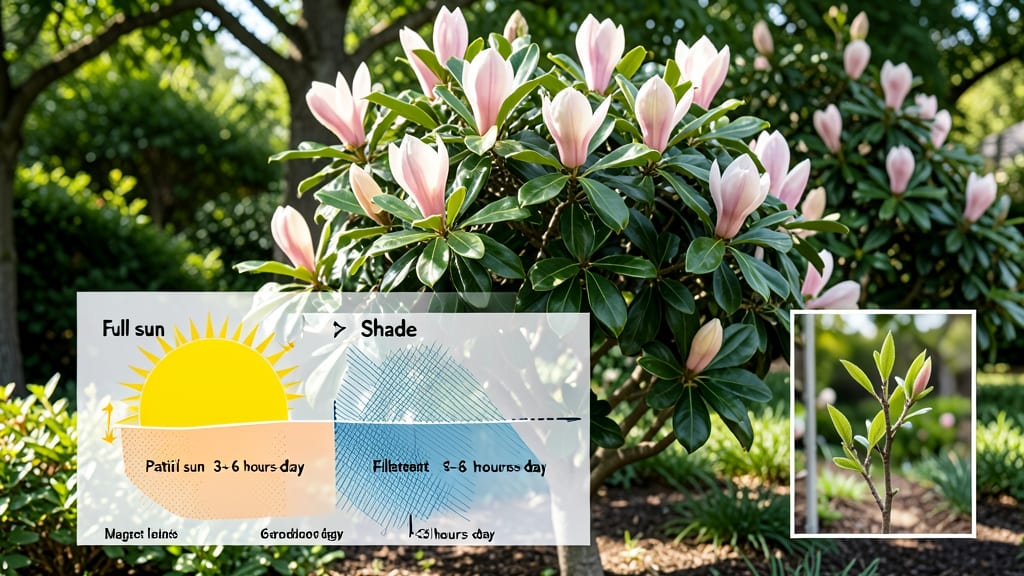
A magnolia tree needs how much sun does a magnolia tree need—4 to 6 hours of sunlight daily 🌸, but the timing makes all the difference for those stunning blooms you adore.
Struggling to keep your magnolia tree blooming beautifully year after year? The secret might lie in understanding its sun requirements—and why morning sunlight is the game-changer most gardeners overlook.
Most varieties thrive with morning sun and afternoon shade, especially in hotter zones like 6a. This balance prevents leaf scorch while maximizing flower production, but too much direct afternoon sun can stress the tree.
Below, I’ll break down exactly how to assess your garden’s sunlight, spot signs of sun stress, and adjust care for year-round magnolia success—no guesswork required.


Ideal sunlight requirements for magnolia trees: morning sun vs full sun
If you’ve ever watched your magnolia tree’s leaves crisp at the edges or its blooms fade early, you’re not alone. The magnolia tree’s sunlight needs are often misunderstood, especially the critical difference between morning sun and full sun exposure.
Unlike many shade-loving plants, magnolias actually thrive with strategic sunlight—but getting the balance wrong can turn your stunning tree into a sad, scorched shadow of its potential.
Most gardeners assume full sun means 6+ hours of direct sunlight daily, but magnolias—especially southern magnolias (Magnolia grandiflora) and deciduous varieties (like Magnolia stellata)—prefer a gentler approach. The key? Morning sunlight paired with afternoon shade.
This protects delicate leaves from leaf scorch while still fueling those iconic blooms. Let’s break down exactly how much sun your magnolia needs—and why timing matters more than you think.
⚠️ Comparison Table: Sunlight Needs by Magnolia Type
The table above reveals a common misconception: magnolias don’t need full sun. In fact, 6+ hours of direct sunlight can cause leaf burn and stunted blooms, especially in hot climates.
The morning sun (before 10 AM) is ideal because it provides gentle, indirect light that warms the tree without the intense heat of afternoon rays. Think of it like a sunrise yoga session—just enough energy to stretch and bloom without overheating.
Why does this work? Magnolia leaves contain essential oils that make them highly sensitive to heat stress. When exposed to afternoon sun (1 PM–5 PM), those oils can overheat, causing leaves to brown and crisp at the edges—a condition called leaf scorch.
But morning sunlight? It’s the perfect wake-up call for your tree, encouraging vibrant blooms without the risk of damage. Plus, the cooler temperatures in the morning mean less water loss through the leaves.
Let’s address a biggest myth upfront: “Magnolias love full sun.” While some varieties can tolerate full sun in cooler climates (USDA Zones 4–6), most magnolias—especially southern and evergreen types—will thrive better with afternoon shade.
If you’re in a hot, humid zone (Zones 7–10), full sun can turn your magnolia into a leafy disaster. Instead, aim for 4–6 hours of morning sun and dappled shade for the rest of the day.
Here’s how to test if your magnolia is getting the right sunlight: Observe its leaf color and bloom production. A healthy magnolia should have deep green leaves with no brown edges and abundant flowers in spring.
If you notice yellowing leaves or fewer blooms, it might be getting too much shade. Conversely, crispy, brown leaf edges mean it’s overheating from too much direct sun. Adjust by moving your tree to a sunnier spot for morning light or adding a light shade cloth for
How to assess your garden’s sunlight for magnolia success
Magnolias are stunning additions to any landscape, but their sunlight needs can be tricky to pinpoint. Unlike sun-loving plants, magnolias prefer morning sun and afternoon shade, which isn’t always obvious when evaluating your yard.
I’ve learned the hard way that planting them in full afternoon sun can scorch their delicate leaves and reduce blooms. The key is understanding how sunlight moves across your property throughout the day.
Start by observing your garden’s sunlight patterns for at least a week. Use a simple sun mapping technique: Place stakes or flags in different areas of your yard and mark how many hours each spot receives direct sunlight.
Pay special attention to east-facing locations, as they provide gentle morning light without the intense afternoon heat. This method helps you identify microclimates—small areas with unique sunlight conditions—that might be perfect for your magnolia.
🌞 Sunlight Checklist for Magnolia Planting
- ☑️ Morning sun (6 AM–12 PM): Ideal for 4–6 hours daily
- ☑️ Afternoon shade (12 PM–6 PM): Protect from harsh sun in hot climates
- ☑️ East-facing spots: Best for southern magnolias
- ☑️ West-facing spots: Use only for deciduous varieties with afternoon shade
- ☑️ Avoid full sun: Can cause leaf burn and stress
Once you’ve mapped your yard, consider the magnolia variety you’re planting. Southern magnolias (Magnolia grandiflora) thrive in partial shade and can tolerate morning sun, while deciduous varieties like Magnolia stellata handle a bit more sun.
Adjust your planting location based on your local climate—cooler regions can handle more sun, while hotter areas need afternoon shade. I’ve found that using nearby trees or structures to create natural shade in the afternoon works wonders.
Don’t overlook the seasonal changes in sunlight. What seems like partial shade in summer might turn into full sun in winter when deciduous trees lose their leaves. Plan for this by choosing a location that offers flexibility, such as near a large shrub that provides seasonal shade.
If your yard lacks natural shade options, consider installing a lightweight shade cloth during peak summer months to protect your magnolia.
After selecting the perfect spot, give your magnolia a gradual transition if it’s coming from a nursery or a different location. Start by placing it in partial shade for a week, then slowly increase its sun exposure over a few weeks.
This helps the tree adjust without shock. Watch for signs like yellowing leaves or dropped buds, which indicate stress from improper sunlight. With the right spot, your magnolia will reward you with vibrant blooms and lush foliage year after year.
Remember, the best location for your magnolia isn’t just about sunlight—it’s about creating a balanced environment that mimics its natural habitat. By taking the time to assess your yard’s unique conditions, you’ll set your magnolia up for long-term success. Happy planting! 🌸