
How To
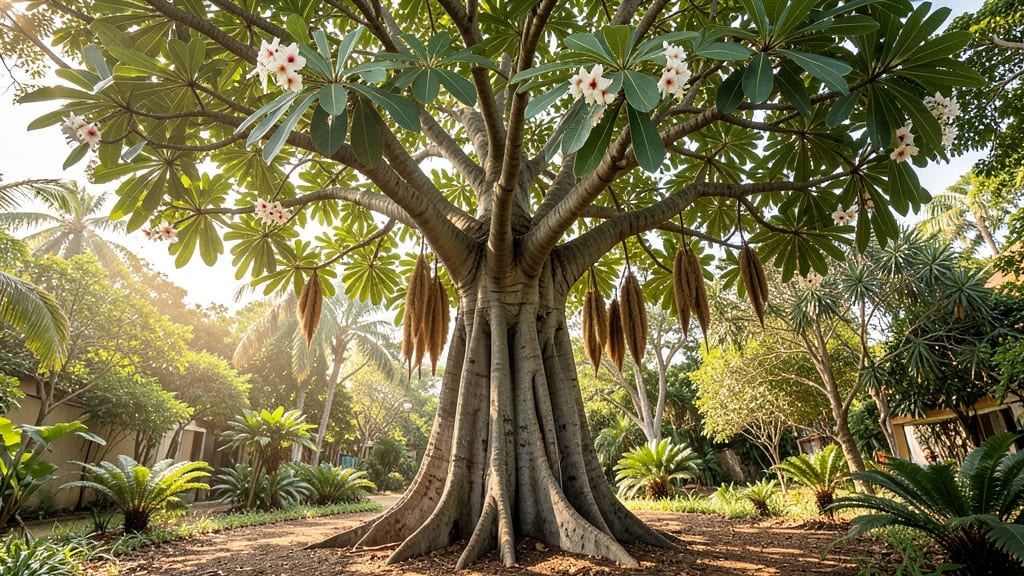
A kapok tree can grow up to 200 feet tall—taller than a 15-story building—making it one of the fastest-growing trees in tropical climates.
If you're dreaming of a towering shade provider or a fast-growing timber source, the kapok tree (Ceiba pentandra) delivers—with some of the most impressive height potential in tropical landscapes.
But before planting, knowing its growth limits and space needs can mean the difference between a thriving giant and a struggling sapling.
In ideal conditions, this 🌳 tree can shoot up 3–6 feet per year, reaching maturity in just a few decades. However, its rapid growth comes with a catch: it needs plenty of space—at least 30 feet of clearance for mature roots and branches.
Without it, you risk weak wood or storm damage, no matter how tall it dreams of growing.
Below, I’ll break down how to maximize its height while keeping it stable, the fastest-growing varieties for your yard, and whether this tropical powerhouse is even feasible for home gardens in USDA Zone 6a.

Kapok tree height limits: how tall can it grow in ideal conditions?
The kapok tree (Ceiba pentandra) is a tropical powerhouse, capable of reaching 160+ feet in its native habitats—making it one of the fastest-growing trees in the world.
In ideal conditions, these giants can grow 3–6 feet per year, transforming from a sapling to a towering canopy in just a few decades. But before planting, understanding its height potential and space needs is critical for success.
Unlike dwarf varieties, kapok trees don’t offer compact options—they’re built for large landscapes or timber plantations. Their rapid vertical growth makes them a favorite for shade solutions and ecological restoration, but their size demands careful planning.
Let’s break down what influences their towering potential and how to harness it responsibly.
In the wild, kapok trees can reach 200 feet in tropical rainforests, where they thrive in USDA zones 10–12. This dwarfs even the fastest-growing trees like eucalyptus, which max out at around 100 feet.
The key to unlocking this potential lies in climate, soil, and sunlight. In cooler climates (like USDA zone 9b), growth slows significantly, capping heights at 50–80 feet.
For gardeners in subtropical regions, the 3–6 feet per year growth rate means a 10-year-old kapok tree could already be 30–60 feet tall. This rapid ascent requires 30+ feet of clearance from nearby structures or power lines.
Without this space, branches can become storm hazards or obstruct sunlight for other plants.
Soil quality plays a critical role in height potential. Kapok trees demand well-draining, nutrient-rich soil with a slightly acidic to neutral pH (6.0–7.5). Sandy loam soils accelerate growth, while clay-heavy or waterlogged soil can stunt them to half their potential height.
Amending soil with compost and organic matter before planting gives young trees the boost they need to reach for the sky.
Sunlight is another non-negotiable factor. Kapok trees require 6+ hours of direct sunlight daily to achieve their maximum height. In partial shade, growth slows to 1–3 feet per year, and the tree may develop a weaker trunk prone to snapping.
Positioning your kapok tree in a south-facing location ensures it gets the full spectrum of sunlight needed for vertical dominance.
Watering also influences height, but not in the way you might think. While young kapok trees need regular deep watering (every 5–7 days in dry seasons), overwatering can lead to root rot and stunted growth.
Once established, these trees develop moderate drought tolerance, but their height potential still depends on consistent moisture during the first 3–5 years.
Comparing kapok trees to other fast-growing giants reveals their unique advantages. While bamboo can grow 3 feet in a single day, it rarely exceeds 100 feet. Kapok trees, though slower, offer greater longevity and structural integrity, making them ideal for timber production and urban forestry projects.
Their lightweight wood also makes them valuable for eco-friendly construction materials.
If you’re considering planting a kapok tree, start small with a container-grown sapling to assess your property’s suitability. Even with ideal conditions, these trees take 10–15 years to reach their full height potential. Patience and planning will reward you with a living monument that outshines most other tropical species.
For those with limited space, consider alternative fast-growing trees like silver maple or hybrid poplar, which max out at 50–80 feet but adapt better to smaller yards. But if you’re dreaming of a true tropical giant, the kapok tree delivers—just give it the space it deserves.
Fastest-growing kapok tree varieties and their space requirements
The kapok tree (Ceiba pentandra) isn't just one species—it has several fast-growing varieties that can transform your landscape differently. If you're considering planting, understanding their growth speeds and space needs is critical.
For example, the standard kapok tree can reach 100–200 feet in ideal conditions, while some tropical relatives like Ceiba aesculifolia grow slightly slower but still require ample clearance for their mature size.
Before choosing a variety, measure your property. Even the fastest-growing kapok trees need 30+ feet of clearance from buildings, power lines, and other structures. In smaller yards, you might consider container-growing options (though they’ll never reach full height) or opt for faster-maturing ornamental varieties that stay under 50 feet.
| Variety | Max Height | Annual Growth | Space Needs |
|---|---|---|---|
| Ceiba pentandra (Standard) | 100–200 ft | 3–6 ft/year | 50+ ft clearance |
| Ceiba aesculifolia (Mexican Kapok) | 60–100 ft | 2–4 ft/year | 30–40 ft clearance |
| Ceiba insignis (Silk Cotton Tree) | 120–150 ft | 4–7 ft/year | 40+ ft clearance |
| Ornamental Dwarf Varieties | 20–50 ft | 1–3 ft/year | 15–25 ft clearance |
If you're working with limited space, ornamental dwarf varieties are your best bet. While they won’t match the towering heights of their wild counterparts, they still offer rapid growth (1–3 feet per year) and stunning foliage.
These varieties thrive in containers or small yards where standard kapok trees would be impractical. Just ensure they get full sun exposure and well-draining soil to prevent root rot.
For those with larger properties, Ceiba insignis (Silk Cotton Tree) is a standout for its 4–7 feet of annual growth. It’s ideal for creating quick shade or privacy screens but requires 40+ feet of clearance at maturity.
Always plant it at least 50 feet from structures to avoid future issues with overhanging branches.
Regardless of variety, kapok trees need well-draining, slightly acidic soil (pH 5.5–6.5) and full sun exposure. In cooler climates (USDA Zone 10+), they grow fastest with consistent moisture but avoid waterlogging.
If you’re in a drier region, mulching around the base will help retain moisture and encourage faster vertical growth.
Before planting, check local regulations—some areas restrict large trees due to their root systems and potential storm risks. With the right variety and space planning, you can enjoy a kapok tree’s rapid growth without sacrificing your property’s safety or aesthetics. 🌳