
How To
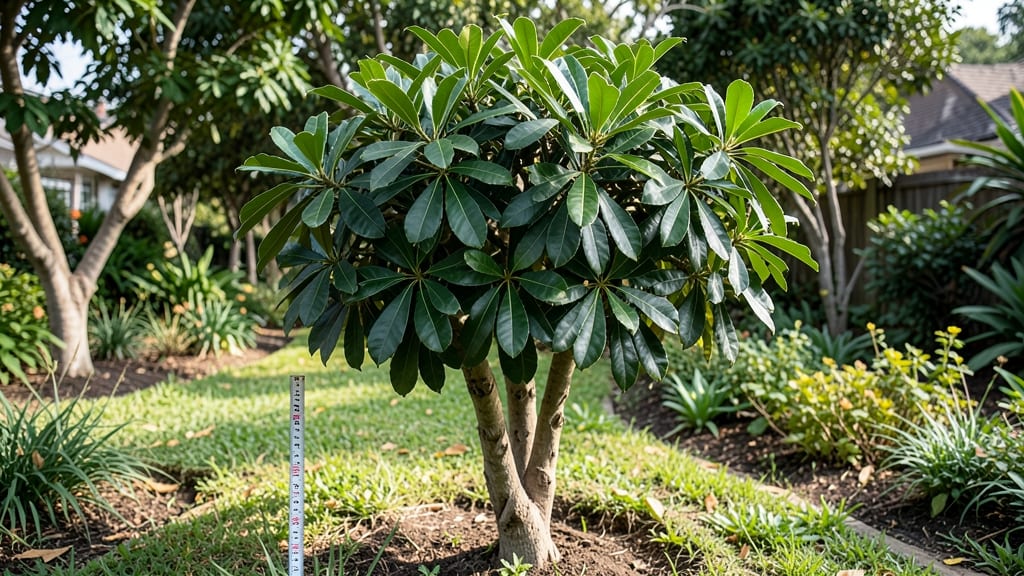
A money tree 💴 can grow indoors up to 10 feet tall with the right care, though most stay between 6 and 8 feet in average homes.
If you’ve ever admired a lush money tree and wondered whether it could become a towering indoor statement piece, you’re not alone.
Many plant parents dream of nurturing one into a verdant giant—but before committing to a 10-foot ceiling, here’s the truth about how tall these tropical beauties can grow indoors.
The key to maximizing height lies in light, pruning, and pot size. Too little light stunts growth, while aggressive pruning can encourage bushier (but shorter) shapes. With the right balance, you can coax your money tree toward its full potential—without sacrificing your home’s decor.
Below, I’ll break down height expectations by variety, the factors that control growth, and how to train your plant for maximum vertical reach—plus common mistakes that keep money trees from reaching their full height.

Money tree height by variety: what to expect indoors
The money tree (Pachira aquatica) is a versatile tropical plant that can range dramatically in height depending on its variety and growing conditions. While some varieties stay compact at just 3 feet tall, others can reach 10 feet indoors with proper care.
Understanding these differences helps you choose the right variety for your space and manage expectations for growth.
Your money tree’s height isn’t just about genetics—it’s influenced by its branching pattern, whether it’s a braided cultivar, or how you prune it. For example, the standard money tree grows tall and straight, while the braided money tree often stays bushier but can still climb if given support.
Let’s break down what to expect from the most popular varieties.
| Variety | Mature Height Indoors | Branching Pattern | Growth Rate |
|---|---|---|---|
| Standard Money Tree | 6-10 ft | Single or multi-trunk | Moderate (1-2 ft/year) |
| Braided Money Tree | 3-8 ft | Multi-trunk, braided | Slow to moderate (6-12 in/year) |
| Dwarf Money Tree | 3-5 ft | Compact, bushy | Slow (4-8 in/year) |
| Mini Money Tree | 1-3 ft | Tight, multi-branched | Very slow (2-4 in/year) |
| Variegated Money Tree | 5-9 ft | Single or multi-trunk | Moderate (1-2 ft/year) |
The standard money tree is the tallest variety, often reaching 10 feet indoors with ideal conditions. If you love a statement plant, this variety thrives in spacious rooms with high ceilings. Its single or multi-trunk structure makes it perfect for corner placements or as a focal point near windows.
For those who prefer a braided money tree, expect heights between 3 and 8 feet. These plants are often grafted or trained to create the iconic braided look, which can slow growth slightly. However, with proper care, they can still become a stunning vertical feature in your home.
If space is limited, the dwarf money tree is an excellent choice, typically maxing out at 5 feet tall. These varieties are bred to stay compact, making them ideal for apartments or small offices.
Their bushy growth habit also means they fill out quickly, providing lush foliage without requiring much height.
The mini money tree is perfect for tiny spaces like desks or shelves, rarely exceeding 3 feet. Despite their small size, they’re just as hardy as larger varieties and require minimal care. Their slow growth rate makes them low-maintenance companions for busy plant parents.
Lastly, the variegated money tree combines beauty with height, often growing 5 to 9 feet tall. The striking yellow or cream variegation on the leaves adds visual interest, but it also means these plants need slightly more light to maintain their color.
Their height makes them ideal for large living rooms or entryways.
Remember, these are general guidelines—your money tree’s height depends on factors like light exposure, pruning habits, and pot size. With the right care, even a mini money tree can grow taller, while a standard variety might stay shorter if pruned regularly.
The key is to choose a variety that fits your space and growth goals.
Whether you're dreaming of a 10-foot indoor tree or a compact desk plant, understanding your money tree’s potential height helps you plan for its future. Next, we’ll explore how to control your money tree’s growth and train it to reach its full potential—without taking over your home!
Factors that control your money tree’s indoor height
Your money tree’s height isn’t just luck—it’s a mix of light exposure, pruning techniques, pot size, and humidity levels working together.
As a tropical plant, Pachira aquatica naturally grows tall in its native environment, but indoors, these factors can either encourage a 6-foot statement piece or keep it compact at 3 feet. Understanding how each element influences growth lets you take control of your plant’s vertical potential.
First, light exposure is the most critical factor. Money trees thrive in bright, indirect light, which promotes steady upward growth. Placing yours near an east or west-facing window gives it the perfect balance—enough light to grow tall without scorching the leaves.
If you notice leggy stems or pale leaves, your plant is stretching toward light, a sign it needs a brighter spot or supplemental grow lights.
- 1. Light Exposure: Place in bright indirect light (east/west windows) to encourage vertical growth. Leggy growth means it needs more light.
- 2. Pruning Techniques: Prune above leaf nodes to encourage bushier growth or top prune to maintain height. Avoid cutting too low—this can stunt vertical growth.
- 3. Pot Size: Use a snug pot (1-2 inches larger than the root ball) to limit rapid growth. Oversized pots encourage sprawling roots and slower vertical development.
- 4. Humidity Levels: Maintain 40-60% humidity to prevent stunted growth. Low humidity causes brown leaf tips and slower upward expansion—use a pebble tray or humidifier.
- 5. Fertilizer Timing: Feed with balanced 10-10-10 fertilizer every 4-6 weeks during spring and summer. Over-fertilizing can lead to weak stems and reduced height.
Next, pruning techniques play a surprising role in height control. If your goal is a tall, slender money tree, avoid heavy pruning—focus on removing only yellow or damaged leaves. However, if you want a bushier, compact plant, prune just above a leaf node to encourage branching.
For braided varieties, prune selectively to maintain the braided effect while still allowing vertical growth.
Don’t overlook pot size—it directly impacts how tall your money tree grows. A too-large pot encourages root expansion instead of vertical growth, leading to a shorter, wider plant. Opt for a snug pot (only 1-2 inches larger than the root ball) to promote upward growth.
If you notice roots circling the pot, it’s time to repot into a slightly larger container to support continued height development.
Finally, humidity levels can make or break your money tree’s growth potential. These tropical plants thrive in 40-60% humidity, mimicking their native rainforest environment. Low humidity causes brown leaf tips and slows vertical growth.
To boost humidity, place a pebble tray under the pot or use a small humidifier nearby. Grouping plants together also creates a microclimate that supports steady upward expansion.
By adjusting these four factors—light, pruning, pot size, and humidity—you can steer your money tree toward your desired height, whether you’re aiming for a compact 3-foot centerpiece or a towering 10-foot indoor tree.
Start with small tweaks, monitor your plant’s response, and enjoy watching it grow to your exact specifications! 🪴