
How To
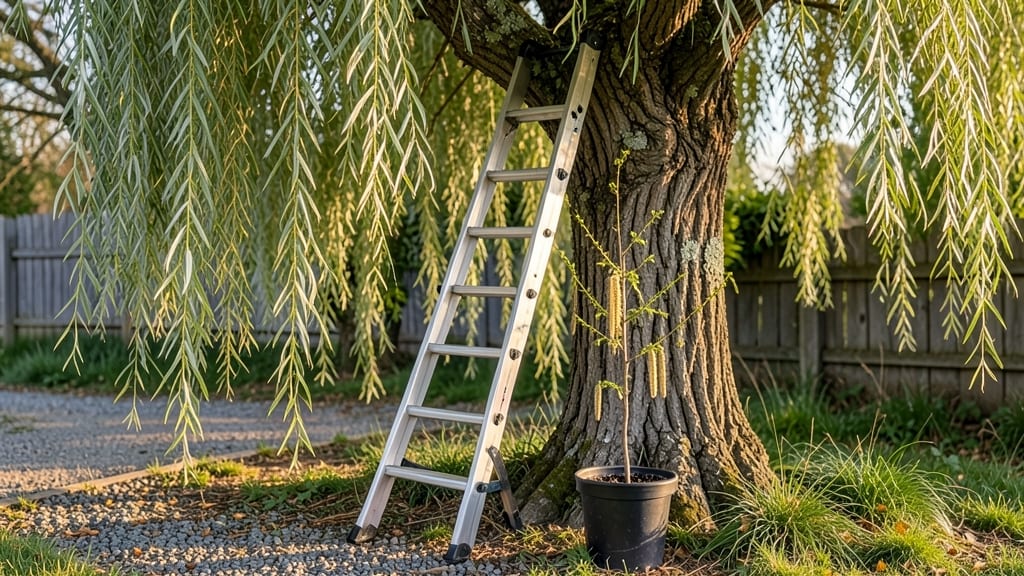
How tall does a willow tree grow? It typically reaches heights between 30 and 50 feet—sometimes even taller—making it a dramatic choice for privacy screens or statement pieces in your landscape.
If you're dreaming of a fast-growing privacy screen or a striking landscape feature, willow trees could be your perfect match—but their staggering height means planning is everything.
Some varieties, like the weeping willow, can reach 50 feet or more, while others, such as the crack willow, stay shorter at 15 to 25 feet. Knowing these differences helps you pick the right type for your space.
In this guide, I’ll break down how tall willow trees grow, which varieties fit your yard, and how to manage their size so they don’t outgrow your plans.

Willow tree height by variety: fastest-growing types and their maximum heights
Willow trees are nature's skyscrapers—some varieties can shoot up 10 feet in a single growing season, making them the fastest-growing trees on the planet. But not all willows reach the same staggering heights.
The weeping willow might dominate your backyard with 50-foot branches, while a dwarf variety could stay neatly contained at just 6 feet. Choosing the right type depends on your space and goals.
Before planting, consider your local climate and soil type. Willow trees thrive in moist, well-drained soil but can tolerate waterlogged conditions—ideal for ponds or streamsides. In dry climates, growth slows dramatically, and heights may max out 20-30% shorter than in ideal conditions.
For example, a crack willow might hit 25 feet in a wetland but only 15 feet in a drought-prone area.
Here’s how 10 popular willow varieties compare in height, growth speed, and ideal conditions:
How to control willow tree growth: pruning, root barriers, and space planning
Willow trees grow aggressively, and their height and spread can quickly overwhelm even spacious yards. While their rapid growth is a selling point for privacy screens, it also means proactive management is essential.
Many gardeners mistakenly believe willows can be "tamed" like shrubs—but their root systems and growth habits demand serious planning. Let’s break down the most effective strategies to keep willows in check while still enjoying their beauty.
First, understand that willows cannot be fully contained like boxwoods or dwarf varieties. Instead, we focus on slowing their spread, redirecting their energy, and strategic pruning to maintain a manageable shape.
The key is combining physical barriers, regular pruning, and smart planting placement. Let’s start with the most critical step: pruning techniques that actually work.
- 1 Prune in late winter or early spring (before buds swell) to remove 1/3 of the previous year’s growth. This encourages bushier growth and prevents vertical dominance.
- 2 Use sharp, clean tools (pruners or a saw for thick branches) to make clean cuts at a 45-degree angle. Avoid tearing bark, which invites disease.
- 3 Remove suckers and water sprouts immediately—they drain energy from the main trunk. Use a shovel or root saw for stubborn suckers near the base.
- 4 Install root barriers (buried 1-2 feet deep around the perimeter) to block lateral root spread. Use hard plastic or metal (not fabric), as willow roots will penetrate weaker barriers.
- 5 Plant willows at least 20-50 feet from structures, fences, or septic systems. Their roots spread 3-5 times the canopy width, and no barrier can fully stop them—only slow them down.
One of the biggest myths about willows is that they can be "tamed" like shrubs with annual trimming alone. Reality check: willows will always grow back with vigorous energy. That’s why root barriers and spacing are non-negotiable.
For example, a weeping willow planted near a driveway will eventually lift pavement as roots seek moisture. Always plan for the mature size, not the sapling.
If you’re dealing with an established willow that’s already encroaching, combine pruning with root pruning. Dig a trench around the base and cut roots with a shovel or root saw, then treat cuts with pruning sealant to prevent rot.
This reduces the tree’s energy and can slow its spread by up to 50%. Just remember: willows are survivors, and they’ll always find a way to grow.
For urban gardeners, consider dwarf varieties like Salix caprea (goat willow), which max out at 15-20 feet but still offer lush foliage. Pair it with regular pruning and root barriers, and you’ll enjoy a willow’s beauty without the space-nightmare.
The key is realistic expectations: willows won’t stay small, but with the right strategies, you can manage their growth and keep your landscape harmonious.