
Container Gardens
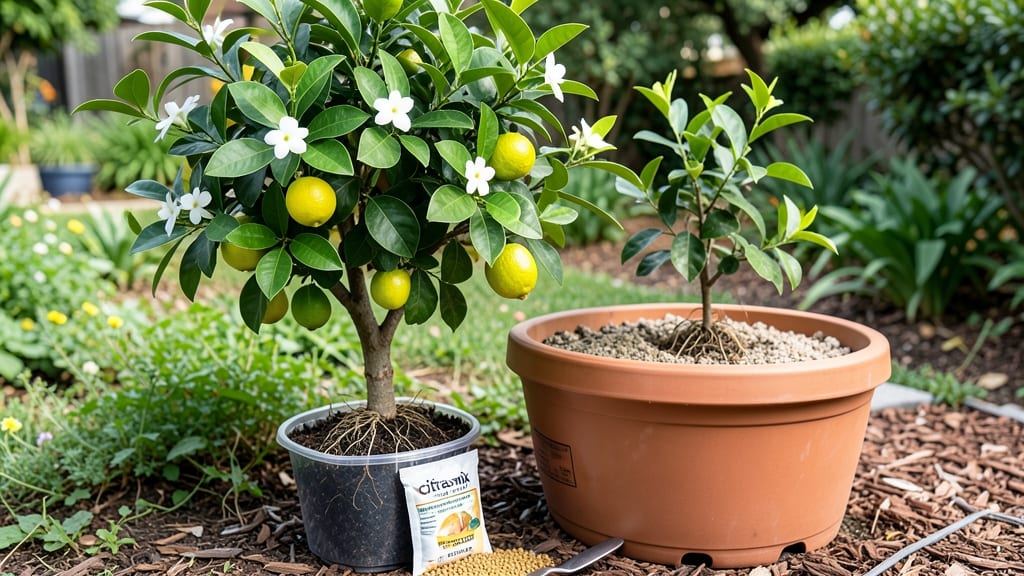
Planting a Meyer lemon tree in a container means fresh fruit on your patio in just three years—not the decade it takes in-ground. 🌱 The dwarf variety stays small enough for balconies, yet produces hundreds of lemons annually if you nail the soil, sunlight, and watering balance.
I’ve grown mine through three winters, and this is the exact setup that keeps it thriving (and fruiting) year-round.
Start with a 5-gallon container minimum—anything smaller stunts roots and limits fruit production. Drainage holes are non-negotiable (I learned this the hard way when my first pot turned into a swamp), and a well-draining cactus/succulent mix with perlite keeps roots happy.
Place it where it gets 6-8 hours of sunlight daily—south-facing windows or patios work best, but avoid harsh afternoon sun that scalds leaves.
Watering’s the trickiest part: let the top 1-2 inches of soil dry between waterings, then soak until water drains freely. Overwatering kills faster than underwatering—my tree’s yellow leaves always scream for help when I’ve been too generous.
Fertilize monthly with citrus-specific food in spring and summer, and watch those blossoms turn into lemons by fall’s first frost.
Repot every 2-3 years when roots circle the pot, and prune back leggy growth in early spring to encourage bushier shape. The first year’s all about establishing roots; by year two, you’ll see blossoms, and by year three? Lemons the size of golf balls hanging from your balcony.
Patience pays off—literally.
📚 In This Guide
- What you need
- Instructions
- Tips and common mistakes
- Wrapping up and next steps
What you need
- ● Dwarf Meyer Lemon Tree: Choose a Citrus × meyeri sapling (1–3 years old) from a nursery—look for healthy, disease-free plants.
- ● Container: A 5-gallon or larger pot (minimum 12–18" diameter) with drainage holes. Terracotta or fabric pots work best.
- ● Well-Draining Potting Mix: A blend of 50% cactus/succulent mix + 30% perlite/pumice + 20% compost (avoid garden soil—it compacts!).
- ● Drainage Layer: 1–2 inches of gravel or ceramic shards at the pot’s bottom.
- ○ Support Stake (Optional but Recommended): A 3–4 ft bamboo or metal stake + soft tree tie for stability as it grows.
- ● Gloves & Trowel: For planting and soil handling.
- ● Watering Can or Hose: With a gentle spray nozzle (avoid overwatering!).
- ● Fertilizer: A balanced citrus fertilizer (e.g., 6-6-6 NPK) or organic options like fish emulsion.
- ○ Mulch (Optional): 1 inch of bark mulch to retain moisture (skip if using fabric pots).
- ● Sunlight Access: A south-facing window, grow lights, or outdoor spot with 6–8+ hours of sunlight daily.
Step-by-step guide for planting a Meyer lemon tree in a container
Here's how I consistently grow dwarf Meyer lemon trees that bear fruit year after year—even on a patio.
🪴 Step 1: Select the Right Container and Drainage System
Choose a container that's at least 18 inches deep and 24 inches wide for your first year—Meyer lemons need room for strong root development. I prefer unglazed terra cotta because it breathes and prevents root rot, but any heavy ceramic or plastic pot with drainage holes works. If your pot lacks holes, drill 4-6 yourself using a ½-inch bit. Place a 2-inch layer of coarse gravel or leca hydroponic clay pebbles at the bottom to create a reservoir system that prevents waterlogging.
Real talk: I learned the hard way that no drainage = dead tree. The roots will rot if they sit in soggy soil for more than a day. Test your setup by filling the pot with water—it should drain completely within 15-20 minutes. If it pools, add more gravel or switch to a pot with larger holes.
🌱 Step 2: Prepare the Soil Mix for Optimal Drainage and Nutrition
Meyer lemons hate soggy roots but need nutrient-rich, well-aerated soil. Mix 50% premium potting mix with 30% perlite and 20% compost—this blend drains fast while holding enough moisture. Avoid garden soil; it compacts and suffocates roots. I add ½ cup of slow-release citrus fertilizer (like Osmocote) to the mix at planting time for an immediate nutrient boost.
Fill the container ⅓ full with your mix, then tap the sides gently to settle it. The goal is loose, fluffy soil that roots can easily penetrate. Press down lightly with your fingers—it should hold shape but not feel packed like wet sand. This prevents air pockets that stunt growth.
☀️ Step 3: Plant Your Dwarf Meyer Lemon Tree Correctly
Remove the tree from its nursery pot and loosen the roots if they're circling tightly. Position it so the graft union (the bump where the tree was grafted) sits 1-2 inches above the soil line—this prevents root rot from moisture buildup. Dig a hole twice as wide as the root ball but only as deep as the root ball itself. Place the tree in the hole and backfill with your soil mix, pressing gently to eliminate air gaps.
Water deeply until it drains from the bottom, then wait 5-10 minutes before adding a 1-inch layer of mulch (like pine bark fines) on top. Keep mulch 2 inches away from the trunk to prevent rot. Here's the thing—Meyer lemons are sensitive to overwatering at planting. You'll know it's right when the top 2 inches of soil feel damp but not wet.
💧 Step 4: Establish a Watering and Light Routine for First 30 Days
Water your tree every 3-4 days until new growth appears—this keeps the soil consistently moist but not soggy. After the first month, reduce to once a week, checking moisture by sticking your finger 1 inch deep. If it's dry, water; if it's damp, wait. I use a moisture meter for accuracy, especially in hot months when evaporation speeds up.
Place your container in full sun (6+ hours daily)—Meyer lemons need bright, direct light to thrive. A south- or west-facing spot works best. If you're using a patio, move the tree to a shaded area during midday heat waves (above 90°F) to prevent leaf scorch. You'll see healthy growth when leaves are deep green and glossy, not yellow or wilted.
✂️ Step 5: Fertilize and Prune for Healthy Growth and Fruit Production
Feed your tree every 6-8 weeks with a citrus-specific fertilizer (like 8-3-9 or 10-10-10). I switch to organic fish emulsion in late summer to boost flowering. Prune spent blooms (those without fruit) to encourage new growth, and trim crossing branches to improve airflow. The key is light pruning—never remove more than ⅓ of the tree's foliage at once, or it'll go into shock.
Watch for new growth flushes (rapid leaf production) after pruning—this is your signal the tree is recovering. By winter, you'll see small fruit forming if conditions are right. Here's my pro tip: Meyer lemons need a slight chill period (around 50°F for 2-3 weeks) to set fruit. If your winters are mild, move the tree outside during cooler months to trigger flowering.
Tips & tricks for planting a thriving container-grown Meyer lemon tree
These game-changing insights will help you avoid common pitfalls and maximize your dwarf Meyer lemon's success—especially when growing in limited space.
Container Size Matters: That 18-inch depth is non-negotiable for the first year because Meyer lemon roots grow aggressively downward. I've seen trees struggle in shallower pots where roots hit the bottom too soon. For subsequent years, upgrade to 24-inch depth to accommodate root expansion. If you're using a decorative pot without drainage, nest it inside a slightly larger nursery pot with holes—this hidden reservoir system prevents root rot while maintaining aesthetics.
Soil Texture is Everything: The 50-30-20 mix of premium potting soil, perlite, and compost creates the perfect balance—drainage that prevents soggy roots while retaining enough moisture. Here's what I've learned: Never skip the perlite. It's the secret ingredient that prevents compaction. If you're using a pre-mixed citrus blend, add an extra 10% perlite to lighten it up. Press the soil gently after filling the pot—it should feel like a well-set cake, not packed sand.
Graft Union Placement is Critical: That 1-2 inch elevation above soil level for the graft union isn't just a suggestion—it's a lifesaver. I've watched trees develop root rot when this rule is ignored. The graft union needs to stay dry to prevent fungal infections. After planting, add a ½-inch layer of coarse sand around the base (but not touching the trunk) to create a natural moisture barrier. This simple step can extend your tree's life by years.
Watering Wisdom: The 15-20 minute drainage test is your best friend. If water pools after 20 minutes, you need more gravel or a pot with larger holes. For the first 30 days, I check moisture by lifting the pot—it should feel light but not bone dry. In summer, I water in the morning to prevent evaporation, and in winter, I reduce frequency to every 10-14 days since the tree's growth slows dramatically. Overwatering is the #1 killer of container citrus.
Pro Tips for Plant Meyer Lemon Tree In Container
- These game-changing insights will help you avoid common pitfalls and maximize your dwarf Meyer lemon's success—especi...
- Container Size Matters: That 18-inch depth is non-negotiable for the first year because Meyer lemon roots grow aggres...
- Soil Texture is Everything: The 50-30-20 mix of premium potting soil, perlite, and compost creates the perfect balanc...
Frequently asked questions
Got questions about growing your Meyer lemon tree in a container? You’re not alone!
Here are answers to the most common concerns—from timing to troubleshooting—so you can keep your citrus thriving and fruiting year-round.
What’s the best time of year to plant a Meyer lemon tree in a container?
Plant your Meyer lemon tree in early spring or late winter (after the last frost) for the best start. This gives roots time to establish before summer heat. If planting in warmer climates, fall is also ideal—just avoid extreme temperatures. Containers warm up faster, so avoid planting in mid-summer unless you’re in a mild zone.
Can I grow a Meyer lemon tree in a container indoors year-round?
Yes! With the right setup, you can grow it indoors year-round. Place it near a south-facing window (or use grow lights 12–14 hours/day) and keep temps between 60–85°F. Watch for drafts (like AC vents) and humidity drops, which can stress the tree. A humidifier or pebble tray helps mimic outdoor conditions.
How often should I fertilize my container-grown Meyer lemon tree?
Feed your tree every 4–6 weeks during spring and summer with a citrus-specific fertilizer (high in nitrogen early on, then balanced 6-6-6 or 8-3-9). In fall and winter, reduce to once every 2–3 months or switch to a low-nitrogen formula. Over-fertilizing can burn roots—always water thoroughly before applying fertilizer!
Why aren’t my Meyer lemon tree leaves turning yellow, and what can I fix?
Yellow leaves usually signal overwatering, nutrient deficiency, or pests. Check these fixes:
- Watering: Let the top 1–2 inches of soil dry out between waterings. Containers drain fast—don’t let them sit in saucers of water.
- Nutrients: Yellowing between veins? It’s likely iron deficiency (common in alkaline soil). Use a chelated iron supplement or adjust pH with sulfur.
- Pests: Inspect for spider mites or aphids on undersides of leaves. Spray with neem oil or insecticidal soap if needed.
What’s the best container size for a Meyer lemon tree, and can I repot it?
Start with a 5-gallon container (18–24 inches wide) for young trees, then upgrade to 10–15 gallons as it matures. Repot every 2–3 years in spring using fresh well-draining citrus potting mix. Signs it’s time: roots circling the pot or water draining too quickly. Choose containers with drainage holes—no exceptions!
How long does it take for a container-grown Meyer lemon tree to bear fruit?
With proper care, you can expect first fruits in 2–4 years! Dwarf varieties (like ‘Improved Meyer’) often fruit sooner. Boost production by:
- Ensuring full sun (6+ hours/day).
- Hand-pollinating flowers with a small brush (they’re self-pollinating but benefit from help).
- Avoiding extreme temp swings (below 40°F or above 95°F stresses the tree).
Wrapping up and next steps
Growing a Meyer lemon tree in a container isn’t just possible—it’s a rewarding journey that brings fresh, sweet lemons right to your doorstep! 🌱 With the right dwarf variety, proper container setup, and a little patience, you’ll enjoy year-round fruit even in small spaces.
Whether you’re a beginner or a seasoned gardener, this guide gives you all the tools to succeed.
Now that you’re ready to plant, take the next step: watch your tree thrive! Monitor its growth, prune as needed, and soon you’ll be harvesting lemons for homemade treats. Happy planting—and enjoy those zesty rewards! 🍋✨