
Planting
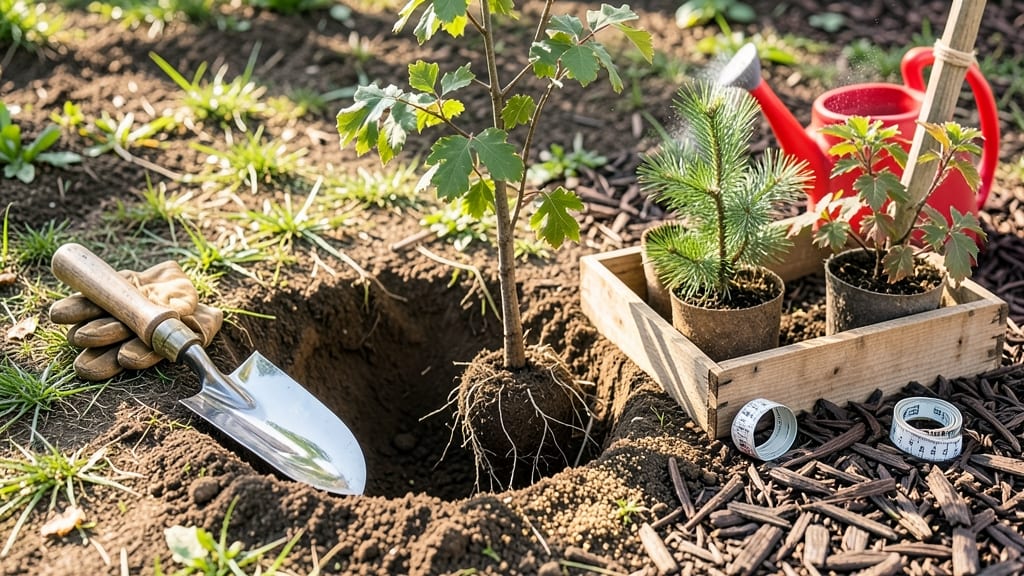
Planting tree seedlings right means stronger roots and a tree that thrives for decades. 🌱 I learned the hard way—my first oak seedling struggled because I didn’t loosen the soil properly. The secret isn’t just digging a hole; it’s creating the perfect foundation so roots spread deep and wide.
Start by digging a hole twice as wide as the root ball but only as deep—burying too deep suffocates roots. Mix the native soil with compost (half and half) for better drainage and nutrients.
For heavy clay soil, add sand or perlite to help roots establish faster. Water the hole before planting to settle the soil and remove air pockets.
After placing the seedling, backfill with the soil mix and water deeply to eliminate air gaps. A 5-gallon watering can works best—aim for 10 gallons total to encourage roots to spread outward.
Mulch around the base (but not touching the trunk) to retain moisture and protect from temperature swings. This method works for fruit trees, shade trees, and even delicate varieties.
Watch for signs of stress like wilting or yellowing leaves in the first few weeks. If you see these, water again and check that the soil isn’t compacted. With proper care, your seedlings will grow into sturdy, healthy trees in just a few seasons.
The key is patience—roots take time to establish, but the payoff is worth it.
📚 In This Guide
- What you need
- Instructions
- Tips and common mistakes
- Wrapping up and next steps
What you need
- ● Tree seedlings: 1–5 (depending on your space and goals). Choose healthy, disease-free saplings with strong stems and vibrant leaves.
- ● Shovel or trowel: A garden shovel (for digging holes) or a hand trowel (for smaller seedlings).
- ● Watering can or hose: A spray nozzle (for gentle watering) or a watering can with a long spout (for precision).
- ● Compost or organic mulch: 2–3 gallons. Look for well-aged compost or wood chips to enrich the soil.
- ● Gloves: A pair of gardening gloves (to protect your hands from dirt and thorns).
- ● Soil tester kit: To check pH and nutrient levels (ideal range: 6.0–7.0 for most trees).
- ● Tree stake or bamboo poles: 1–2 per seedling (for support if needed).
- ● Mulch mat or landscape fabric: To suppress weeds and retain moisture.
- ● Fertilizer (slow-release): A balanced, organic fertilizer (e.g., 10-10-10 or compost tea).
- ● Pruners: Small, sharp bypass pruners for trimming dead branches.
Step-by-Step instructions for planting tree seedlings
Here's my foolproof method for planting four strong, thriving trees—no guesswork involved.
🌱 Step 1: Prepare the Planting Site
Choose a location with 6+ hours of sunlight daily and space for mature root spread. Dig a hole twice as wide as the root ball but only as deep—planting too deep suffocates roots. I like to loosen the sides of the hole with a shovel to encourage roots to spread outward.
Remove any rocks or debris from the hole. If your soil is heavy clay or sandy, mix in 2-3 inches of compost into the bottom of the hole. This improves drainage and gives roots a nutrient boost right from the start. Tap the sides of the hole gently to settle the soil before planting.
🪴 Step 2: Remove Seedling from Container
Water the seedling thoroughly 24 hours before planting to reduce transplant shock. Gently squeeze the sides of the container to loosen the root ball. If the roots are circling tightly (a common problem), use your fingers to tease them outward—this prevents girdling as the tree matures.
Lift the seedling by the base of the stem, not the leaves. If the root ball falls apart, it's okay—just keep the roots intact. You'll know you've done it right when the roots stay mostly together and you can see the main taproot extending downward.
💧 Step 3: Plant at the Right Depth
Place the seedling in the hole so the top of the root ball sits level with the surrounding soil. Planting too deep buries the stem, which can rot; too shallow exposes roots and causes stress. Fill the hole with soil, tamping it down lightly every 2 inches to remove air pockets.
Create a small watering basin around the base of the tree by mounding soil outward. This directs water straight to the roots where it's needed most. Water deeply until the soil 1 inch below the surface feels moist. You'll see the soil settle slightly—this is normal and means the roots have room to grow.
☀️ Step 4: Mulch and Protect Newly Planted Seedlings
Spread 2-3 inches of mulch (wood chips or straw) in a donut shape around the tree, keeping it 3-4 inches away from the trunk. Mulch too close can cause rot; too far away lets weeds compete for water. Water again after mulching to help settle everything in place.
Stake only if the seedling is top-heavy or in a windy area. Use one stake per tree, tied loosely with soft fabric to avoid damaging the trunk as it grows. Check stakes monthly—they should never restrict growth. In the first week, water every 2-3 days until new leaves appear.
⏰ Step 5: Monitor and Maintain Growth
Watch for new leaf growth within 2-4 weeks—this is your sign the tree has established roots. If leaves yellow or wilt, water deeply and check for pests like aphids. I like to fertilize lightly with a balanced 10-10-10 formula 3 months after planting to support root development.
After the first year, reduce watering to once a week unless there's a drought. Overwatering is the #1 killer of young trees—always let the top 2 inches of soil dry out between waterings. Prune only to remove dead branches; never "thin" a young tree's canopy.
Tips & tricks for planting tree seedlings
These little details make all the difference between a struggling sapling and a thriving tree. Let me share what I've learned after watching dozens of plantings go right—and a few go wrong.
Root Ball Prep: In Step 2, when you're loosening that root ball, don't just squeeze the container—gently tap the sides first to break the seal between roots and pot. I've seen roots grow in circles for years because they couldn't escape the container. If roots are tightly bound, use your fingers to carefully separate them while keeping the main taproot intact. This simple step prevents girdling that can strangle your tree as it grows.
Soil Layering Secret: For Step 1, if your native soil is especially compacted or poor, create a "layer cake" in the bottom of your hole. Start with 1 inch of coarse sand or small gravel for drainage, then add 2 inches of compost mixed with native soil. This mimics natural forest floor conditions and gives roots both nutrients and proper aeration. The compost layer should be right where the roots will settle—this is where they'll find their first nourishment.
Watering Wisdom: After planting in Step 3, that first deep watering is crucial—but don't just pour. Create a small basin around the base by mounding soil outward, then water slowly until it seeps down to 1 inch below the surface. I've seen new trees drown because water pooled away from the roots. A slow, steady pour ensures water penetrates where it's needed most. You'll know you've done it right when water appears at the edges of your basin after 10-15 minutes.
Mulch Placement: When you're spreading that 2-3 inches of mulch in Step 4, think donut—not blanket. Keep it 3-4 inches away from the trunk to prevent rot while still protecting roots. I like to use wood chips because they break down slowly, adding organic matter to the soil. The mulch should cover the entire root zone but leave the trunk exposed to sunlight. This creates the perfect microclimate for root growth without smothering your young tree.
Pro Tips for Plant Tree Seedlings
- These little details make all the difference between a struggling sapling and a thriving tree.
- Root Ball Prep: In Step 2, when you're loosening that root ball, don't just squeeze the container—gently tap the sides first to break the seal between roots and pot.
- Soil Layering Secret: For Step 1, if your native soil is especially compacted or poor, create a "layer cake" in the bottom of your hole.
Frequently asked questions
Got questions about planting tree seedlings? You’re not alone! Here are answers to the most common concerns—so you can plant with confidence and watch your little saplings thrive.
When is the best time of year to plant tree seedlings?
The ideal window is early spring or fall when temperatures are mild (50–70°F) and rainfall is steady. Avoid planting in extreme heat or cold—roots struggle to establish in these conditions. Pro tip: If you must plant in summer, water deeply and use shade cloth to protect young roots.
How often should I water newly planted seedlings?
Water daily for the first 2 weeks, then taper to 2–3 times weekly (depending on weather). The soil should stay moist but not soggy—think "damp sponge," not "mud puddle." Deep watering (1–2 inches per session) encourages roots to grow downward. Use a soaker hose to avoid disturbing the soil.
Can I plant tree seedlings in containers instead of the ground?
Use large pots (5+ gallons) with drainage holes and well-draining soil. Containers work well for urban areas or small spaces, but transplant seedlings outdoors within 1–2 years—roots outgrow pots fast. Choose fast-draining mixes (like 60% soil, 30% perlite, 10% compost) to prevent rot.
What do I do if my seedling’s leaves turn yellow or wilt?
Yellow leaves often signal overwatering or poor drainage, while wilting can mean underwatering or root stress. Check the soil moisture and adjust your watering routine. Pests? Inspect for aphids or mites—spray with neem oil if needed. If the trunk feels soft, it might be fungal rot; trim affected areas and improve airflow.
Are there any trees I should avoid planting near my home?
Yes! Skip aggressive rooters like willows or silver maples near foundations, sidewalks, or septic systems—they can crack pipes or lift pavement. Opt for shallow-rooted species (e.g., dogwood, crape myrtle) if space is tight. Research your tree’s mature size and growth habits before planting!
Wrapping up and next steps
Planting tree seedlings is a rewarding way to nurture growth and contribute to a greener planet—and you’ve got all the tools to succeed! 🌱 By choosing the right soil layers, preparing the site carefully, and giving your seedlings the love they need, you’re setting them up for strong roots and thriving future growth. Remember: patience and consistency are key!
Now that you’re armed with knowledge, take the next step—pick a sunny day, grab your tools, and get planting! Whether it’s a backyard tree or a community project, every seedling makes a difference. Happy growing! 🌿