
Pruning
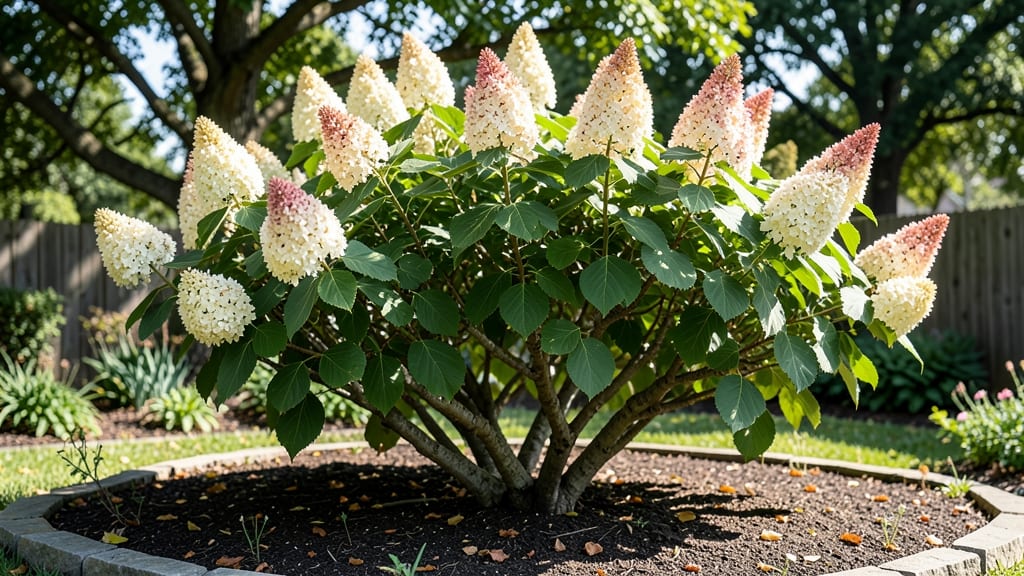
Your hydrangea tree’s fall pruning determines next summer’s blooms—get it wrong, and you’ll end up with bare branches by June. ✂️ I’ve pruned winter-blooming varieties for years, and the timing in late fall (after the first frost but before hard freezes) is everything.
One wrong cut now means fewer flowers next year, but the right approach transforms a struggling shrub into a showstopper.
The key is patience and precision: wait until the plant’s gone dormant but before the ground freezes, then trim back one-third of the oldest stems to the ground. This might sound drastic, but it’s how you force new growth—those fresh stems will produce next year’s flowers.
Most gardeners over-prune in fall, thinking more cuts mean bigger blooms, but winter-bloomers need their old wood to set buds.
By spring, you’ll see vibrant new shoots pushing through the soil, and by summer, your hydrangea will be heavier with blooms than ever before. The foliage stays lush longer too, giving you that golden-hued fall color before the frost.
Just avoid pruning in spring—those buds are already set for summer, and cutting them off means no flowers at all.
Works for oakleaf, panicle, and smooth hydrangeas—just adjust timing slightly for your zone. Here’s how to do it without the guesswork, step by step.
📚 In This Guide
- What you need
- Instructions
- Tips and common mistakes
- Wrapping up and next steps
What you need
- ● Pruning shears: Bypass pruners (sharp, clean, and disinfected with rubbing alcohol). Quantity: 1 pair (or 2 if working with large branches).
- ● Loppers: For thicker branches (1–2 inches in diameter). Quantity: 1 pair.
- ○ Hand saw: For stubborn, woody stems (optional but helpful for mature trees). Quantity: 1.
- ● Gloves: Heavy-duty, cut-resistant gloves to protect hands from thorns and sap.
- ● Disinfectant: 1 part bleach to 9 parts water (for cleaning tools between cuts).
- ○ Pruning sealant: (Optional) For large cuts on older wood to prevent disease. Quantity: Small bottle.
- ○ Marking twine or flags: (Optional) To tag branches for removal or special attention.
- ● Timing: Prune after the first hard frost but before winter dormancy sets in (typically late fall, October–November, depending on your climate zone).
- ● Weather: Choose a dry, overcast day to avoid stressing the tree.
- ● Safety gear: Safety glasses (to shield from debris) and long sleeves/pants (to protect from thorns).
- ● Cleanup supplies: Heavy-duty trash bags (for debris) and a wheelbarrow or bucket (to haul branches).
- ● Tree knowledge: Familiarize yourself with your hydrangea variety (e.g., Hydrangea paniculata vs. Hydrangea arborescens)—pruning needs vary!
Step-by-step guide to pruning hydrangea trees in fall
Fall is the perfect time to shape winter-blooming hydrangeas for next year’s stunning blooms.
✂️ Step 1: Time Your Pruning Precisely
Prune your hydrangea tree 4-6 weeks before your first hard frost—typically late October to early November in most climates. This timing ensures new growth has time to harden off before winter. You’ll know it’s time when leaves begin turning brown but haven’t yet fallen completely.
If you wait too long, you risk exposing tender new growth to freezing temperatures. If you prune too early, the tree may produce weak, late-season growth that won’t mature before winter. Watch for daytime highs consistently below 50°F as your cue.
✂️ Step 2: Gather the Right Tools and Safety Gear
Use clean, sharp pruning shears (sterilized with rubbing alcohol) and hand pruners for smaller branches. A ladder may be needed for taller varieties. Wear gloves to protect against thorns and long sleeves to avoid scrapes from rough bark.
I always keep a small bucket nearby to collect fallen leaves and debris—this keeps your workspace tidy and prevents slipping. Sharp tools make clean cuts, which heal faster and reduce disease risk. Dull blades tear bark, inviting infections that can weaken your tree.
✂️ Step 3: Remove Dead, Diseased, or Weak Wood First
Start by cutting out any dead, diseased, or crossing branches—these compete with healthy growth and can harbor pests. Look for branches with no green bark underneath when scraped or those with mushy, discolored wood. Remove these all the way back to the main trunk or a healthy lateral branch.
Next, trim branches that grow inward or rub against others. These create wounds that invite rot. You’ll see these as thin, spindly stems or ones growing at sharp angles. Make cuts at a 45-degree angle just above a bud or lateral branch to encourage outward growth.
✂️ Step 4: Shape the Tree for Airflow and Structure
Step back and visualize the tree’s natural shape—aim for an open, vase-like form that allows sunlight and air to circulate. Start at the outermost branches and work inward, cutting back 1/3 of the current season’s growth to encourage bushier blooms next year.
For winter-blooming varieties, never cut back into old wood—this removes next year’s flower buds. Instead, focus on lightly thinning to open the center. You’ll see stronger growth if you avoid heavy pruning—think of it as a haircut, not a buzz cut.
🌿 Step 5: Clean Up and Protect for Winter
After pruning, collect and dispose of all debris—never leave clippings on the ground, as they can harbor pests. Apply a 2-3 inch layer of mulch around the base (but not touching the trunk) to insulate roots. Use shredded bark or pine straw for best results.
Water deeply one last time before winter to help roots establish. If your hydrangea is young or in a windy area, consider wrapping the trunk with burlap to protect against cold snaps. This is especially important for newly pruned trees, which are more vulnerable.
Tips & tricks for pruning hydrangeas in fall
Fall pruning transforms your hydrangea into next year's showstopper—here's how to avoid the most common mistakes.
Timing is Everything: The 4-6 week window before frost is non-negotiable for winter-blooming varieties. I once pruned too early and ended up with weak growth that never matured properly. Watch for those consistently below 50°F daytime temps—they're your signal that new growth has hardened enough. Pro tip: Use a local frost calendar as backup if you're unsure about your exact frost date.
Tool Prep Prevents Problems: Sterilizing your pruning shears with rubbing alcohol isn't just about hygiene—it prevents spreading diseases between cuts. I learned this the hard way after pruning a healthy tree right after a diseased one. For taller varieties, invest in a sturdy ladder with a safety strap. And here's what nobody tells you: Store your pruning tools in a dry place after each use to prevent rust that dulls blades over time.
Cutting Technique Matters: That 45-degree angle isn't arbitrary—it helps water run off the cut and prevents rot. When removing branches, always cut just above a bud or lateral branch facing outward. I used to make flush cuts and ended up with ugly stubs that took years to heal. For thick branches, make two cuts: the first undercut, then the final cut just outside the branch collar. This prevents tearing the bark.
Winter Protection Wins: The 2-3 inch mulch layer is your tree's winter blanket—don't skimp! I've seen trees with mulch piled against the trunk (big mistake) because people forget it should stay clear. For young trees or windy areas, that burlap wrap can make all the difference. And here's my secret: Water deeply before wrapping—hydrated roots handle winter stress better than thirsty ones.
Pro Tips for Hydrangea Tree In Fall
- Fall pruning transforms your hydrangea into next year's showstopper—here's how to avoid the most common mistakes.
- Timing is Everything: The 4-6 week window before frost is non-negotiable for winter-blooming varieties.
- Tool Prep Prevents Problems: Sterilizing your pruning shears with rubbing alcohol isn't just about hygiene—it prevents spreading diseases between cuts.
Frequently asked questions
Got questions about keeping your hydrangea tree stunning in fall and prepped for winter? You’re not alone! Here are answers to the most common queries—so you can prune with confidence and enjoy those showstopping blooms next season.
When is the best time to prune a hydrangea tree in fall for winter blooms?
Prune after the first hard frost (usually late fall) but before new growth starts in early spring. This timing ensures you remove dead blooms while protecting next year’s buds. Avoid pruning too early—fall flowers may still need time to fade naturally!
Can I prune a hydrangea tree in late fall if I missed the ideal window?
Yes, but with caution! If you prune too late (near winter), new cuts may not heal properly. Wait until early spring (just before buds swell) if you missed fall. Focus on removing dead or diseased wood first—avoid heavy cuts that could stress the tree.
How do I know if I’m pruning my hydrangea tree correctly for winter blooms?
Look for dormant buds (small bumps) at the base of stems—they’re next year’s blooms! Prune just above these buds (use sharp shears) and avoid cutting old wood (last year’s growth). For winter-blooming varieties, never prune back to bare stems!
What if my hydrangea tree didn’t bloom in fall—did I prune it wrong?
Not necessarily! Some varieties (like Oakleaf or Panicle hydrangeas) bloom on new wood, so light pruning in late winter/early spring is better. If it’s a bigleaf type, check for over-pruning—last year’s blooms form on old wood. Adjust next year’s cuts!
Are there fall-pruning alternatives if I don’t want to cut back my hydrangea tree?
Instead of heavy pruning, try:
- Deadheading: Snip off spent blooms (but leave stems for structure).
- Thinning: Remove 10–20% of oldest stems to improve airflow.
- Mulching: Add 2–3 inches of mulch to protect roots in winter.
Wrapping up and next steps
Fall is the perfect time to shape your hydrangea tree for stunning winter blooms! Remember, timing, tools, and technique are key—prune after blooms fade but before hard frost, use sharp shears, and avoid over-trimming.
With the right care, your tree will reward you with vibrant color and robust growth next season.
Ready to take action? Grab your pruners and get started! 🌿✂️ For extra confidence, revisit our FAQs or consult a local gardening expert. Your future blooms will thank you!