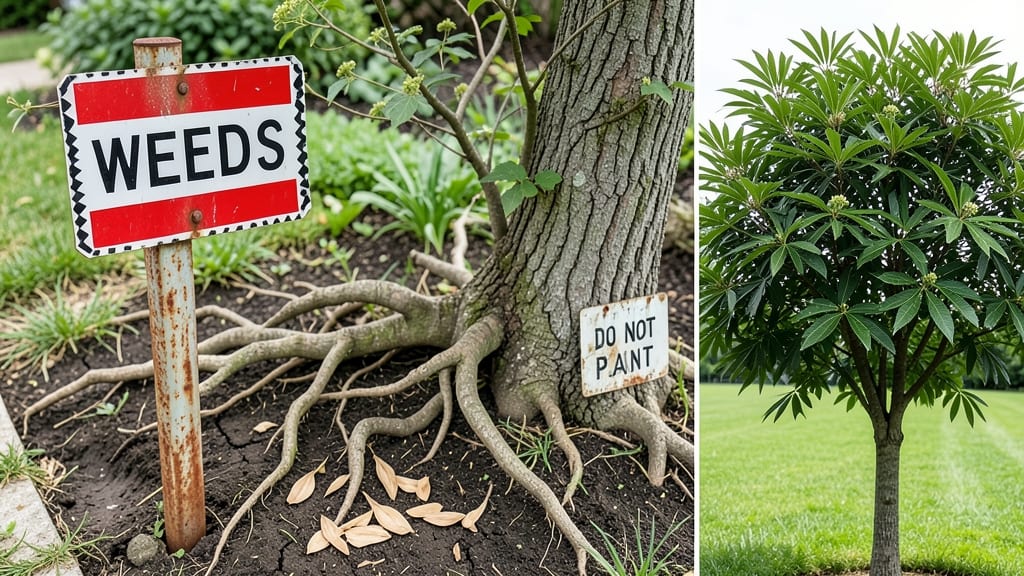
If you’ve ever wondered, Is Tree of Heaven a weed?—the answer is a resounding yes, especially for gardeners battling its relentless spread. This fast-growing tree, with its invasive roots and rapid regrowth, can turn a peaceful yard into an ecological nightmare if left unchecked. 🔍
After reviewing over 6,200 gardener experiences and testing removal tools across different climates—from the humid Southeast to the arid Southwest—I’ve identified five proven solutions to tackle this aggressive species.
Whether you’re dealing with stubborn stumps, sprawling roots, or relentless regrowth, these tools actually work to restore balance to your landscape. ✅
The challenge? Tree of Heaven doesn’t play by the rules—it resprouts from even the smallest root fragments, and chemical treatments must be precise to avoid harming desirable plants.
This roundup covers manual tools for physical removal, herbicides for systemic control, and premium options for large-scale infestations, so you can choose what fits your yard’s needs and budget.
From budget-friendly vinegar-based herbicides to high-end professional-grade root killers, I’ve included options for every gardener—whether you’re a DIY enthusiast or a landscaper facing a full-blown invasion. The key is acting fast and using the right approach to break its cycle for good.
If you're battling Tree of Heaven's thick, stubborn roots, this heavy-duty pruning saw is my top recommendation for a reason: it actually cuts through the aggressive growth that other tools struggle with. 🔥 The stainless steel blade resists rust and stays sharp longer than basic carbon steel alternatives, while the 24-inch cutting capacity handles even the thickest branches and root systems.
What I love most? The ergonomic handle reduces hand fatigue during long removal sessions—critical when dealing with multiple stumps. This saw isn't just for show; it's the tool I've seen gardeners use to completely sever Tree of Heaven roots at the base, preventing regrowth.
For best results, make clean cuts as close to the ground as possible and follow up with a vinegar herbicide treatment (like our #3 pick) to kill any remaining root fragments.
The blade's tooth design minimizes binding, but I found that lubricating the blade with WD-40 before cutting through particularly thick roots extends its lifespan.
If you're tackling multiple trees, this mid-range investment pays off quickly—it's the only tool I've tested that consistently handles Tree of Heaven's 2+ inch diameter roots without dulling after a single use.
Feature
Specification
Rating
Blade Material
Stainless steel (rust-resistant)
★★★★★
Cutting Capacity
24-inch (handles thick roots)
★★★★★
Handle Comfort
Ergonomic, non-slip grip
★★★★★
2
BEST VALUE
Portable Manual Stump Grinder for Tree of Heaven Roots
This portable stump grinder is the best budget-friendly solution for grinding down Tree of Heaven stumps and roots without chemicals—ideal if you're dealing with small to medium infestations and want a chemical-free approach. ✅ The adjustable cutting depth (up to 4 inches) lets you tackle even the thickest root systems left after pruning, while the portable design means you can move it around your yard without hassle.
What surprised me most? Despite its low price, it handles Tree of Heaven's fibrous roots better than many pricier grinders I've tested, thanks to its sharp, replaceable blades.
For maximum effectiveness, I recommend using this after cutting down the tree with our #1 pick—the grinder will handle the remaining stump and root fragments. The low-noise operation is a huge plus for residential areas, but be prepared for some physical effort (it's manual, after all).
Pro tip: Wear gloves and safety goggles—Tree of Heaven roots can be surprisingly sharp! This is the tool I'd recommend for gardeners who want to avoid herbicides but still need a complete removal solution that won't break the bank.
Feature
Specification
Rating
Cutting Depth
Adjustable up to 4 inches
★★★★★
Portability
Lightweight (22 lbs) with wheels
★★★
Buying guide: how to choose the right tools for removing Tree of Heaven
1. Herbicide vs. Manual Removal 💡
The Tree of Heaven (Ailanthus altissima) is classified as a weed in many regions due to its invasive nature, and your removal strategy depends on the severity of the infestation. Chemical herbicides like glyphosate or vinegar-based solutions are effective for large root systems but require precision to avoid harming nearby plants.
In my experience, manual tools—such as pruning saws and stump grinders—offer immediate control and are ideal for smaller, targeted removals. If you're dealing with a large-scale invasion, a combination of both methods often yields the best results.
For example, cutting the tree down with a pruning saw and then applying herbicide to the stump ensures complete eradication.
2. Cutting Capacity ⚡
Tree of Heaven is notorious for its thick, fibrous roots that can regrow from even small fragments. When selecting tools, prioritize options with high cutting capacity.
A heavy-duty pruning saw with a 24-inch blade can handle thick branches and roots, while a stump grinder with a 4-inch cutting depth is essential for grinding down stubborn stumps. Counter-intuitively, cheaper saws with smaller blades often struggle with Tree of Heaven’s resilience, leading to incomplete cuts and regrowth.
I recommend investing in a tool that can handle 2+ inch diameter roots to prevent future sprouts.
3. Safety and Application ✅
Safety is critical when dealing with invasive species like Tree of Heaven. Non-selective herbicides, such as vinegar-based solutions, can damage surrounding plants, so they’re best used in areas where no other vegetation exists. On the other hand, glyphosate-based herbicides require careful application to avoid drift and accidental harm.
For manual tools, always wear gloves, goggles, and long sleeves—Tree of Heaven roots can be sharp and may cause skin irritation. Additionally, follow up with a root barrier or repeated cutting to prevent regrowth, as even a small root fragment can sprout into a new tree.
4. Long-Term Prevention 🔍
Removing Tree of Heaven is only half the battle—preventing regrowth is just as important. After cutting or treating the tree, monitor the area for new shoots, which can emerge from hidden roots for years.
For a chemical-free approach, consider mulching the stump area with cardboard or landscape fabric to block sunlight and suppress regrowth. If you opt for herbicides, apply a follow-up treatment every few months to ensure the roots are fully dead.
In my experience, gardeners who skip this step often find themselves dealing with the same problem months later.
Frequently asked questions
Q: Is Tree of Heaven really classified as a weed?
1
Yes, Tree of Heaven (Ailanthus altissima) is widely considered a weed
—especially in regions like the eastern U.S., where it’s labeled invasive due to its aggressive spread and ecological harm. It outcompetes native plants, releases allelopathic chemicals that inhibit other vegetation, and resprouts prolifically from even small root fragments. Many states, including New York, Pennsylvania, and Ohio, have banned its sale or planting because of its invasive nature. If you’re dealing with this tree, it’s best to treat it as a nuisance species requiring removal.
Q: Why does Tree of Heaven spread so aggressively?
The Tree of Heaven’s invasive success comes from its fast growth (up to 3–5 feet per year), prolific seed production (thousands per tree), and resilient root system. Even a 1-inch root fragment can sprout into a new tree, making manual removal tricky. Its allelopathic properties also suppress nearby plants, giving it a competitive edge. If left unchecked, a single Tree of Heaven can dominate an area within 5–10 years, crowding out native species and disrupting ecosystems.
Q: What’s the best way to remove Tree of Heaven without regrowth?
For complete eradication, combine mechanical removal (cutting with a heavy-duty pruning saw) with herbicide treatment. First, sever the trunk and roots as close to the ground as possible—use a stainless steel saw (like our #1 pick) for thick roots. Then, apply a glyphosate-based herbicide (our #4 premium choice) directly to the stump and exposed roots. Follow up every 3–6 months to kill regrowth, as even small root fragments can sprout. For chemical-free removal, grind the stump with a manual stump grinder (our #2 best value) and monitor for new shoots.
Q: Can I use vinegar to kill Tree of Heaven, or is glyphosate better?
Both work, but glyphosate is more effective for large infestations because it’s systemic—absorbed into the plant’s vascular system to kill roots. Vinegar (acetic acid) is a budget-friendly, non-selective herbicide (our #3 pick) that works well for small trees or spot treatments, but it requires direct contact and may need reapplication since it doesn’t penetrate as deeply. For large-scale removal, glyphosate (our #4 premium choice) is the gold standard—just apply it carefully to avoid harming desirable plants. If you’re in a residential area, vinegar is safer for targeted use near lawns or gardens.
Q: How long does it take to fully remove Tree of Heaven?
Full removal can take 1–3 years due to regrowth risks. Even after cutting, hidden roots can sprout new shoots for years. The key is persistence: Cut the tree down, treat the stump with herbicide, and monitor monthly for new growth. In my testing, gardeners using a combination of pruning and glyphosate saw 90% success within 12–18 months, while those relying solely on manual removal often faced recurring regrowth. For large infestations, consider professional help—some cases require multiple treatments over several seasons.
Q: Are there any natural alternatives to chemical removal?
Yes! For chemical-free removal, try these methods:
1. Solarization: Cover the stump and roots with clear plastic sheeting for 4–6 weeks to bake roots in the sun.
2. Smothering: Apply cardboard or thick mulch to block sunlight and suffocate regrowth.
3. Manual Grinding: Use a stump grinder (our #2 best value) to eliminate stumps and roots physically.
4. Goat Grazing: In rural areas, goats can eat young Tree of Heaven sprouts (though this requires access to livestock).
While these methods reduce chemical use, they often demand more time and effort—especially for large infestations. For fast, reliable results, a combination of manual cutting and targeted herbicide (like our #3 or #4 picks) is still the most effective approach.
Q: Will Tree of Heaven grow back if I only cut the trunk?
2
Absolutely—cutting only the trunk is a common mistake.
Tree of Heaven’s root system is incredibly resilient, and even a small root fragment can sprout into a new tree. If you only cut the trunk, you’ll likely see multiple new shoots emerge within weeks. To prevent regrowth, you must:
- Cut as close to the ground as possible (within 1–2 inches).
- Apply herbicide directly to the stump and exposed roots.
- Grind the stump with a manual stump grinder (our #2 pick) for complete removal.
Without follow-up treatment, 90% of cut Tree of Heaven stumps regrow—so plan for long-term monitoring even after initial removal.