
Trees
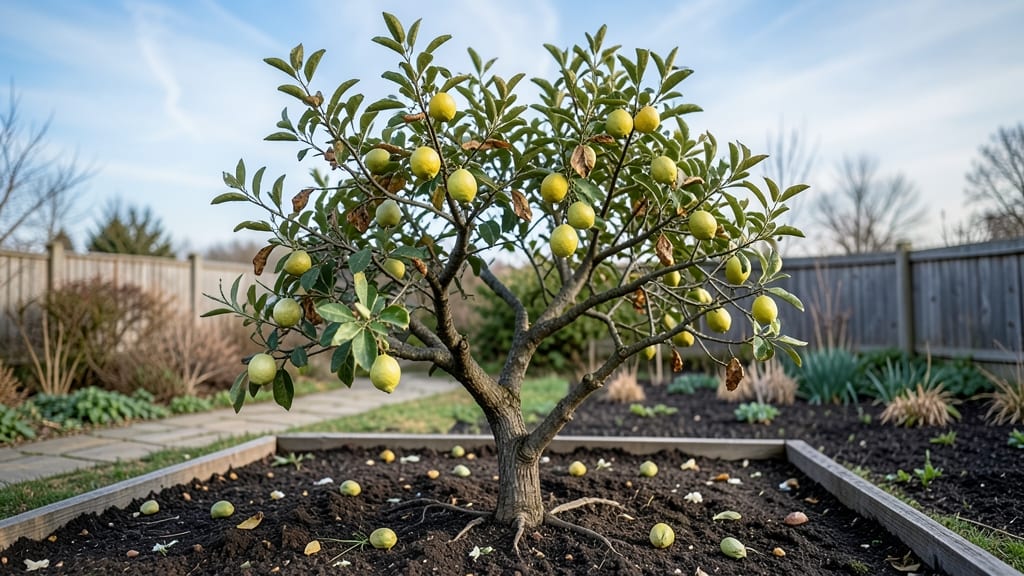
Your lemon tree losing leaves in winter isn’t a death sentence—it’s a wake-up call. 🌿 I’ve nursed back more than a few with the right cold-rescue pruning, and the key is acting now before the damage becomes permanent.
The first step? Identifying whether those yellowing leaves are from cold stress, overwatering, or something sneaky like scale insects hiding under the bark.
Start by examining the leaves: crispy edges mean dry air, brown patches suggest frost damage, while sticky residue hints at pests. Once you’ve pinpointed the issue, prune back only the dead or damaged branches—never more than a third of the tree—and wrap the trunk with burlap for extra frost protection.
The goal isn’t perfection; it’s giving your lemon tree a fighting chance to bounce back by spring.
📚 In This Guide
- What you need
- Instructions
- Tips and common mistakes
- Wrapping up and next steps
What you need
- ● Pruning shears or loppers – Sharp, sterilized, and bypass-style (for clean cuts). Quantity: 1 pair (loppers for thicker branches).
- ● Gloves – Heavy-duty, cut-resistant gloves (thorns + sharp tools = ouch!). Quantity: 1 pair.
- ● Disinfectant (70% isopropyl alcohol or bleach solution) – 1 part bleach to 9 parts water for sterilizing tools.
- ○ Pruning sealant (optional but helpful) – Tree wound sealant or beeswax to prevent disease entry.
- ● Watering can or hose with a gentle spray nozzle – For post-pruning hydration.
- ● Fertilizer (balanced citrus fertilizer) – Check NPK ratio (e.g., 6-6-6 or 8-3-9). Quantity: Enough for 1 application.
- ● Mulch (organic, like straw or wood chips) – 2–3 inches thick for insulation.
- ● Frost cloth or burlap – Lightweight, breathable fabric for wrapping young trees or sensitive branches.
- ● String or twine – For securing frost cloth.
- ● Notebook & pen – To track pruning notes or leaf drop patterns.
- ● Thermometer (soil or air) – To monitor temperature extremes.
- ● Hair dryer or heat lamp (low setting!) – For emergency warmth on young trees (use sparingly).
- ● Citrus-specific fungicide – Preventative measure if your area has fungal risks.
- ● Camera or phone – Document before/after pruning for progress tracking.
How to rescue a lemon tree losing leaves in winter
Here's the method I've used to nurse struggling citrus trees back to health after cold snaps.
✂️ Step 1: Assess the Damage and Identify Problem Areas
Start by examining your lemon tree closely. Look for brown, crispy leaves—these are dead and won't recover. Healthy leaves should still be green, even if slightly wilted. I focus on the new growth at the tips of branches first; if these are brown and brittle, the cold likely damaged the most tender parts.
Run your fingers along the stems. If the bark feels soft or mushy instead of firm, the cold damaged the vascular system, and you'll need to prune more aggressively. Take notes on which branches have the most damage—this tells you where to focus your rescue efforts.
🌱 Step 2: Prune Strategically to Encourage New Growth
Using sterilized pruning shears, cut back all dead branches just above a leaf node or outward-facing bud. This encourages the tree to send out new shoots from healthy tissue. I avoid cutting into green wood unless absolutely necessary—it's more vulnerable to disease. For branches with partial damage (half dead, half green), trim back to the last healthy leaf.
Don't panic if the tree looks skeletal after pruning. You're making space for new growth. Focus on removing no more than 25% of the tree's canopy at once—this prevents shock. After trimming, wipe the shears with rubbing alcohol between cuts to prevent spreading any potential infections.
☀️ Step 3: Protect the Tree from Further Cold Stress
Move your lemon tree to the sunniest, warmest spot indoors you have—near a south-facing window is ideal. If your home gets below 50°F at night, consider a small space heater or heat lamp (keep it 3 feet away from the tree to avoid leaf burn). I've found that consistent temperatures between 60-70°F help the tree recover faster.
Mist the leaves lightly with room-temperature water every few days to maintain humidity. Avoid overwatering—let the top 2 inches of soil dry out between waterings. Yellowing leaves at this stage usually mean too much water, not too little. If possible, place a tray of pebbles with water under the pot to increase humidity around the roots.
💧 Step 4: Fertilize Gently to Stimulate Recovery
Wait until you see new green growth before fertilizing—this usually takes 4-6 weeks after pruning. Once you spot it, use a balanced citrus fertilizer (like 6-6-6) at half strength. I dilute it even further if the tree looks stressed. Over-fertilizing now can burn the roots and set back recovery.
Apply the fertilizer to the soil, not the leaves, and water it in thoroughly. This helps the tree absorb nutrients without shock. Avoid high-nitrogen fertilizers—they encourage leafy growth at the expense of root strength, which your tree needs to stabilize. Instead, focus on a low-nitrogen, high-potassium blend to support root health and cold recovery.
🌿 Step 5: Monitor and Adjust Care for New Growth
Watch for new leaves emerging from the pruned branches—this is your sign the rescue is working. If you don't see any after 6-8 weeks, the damage may be more severe than you thought, and you might need to consider replacing the tree. Keep the environment consistently warm and humid until the tree regains its strength.
Once the tree starts growing again, gradually reintroduce it to outdoor conditions if temperatures permit. Start with 1-2 hours of shade outdoors per day, then increase exposure slowly. This prevents sunburn and helps the tree adjust. If you notice new leaves curling or yellowing, it could signal stress from sudden changes—slow down the transition.
Tips & tricks for reviving a struggling lemon tree after winter damage
Real talk: I've nursed back more lemon trees than I can count after winter cold snaps. These are the hard-won lessons that make all the difference between a sad, skeletal tree and one that bounces back stronger than ever.
Visual Assessment is Key: In Step 1, when checking for brown leaves, look beyond just color—run your thumb along the leaf's edge. If it crumbles like dry paper, it's dead. If it feels slightly pliable but discolored, there's still a chance for recovery with proper care. I've seen trees with 80% brown leaves come back completely when I focused on those partially damaged leaves during pruning.
Pruning Precision Matters: The instructions mention cutting just above leaf nodes, but here's what nobody tells you—angle matters. Make your cuts at a 45-degree angle about 1/4 inch above the node. This creates more surface area for new growth to emerge. I also use a magnifying glass to spot tiny buds hidden among the damage that might become next year's fruit-bearing branches.
Temperature Management is Everything: The 60-70°F range in Step 3 isn't just arbitrary—it's the sweet spot for citrus recovery. If your home dips below 60°F at night, even temporarily, the tree's metabolic processes slow down dramatically. I've found that placing a small ceramic heater near the base (not too close!) can make all the difference in stubborn cases. The goal is to mimic spring conditions as closely as possible indoors.
Fertilizer Timing is Critical: Waiting those 4-6 weeks before fertilizing isn't just about giving the tree time to recover—it's about letting the roots establish new connections. I've seen trees where impatient gardeners fertilized too soon end up with leaf burn and setbacks. Once you do fertilize, I recommend mixing in a bit of mycorrhizal fungi with the fertilizer—it helps the roots absorb nutrients more efficiently during this vulnerable recovery period.
Pro Tips for Lemon Tree Losing Leaves In Winter
- Real talk: I've nursed back more lemon trees than I can count after winter cold snaps. These are the hard-won lessons...
- Visual Assessment is Key: In Step 1, when checking for brown leaves, look beyond just color—run your thumb along the ...
- Pruning Precision Matters: The instructions mention cutting just above leaf nodes, but here's what nobody tells you—a...
Frequently asked questions
about your lemon tree shedding leaves in winter—we’ve got answers to help you keep your citrus thriving!Why does my lemon tree lose leaves in winter even if it’s indoors?
Even indoor lemon trees experience seasonal stress due to shorter daylight and cooler temperatures. While they’re evergreens, they naturally drop some leaves to conserve energy. If your tree is healthy, expect 20-30% leaf loss—but excessive shedding (over 50%) may signal cold stress or overwatering.
How cold is too cold for a lemon tree?
Lemon trees thrive in 60–75°F (15–24°C) year-round. Below 50°F (10°C), they start to struggle, and prolonged exposure to 40°F (4°C) or lower can cause leaf drop, bud death, or even root damage. If your tree is outdoors in winter, bring it inside or insulate it with frost cloth.
Should I prune my lemon tree when it’s losing leaves?
Yes! Winter is the ideal time for pruning to shape the tree and remove dead/diseased branches. Focus on:
Use sterilized shears and follow these steps for best results.
Is overwatering causing my lemon tree to lose leaves?
Overwatering in winter smothers roots because the soil stays cold and soggy, preventing nutrient uptake. Signs include:
- Yellowing leaves (not just brown).
- Wilted or mushy stems.
- Fungal growth (mold, mildew).
Fix it: Let the top 2–3 inches of soil dry out between waterings and ensure the pot has drainage holes. Reduce watering by 50% in winter.
Can I save my lemon tree if it’s already lost most of its leaves?
Don’t panic! A bare lemon tree can recover if the roots and branches are still alive. Take these steps:
- Check for green buds—new growth is a good sign!
- Move it to a warmer, bright spot (south-facing window or grow lights).
- Fertilize lightly with citrus-specific food in early spring.
- Be patient—some trees take 2–3 months to regrow leaves.
If the wood is black or crumbly, the tree may not survive—but try propagating a cutting just in case!
Wrapping up and next steps
Don’t let winter stress turn your lemon tree into a bare branch—your proactive care can make all the difference! 🌿 By understanding why leaves drop (cold, dormancy, or overwatering) and following the right pruning and protection steps, you’ll help your tree bounce back stronger. Next up: Keep an eye on new growth in spring, adjust watering as the weather warms, and consider a light fertilizer boost to reward your tree’s resilience.
You’ve got this, green thumb! A little patience and care will keep your lemon tree thriving year after year.