
Watering
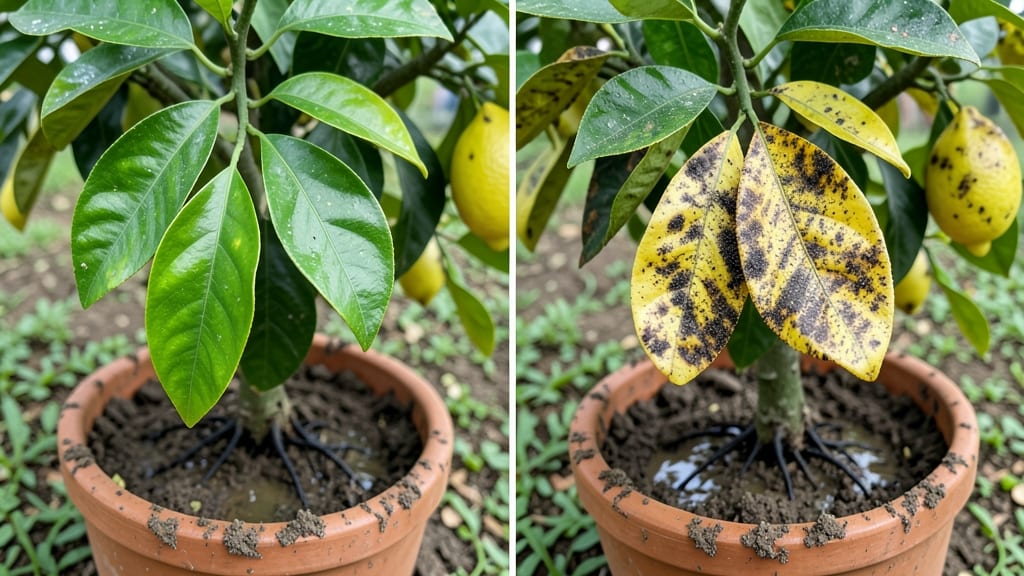
Your overwatered lemon tree leaves are screaming for help—not from thirst, but from drowning. 🌱 I’ve watched this happen too many times, and the good news is that recovery is simpler than you think.
The first sign is usually soft, mushy leaves that peel away easily, followed by drooping branches that refuse to bounce back, no matter how much you wish they would.
Overwatering creates a suffocating environment where roots can’t breathe, leading to root rot and nutrient starvation. The soil stays clingy and smells sour, not fresh. Most people think more water fixes the problem, but what your tree really needs is air, proper drainage, and a break from the soggy conditions.
Trust me, cutting back on water now will save your tree’s life.
Within 2-3 weeks of adjusting your watering routine, you’ll see new growth emerging from the base of the tree—bright green, sturdy leaves that tell you the roots are finally getting the air they need.
The key is to water only when the top 1-2 inches of soil feel dry, and always use pots with drainage holes if your tree is in a container.
This isn’t just about fixing yellow leaves—it’s about giving your lemon tree a second chance. Once you’ve corrected the watering habits, keep an eye out for pests that love stressed trees, and consider adding a 1-inch layer of mulch to help regulate moisture.
Your tree will thank you with vibrant foliage and maybe even a few lemons next season.
Root Causes Of Soggy Soil
When your lemon tree’s leaves start turning yellow, drooping, or even falling off, the real trouble often begins below the soil surface. Overwatering disrupts the delicate balance of moisture, oxygen, and nutrient uptake that keeps roots—and your tree—healthy.
Let’s break down the key culprits behind soggy soil and how they trigger leaf distress.
Lemon trees (especially dwarf varieties) thrive in well-draining soil, but many gardeners fall into the trap of sticking to a rigid watering schedule—even when conditions change. Here’s why this backfires:
- Saturation without drying: Roots need oxygen to respire. When soil stays waterlogged, oxygen levels plummet, suffocating roots and preventing them from absorbing water or nutrients. This leads to anaerobic conditions, where harmful bacteria and fungi (like Phytophthora) multiply, rotting roots.
- Leaching of nutrients: Overwatering flushes out essential minerals (e.g., nitrogen, potassium, magnesium) that lemon trees need for chlorophyll production. Without these, leaves yellow between veins (a classic sign of nutrient starvation).
- Root-bound stress: Even in pots, excess moisture prevents roots from expanding. Compacted, waterlogged soil forces roots to compete for space and resources, weakening the tree’s overall vigor.
Pro Tip: 💡 Stick your finger 2–3 inches into the soil—if it’s damp, wait. Lemon trees prefer the topsoil to dry out slightly between waterings, especially in containers.
Potted lemon trees are highly susceptible to overwatering because containers trap moisture like a sponge. Here’s how poor drainage sabotages your tree:
| Problem | Why It Happens | Leaf Symptom |
|---|---|---|
| No drainage holes | Water pools at the bottom, creating a permanent wet zone where roots drown. | Yellowing at the bottom leaves first, then spreading upward. |
| Compacted or heavy soil | Clay or garden soil without perlite/sand holds water like a brick, blocking airflow. | Leaves turn yellow with brown edges (like a "scorched" look). |
| Overpotting | Too-large pots retain moisture longer than roots can absorb it, leading to root rot. | Wilting, mushy stems, and leaves dropping suddenly. |
Fix It: 🔥 Use terracotta pots (they breathe better) and amend soil with 50% potting mix + 50% perlite/pumice. Elevate pots on feet to improve airflow underneath.
Not all overwatering is your fault—sometimes, Mother Nature plays a role. These conditions amplify the damage:
- High humidity: Warm, damp air slows evaporation, keeping soil moist longer. In tropical climates or greenhouses, roots stay soggy even with "normal" watering.
- Shade without airflow: Lemon trees need 6+ hours of sunlight to dry out efficiently. Shady spots (like under eaves) trap moisture, while stagnant air prevents transpiration.
- Rainfall + windbreaks: If your tree is outdoors, heavy rains combined with dense foliage (like nearby bushes) can double the moisture around roots.
Adjust for Weather: ⏰ Reduce watering by 30–50% during rainy seasons or if your area has high humidity. Move potted trees to bright, breezy spots to speed up drying.
Ironically, too much fertilizer can worsen overwatering damage. Here’s how:
- Salt buildup: Synthetic fertilizers leave salts in the soil, which lower water absorption (osmotic stress). Roots "drink" less, but the soil stays saturated.
- Nitrogen overload: Excess nitrogen promotes soft, lush growth that’s prone to rot. Weak stems can’t support heavy foliage, leading to drooping yellow leaves.
- pH disruption: Overwatering leaches calcium and magnesium, throwing off soil pH. Lemon trees prefer 6.0–7.0 pH; acidic or alkaline soil locks out nutrients, causing yellowing.
Solution: 🌡️ Flush the soil with water until it runs clear (repeat monthly). Switch to organic, slow-release fertilizer (like worm castings) and test soil pH with a kit.
Revive Your Lemon Tree Now
Overwatering your lemon tree can feel like a slow-motion disaster—yellow leaves, soggy roots, and a plant that just won’t bounce back. But don’t panic! With the right steps, you can nurse your tree back to health and prevent future waterlogging.
Below, we’ll break down cause-specific fixes so you can tackle the problem head-on, plus pro tips to keep your lemon tree thriving.
---
If your lemon tree’s roots are drowning, the first priority is draining excess water and giving them room to breathe.
#### 🔥 Stop Watering Immediately - Why? Overwatering creates anaerobic conditions, suffocating roots and inviting rot. - How? Pause all watering for 3–5 days to let the soil dry out. If the top 2–3 inches of soil are still damp, wait longer.
#### 🍳 Repot or Improve Drainage - If the roots are visibly rotting (mushy, black, or smelly), repot your tree in fresh, well-draining soil. - Soil mix recipe: Combine 60% potting mix, 30% perlite or pumice, and 10% compost for aeration. - Pot upgrade: Choose a container with drainage holes (or drill them if needed).
Terracotta pots help wick away moisture faster. - If repotting isn’t an option, amend the existing soil with coarse sand or gravel to improve drainage.
#### ⏰ Let It Dry Between Waterings - Lemon trees hate soggy feet! Water only when the top 1–2 inches of soil are bone-dry (stick your finger in to check). - Pro tip: 💡 Use a moisture meter for accuracy—no more guesswork!
---
Yellow leaves are a red flag, but not all are beyond saving. Here’s how to prune strategically to redirect energy to healthy growth.
#### 👨🍳 Identify and Remove Dead Leaves - Snap test: Gently tug a yellow leaf. If it comes off easily, it’s dead—snip it off with clean pruners. - Live but struggling leaves? If they’re still slightly green with yellow edges, leave them—they’re recovering.
#### 🔪 Prune Overcrowded Branches - Overwatering weakens the tree, making it prone to fungal infections (like root rot) that spread upward. - Trim any branches with black spots, mold, or soft stems—these are signs of disease. - Shape the tree to improve airflow, reducing humidity buildup around foliage.
#### ✨ Boost Recovery with Fertilizer - After pruning, feed your lemon tree with a balanced, water-soluble fertilizer (like 10-10-10) to replenish lost nutrients. - Avoid high-nitrogen fertilizers—they encourage leafy (but weak) growth. Instead, opt for a citrus-specific formula with micronutrients like iron and zinc.
---
Prevention is key! Once your lemon tree is on the mend, lock in a watering routine that keeps roots happy.
#### 📊 Water Deeply, Less Often - Deep watering encourages roots to grow downward (where they’ll find moisture in the wild). - How to do it: Water until it flows freely from the drainage holes, then stop. Repeat every 7–10 days (adjust for climate—hotter = more frequent).
#### 🥗 Mulch to Retain Moisture (Without Trapping It) - Apply a 1–2 inch layer of organic mulch (like straw or wood chips) around the base, but keep it 2–3 inches away from the trunk to prevent rot. - Why? Mulch slows evaporation but doesn’t smother the soil like thick layers do.
#### 🎯 Watch for Signs of Over- or Underwatering - Overwatered? Yellow leaves, wilting, or moldy soil. - Underwatered? Dry, crispy leaf edges or leaves curling upward. - Adjust as needed—lemon trees are resilient once they’re back in balance!
---
1. Upgrade Your Pot: If your current container lacks drainage, repot ASAP—even if it means a temporary upgrade. 2. Monitor Humidity: Lemon trees prefer moderate humidity. If your home is dry, mist leaves occasionally (but avoid soggy conditions).
3. Sunlight Check: Ensure your tree gets 6–8 hours of sunlight daily. Weak growth from poor light makes overwatering worse. 4. Winter Slow-Down: In cooler months, reduce watering by half—lemon trees go semi-dormant and need less moisture.
--- By following these steps, your lemon tree should bounce back in 4–6 weeks**—with stronger roots, greener leaves, and a thirst for life (but not too much water!). 🍋✨ Stay patient, and your citrus friend will thank you with juicy rewards.
Frequently asked questions
Why do my lemon tree leaves turn yellow from overwatering?
Overwatering causes yellow leaves because roots suffocate without oxygen, preventing nutrient absorption. The classic sign is yellowing between leaf veins (chlorosis) from nutrient leaching. Check soil moisture—if it stays damp for more than 2 days, you're overdoing it.
Can I save my lemon tree if the leaves are already yellow and mushy?
Yes, but act fast! Trim all mushy leaves (they won't recover) and check roots for rot. Repot in fresh, well-draining soil and stop watering for 3-5 days. With proper care, new growth should appear in 4-6 weeks.
How often should I water a lemon tree in a pot?
Water potted lemon trees only when the top 1-2 inches of soil feel completely dry. In summer, this might be every 5-7 days; in winter, stretch it to every 10-14 days. Always use pots with drainage holes!
What's the best soil mix to prevent overwatering?
Use a blend of 60% potting mix, 30% perlite/pumice, and 10% compost. This creates air pockets while retaining enough moisture. For containers, add a layer of gravel at the bottom to improve drainage.
Will my lemon tree recover if I've been overwatering for months?
Recovery is possible but may take 3-6 months of proper care. Start by pruning dead leaves, improving drainage, and adjusting your watering routine. Be patient—healthy roots will regrow, and new leaves will emerge from the base.