
Neem Oil
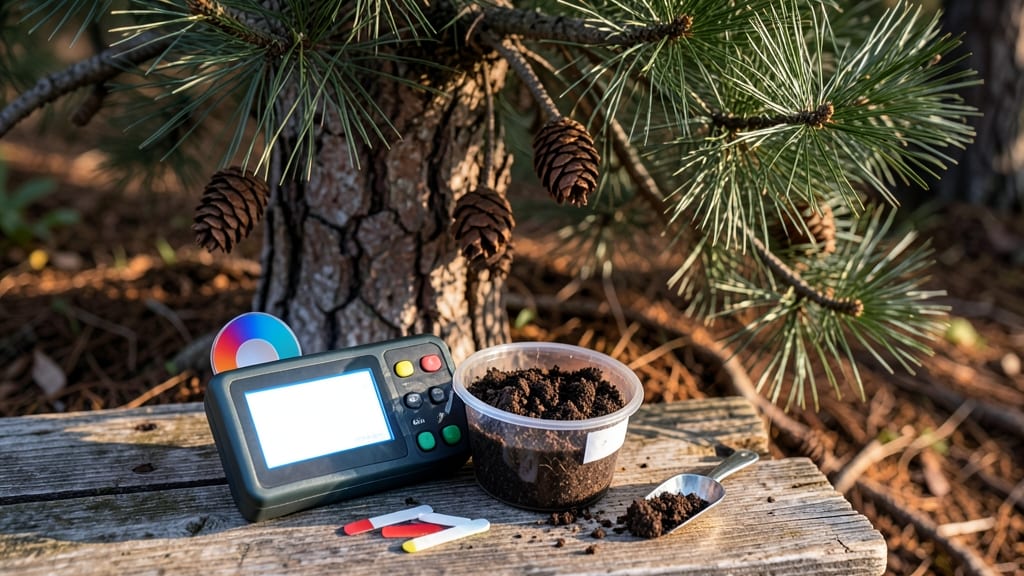
The pine tree soil pH you’re using could be the difference between a thriving evergreen and one that struggles to grow 🌲. Most pine species crave acidic soil, but many gardeners accidentally make it too alkaline—leading to yellowing needles, stunted roots, or even death.
If your pines look unhealthy, the problem might not be pests or disease but your soil’s chemistry. Pines thrive in pH levels between 4.5 and 6.0, but testing and adjusting it isn’t as complicated as it sounds.
Below, I’ll walk you through how to check your soil’s pH, the best amendments for acid-loving pines, and common mistakes that sabotage growth.
Whether you’re planting in Zone 6a or dealing with sandy soil that drains too quickly, getting the pH right is the foundation of strong, healthy pines. You’ll also learn how to avoid overcorrecting—because too much lime or sulfur can do more harm than good.
By the end, you’ll know exactly how to create the perfect acidic environment for your pines, whether you’re working with native soil or a custom mix. Let’s get started!
Optimal soil pH range for pine trees & why it matters
Pine trees thrive when their soil pH aligns with their natural habitat preferences. Most pine species—like the eastern white pine or loblolly pine—prefer acidic soil with a pH between 4.5 and 6.0.
This acidity unlocks essential nutrients like iron and manganese, which are critical for needle health and root development. If your soil pH strays outside this range, your pine may struggle with chlorosis (yellowing needles) or stunted growth, even if you’re providing adequate water and sunlight.
Native pine habitats—such as sandy, well-drained forests in the southeastern U.S.—naturally maintain acidic pH levels. However, urban or agricultural soils often become alkaline due to lime amendments or calcium-rich fertilizers.
Without intervention, pines planted in these soils can suffer from nutrient deficiencies, weakened immunity to pests, and slower growth rates. Understanding your soil’s pH is the first step to creating an environment where pine trees can flourish.
| Pine Species | Ideal pH Range | Native Habitat pH | Signs of pH Stress |
|---|---|---|---|
| Eastern White Pine | 4.5–6.0 | 4.0–5.5 (sandy forests) | Yellow needles, slow growth |
| Loblolly Pine | 5.0–6.5 | 4.5–6.0 (coastal plains) | Chlorosis, weak root system |
| Ponderosa Pine | 5.0–7.0 | 5.0–6.5 (mountain forests) | Stunted needles, pest susceptibility |
| Scotch Pine | 5.5–7.0 | 5.0–6.5 (European forests) | Brown needle tips, poor growth |
🌲 Key Takeaway: Most pines prefer acidic soil, but some adapt to slightly alkaline conditions.
The relationship between soil pH and nutrient availability is what makes pH adjustments so critical. For example, iron chlorosis—a common issue in alkaline soils—occurs when pH levels rise above 7.0, locking out iron despite its presence in the soil.
Pine trees need iron to produce chlorophyll, so without it, needles turn yellow while veins remain green. Similarly, manganese and zinc become unavailable in alkaline soils, leading to poor growth and weak structural integrity. Testing your soil’s pH is the first step to diagnosing these hidden deficiencies.
Regional soil variations further complicate pH management. In the southeastern U.S., naturally acidic soils (pH 4.5–5.5) are ideal for pines like the longleaf pine, while western states often have alkaline soils (pH 7.0–8.0) due to limestone bedrock.
If you’re planting pines in these areas, you’ll need to lower pH artificially using organic amendments like pine bark fines or sulfur.
Conversely, in regions with highly acidic soils (like peat bogs), a slight pH adjustment upward may be necessary to avoid aluminum toxicity, which can harm roots.
One of the most telling signs of pH-related stress in pine trees is needle discoloration.
While yellowing can result from overwatering or pests, a pattern of yellow needles with green veins is almost always a sign of iron deficiency caused by high pH. Other red flags include stunted new growth, thin, weak branches, and an increased susceptibility to fungal diseases like needle blight.
If your pine tree exhibits these symptoms, a soil test should be your first diagnostic tool.
For container-grown pines, pH management is even more critical because roots have limited access to natural soil buffers. The soil mix in pots can become quickly depleted or compacted, altering pH levels faster than in-ground soils.
Always use a well-draining, acidic potting mix (like one formulated for azaleas or rhododendrons) and monitor pH every 6–12 months.
If you notice salty crusts on the soil surface or white deposits, these are signs of high pH and mineral buildup, which can be corrected with organic matter additions like peat moss or pine fines.
Long-term soil health for pines also depends on organic matter content. Organic materials like compost, leaf litter, and wood chips naturally acidify soil over time while improving water retention and aeration.
Mulching with pine straw (which has a pH of 4.5–5.5) is a popular choice for pine tree gardens because it slowly releases acids into the soil while suppressing weeds. Avoid using lime-containing mulches or fresh wood chips, as these can raise pH levels and harm acid-loving pines.
If your soil test reveals a pH outside the ideal range, don’t panic—adjustments can be made safely with the right amendments. For alkaline soils (pH > 6.5), elemental sulfur is the most effective way to lower pH gradually.
Apply 1–2 pounds of sulfur per 100 square feet and water thoroughly to activate the acidification process, which can take 2–3 months to show results.
How to test & adjust pine tree soil pH: step-by-step guide
Testing and adjusting your pine tree soil pH is one of the most effective ways to ensure healthy growth. Most pine species thrive in acidic soil with a pH range of 4.5 to 6.0.
If your soil is too alkaline, your pine tree may struggle to absorb essential nutrients like iron, manganese, and phosphorus, leading to yellowing needles or stunted growth.
Before making any adjustments, it’s crucial to accurately measure your soil’s current pH. You have two main options: DIY soil test kits or professional lab testing. For most gardeners, a home test kit ($10-$20) is a cost-effective starting point, while lab tests offer precise results but cost more ($20-$50).
I recommend testing in early spring or fall when soil conditions are most stable.
⚠️ callout warning ⚠️
⚠️ Warning: Over-Adjusting pH Can Harm Pines!
Pine trees are acid-loving and can’t tolerate sudden pH swings. Never add lime to lower acidity—it will raise pH too quickly, shocking roots. Instead, use organic amendments like sulfur or peat moss for gradual adjustments. Test soil again in 3-6 months to monitor changes.
⚠️ Pro Tip: Sandy soils acidify faster than clay soils. If your soil is clay-heavy, apply amendments slowly to avoid nutrient runoff.
Once you’ve tested your soil, you’ll need to adjust it based on the results. If your pH is above 6.0, your pine tree needs more acidity.
The safest way to lower pH is by adding elemental sulfur (½ to 1 pound per 100 sq ft) or pine bark fines (2-3 inches as mulch). For organic options, try peat moss or composted pine needles, which slowly acidify soil over time.
If your soil is too acidic (below 4.5), you’ll need to raise the pH slightly. Avoid quick fixes like wood ash, which can create pH spikes. Instead, use calcitic lime (1-2 pounds per 100 sq ft) sparingly, as pines are sensitive to alkaline shifts.
Always water thoroughly after applying amendments to help them integrate into the soil.
Long-term soil health is just as important as quick fixes. Incorporate organic matter like compost or well-rotted manure to improve soil structure and buffer pH fluctuations. Mulch with pine straw or pine bark to maintain acidity naturally.
Re-test your soil every 1-2 years, especially if you notice new growth issues like needle drop or poor root development.
Remember, pines are resilient, but they hate sudden changes. If your soil is severely out of range, consider planting in a raised bed with pre-mixed acidic soil. With patience and the right approach, your pine tree will thrive in soil that’s just right for its needs. 🌲