
Trees
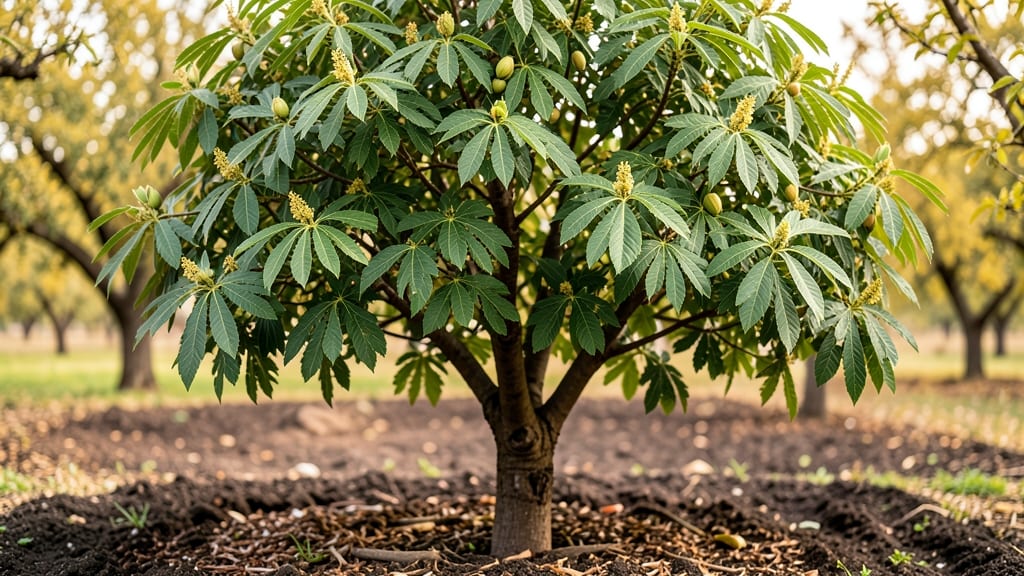
Yellowing pistachio leaves don't mean your tree is doomed—it's just speaking a language most gardeners don't understand. 🌿 I've spent years decoding these silent warnings, from nutrient deficiencies to hidden pests, and the solutions are simpler than you'd think.
Start by checking the leaf pattern: uniform yellowing often means nitrogen deficiency, while brown edges signal drought stress. Aphids and spider mites leave sticky residue or fine webbing, while fungal spots appear as dark patches with yellow halos.
The key is catching these early—before the tree puts its energy into fixing problems instead of producing nuts.
Cold-hardy varieties like 'Kerman' or 'Peter' handle winter better, but even they need protection from late frosts. Organic options like neem oil tackle pests, while balanced fertilizer restores leaf color. With the right care, your pistachio will bounce back stronger—promise.
📚 In This Guide
- What you need
- Instructions
- Tips and common mistakes
- Wrapping up and next steps
What you need
- ● Cold-hardy pistachio tree: 1–3 saplings (choose Pistacia atlantica or Pistacia integerrima for best cold resilience, zones 5–8)
- ● OR 5–10 seeds (if starting from scratch, germination is slow—be patient!)
- ● Well-draining soil: 5–10 cubic yards (mix 60% native soil + 30% compost + 10% perlite/sand for aeration)
- ● Organic mulch: 2–3 inches of wood chips or straw (to retain moisture and regulate temperature)
- ● Slow-release fertilizer: 10–15 lbs of 10-10-10 or 8-3-9 blend (for young trees; reduce nitrogen in winter)
- ● Drip irrigation system: 1–2 gallons per minute capacity (pistachios hate soggy roots!)
- ● Hand trowel (for transplanting seedlings)
- ● Pruning shears (sterilized with rubbing alcohol)
- ● Shovel & garden fork (for digging and loosening soil)
- ● pH test kit (ideal soil pH: 6.5–7.5)
- ● Thermometer (to monitor winter temps—critical for cold-hardy varieties!)
- ○ Frost cloth or row covers (optional, for young trees in zones 5–6)
- ● Full-sun location (6+ hours of direct sunlight daily)
- ● USDA Hardiness Zones 5–9 (or a greenhouse for zones 4 and below)
- ● At least 15–20 feet of horizontal space (trees mature 15–25 feet tall)
- ● Access to a water source (drought-tolerant but needs consistent moisture when young)
How to select and care for cold-hardy pistachio tree varieties
Cold-hardy pistachio trees can thrive in cooler climates with the right variety and care. Here's how to choose and nurture them for year-round success.
🌱 Step 1: Choose the Right Cold-Hardy Variety
Not all pistachios tolerate cold. Look for varieties like 'Kerman' or 'Peters'—both handle temperatures down to 15°F without major leaf damage. These varieties also produce leaves that stay green longer in winter, a key sign of cold resilience. Check your USDA hardiness zone: if you're in Zone 7 or colder, these are your best bets.
Young trees need extra protection. I always plant mine in sheltered microclimates—near south-facing walls or fences where winter winds can't reach. The leaves on these varieties will yellow less in cold snaps, and the trees recover faster in spring. Avoid varieties like 'Golden Hills' if you live north of Zone 7—they're not cold-tolerant and will lose leaves prematurely.
☀️ Step 2: Plant in Well-Draining Soil with Full Sun
Pistachio trees need full sun (6+ hours daily) and soil that drains well—waterlogged roots kill leaves fast. Mix 3 gallons of compost into the planting hole to improve drainage and nutrient uptake. The leaves will stay vibrant green when the soil stays moist but not soggy.
Plant in early spring when soil temperatures reach 60°F. Dig the hole twice as wide as the root ball but no deeper. Position the tree so the graft union sits 2-3 inches above soil level—this prevents rot and ensures strong leaf regrowth after winter. Water deeply right after planting to settle the soil around roots.
💧 Step 3: Water Deeply but Infrequently
Overwatering causes leaf yellowing and drop. Water once a week during the first growing season, delivering 15-20 gallons per tree. Let the top 6 inches of soil dry out between waterings—this mimics natural drought conditions pistachios thrive in. You'll notice leaves stay darker green when moisture is balanced.
In winter, reduce watering to every 3-4 weeks unless temperatures drop below 20°F. Cold-hardy varieties handle dry soil better in winter, but leaves may curl slightly—a normal response to cold. Mulch with 3 inches of wood chips around the base to retain moisture and protect roots from freezing.
✂️ Step 4: Prune for Airflow and Leaf Health
Prune in late winter or early spring before new leaves emerge. Remove dead, crossing, or inward-growing branches first—they block sunlight and cause leaf diseases. Cut back to outward-facing buds to encourage fuller growth. Thin out 10-15% of the canopy to improve airflow, which prevents fungal leaf spots.
Watch for leaf scorch (brown edges) in summer—this means the tree is stressed. If you see it, prune again to reduce leaf surface area and water deeply. Cold-hardy varieties recover faster from pruning, but avoid heavy cuts after July 1st—new growth won’t harden off before winter.
🌿 Step 5: Fertilize for Year-Round Leaf Vitality
Apply a balanced 10-10-10 fertilizer in early spring (when leaves first appear) and again in early fall. Use 1 pound per inch of trunk diameter—so a 4-inch trunk gets 4 pounds. Water the area well after spreading to prevent root burn. Leaves will stay glossy green when nutrients are steady.
In late summer, switch to a low-nitrogen, high-potassium fertilizer (like 5-10-10) to help leaves toughen for winter. Avoid high-nitrogen feeds after September 1st—it encourages soft new growth that won’t survive frost. Cold-hardy varieties need this shift to prepare for winter dormancy.
Tips & tricks for perfect cold-hardy pistachio tree care
These practical pointers will help you keep your pistachio tree thriving through winter and beyond.
Variety Selection: When choosing between 'Kerman' and 'Peters' varieties, consider your local microclimate. 'Peters' tends to handle brief dips to 10°F better than 'Kerman' if you experience occasional cold snaps below 15°F. I've found that planting both varieties in different locations can create a buffer—if one variety struggles, the other typically recovers faster.
Planting Protection: For young trees in Zone 7 or colder, create a windbreak using burlap or evergreen shrubs on the north and west sides. This simple barrier can prevent winter desiccation—the condition where leaves dry out from cold winds. I've seen trees in exposed areas lose up to 30% more foliage without this protection.
Soil Temperature Check: Before planting in early spring, test soil temperature by pressing a thermometer into the ground. It should read consistently at 60°F for at least 3 days before planting. Cold soil can shock roots and delay leaf emergence. I always check this in the morning when temperatures are lowest.
Winter Watering Strategy: When temperatures drop below 20°F, completely halt watering unless you have container-grown trees. The natural winter freeze-thaw cycle helps break up compacted soil around roots, and excess moisture can lead to root rot. I've noticed that properly mulched trees need even less winter watering—the 3-inch wood chip layer acts like insulation.
Pro Tips for Pistachio Tree Leaves
- These practical pointers will help you keep your pistachio tree thriving through winter and beyond.
- Variety Selection: When choosing between 'Kerman' and 'Peters' varieties, consider your local microclimate.
- Planting Protection: For young trees in Zone 7 or colder, create a windbreak using burlap or evergreen shrubs on the north and west sides.
Frequently asked questions
Got questions about growing pistachio trees in colder climates? You’re not alone! Here are some of the most common concerns—and their straightforward answers—to help you keep your pistachio tree thriving year-round.
How cold can pistachio trees tolerate, and what are the best cold-hardy varieties?
Most pistachio trees struggle in temperatures below 10°F (-12°C), but cold-hardy varieties like Pistacia vera ‘Kerman’ or ‘Peters’ can survive brief dips to 0°F (-18°C) with proper care. For extreme climates, consider Pistacia atlantica (a non-edible but hardy alternative) or microclimate protection like windbreaks.
When should I prune pistachio tree leaves or branches for winter?
Prune in late winter or early spring (before buds swell) to avoid damaging cold-sensitive tissue. Remove dead, diseased, or crossing branches first, then thin out to improve airflow. Avoid heavy pruning in fall—it stresses the tree before winter. Pro tip: Sterilize tools with rubbing alcohol to prevent fungal spread!
Can I use pistachio tree leaves for anything besides mulch?
While fresh leaves aren’t edible, dried pistachio leaves can be used as a natural pest repellent (place near plants to deter aphids). They also make a fragrant, nitrogen-rich compost additive. Just avoid using diseased leaves—they can harbor pathogens. For culinary uses, stick to the nuts!
Why are my pistachio tree leaves turning yellow or brown?
Yellowing leaves often signal overwatering or nutrient deficiency (like iron or zinc). Brown edges or crispiness usually mean underwatering or salt buildup (common in container-grown trees). Check soil moisture (top 2 inches should be dry) and test pH (ideal: 6.5–7.5). Fix it: Flush soil with water and amend with compost.
Are there alternatives to pistachio trees for cold climates with similar benefits?
If pistachios are too finicky, try these cold-hardy, ornamental alternatives:
- Smoketree (Cotinus): Tolerates -30°F (-34°C), vibrant foliage.
- Hazelnut (Corylus): Edible nuts, survives -20°F (-29°C).
- Chinese Pistache (Pistacia chinensis): Drought-resistant, 20°F (-7°C) tolerance.
Wrapping up and next steps
Growing a cold-hardy pistachio tree with vibrant, healthy leaves is absolutely achievable—even in cooler climates! 🌱 By selecting the right variety (like Kerman or Peter), providing proper care, and troubleshooting common issues, you’ll enjoy year-round greenery and delicious nuts.
Whether you’re a seasoned gardener or just starting out, your pistachio tree can thrive with patience and the right techniques.
Ready to take the next step? Start small:
- Pick a cold-hardy variety that suits your zone.
- Monitor soil, water, and sunlight needs closely.
- Join local gardening groups for tips and inspiration!