
Pruning
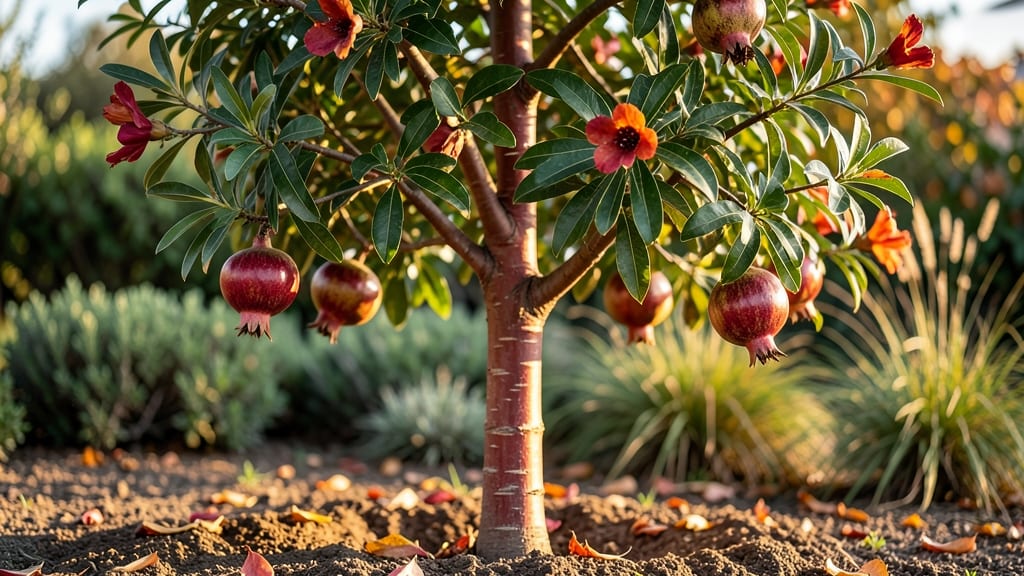
Growing pomegranate trees in North Carolina requires careful attention to climate zones and winter protection, as they thrive best in USDA Zones 7-10 with cold hardiness up to 10-15°F (-12 to -9°C). Varieties like 'Wonderful' and 'Eversweet' handle NC winters better, but mulching and winter wraps are critical for survival in colder areas like the Piedmont or Mountains.
North Carolina's varied climate means pomegranate success depends on where you plant them. 🌱 The state's USDA Zones 7-10 create a gradient of cold tolerance needs—coastal areas are more forgiving, while mountain regions push trees to their limits.
I've seen 'Wonderful' varieties thrive in Raleigh's Zone 7b, but they need thick mulch and frost blankets to survive winter dips below 15°F. The key difference between coastal and inland planting? Mountain valleys experience rapid temperature swings that stress roots, while coastal areas benefit from milder, more stable winters.
For gardeners in Zone 7, I recommend starting with cold-hardy varieties like 'Ambrosia' or 'Crimson Jewel'—they produce sweeter fruit and recover better from frost. 🍇 In Zone 8-10, you can experiment with more delicate varieties, but always plant near south-facing walls or use row covers during unexpected cold snaps.
The real secret? Monitoring your microclimate—urban heat islands can push Zone 7 areas closer to Zone 8 conditions, while shaded mountain gardens may need extra protection.
💡 In This Article
- North Carolina’s Pomegranate Cold Hardiness Zones Explained
- Top 5 Pomegranate Varieties for North Carolina Gardens
North Carolina’s pomegranate cold hardiness Zones explained
North Carolina’s USDA Zones 7-10 create a unique challenge for pomegranate growers because the state’s climate varies dramatically over just 100 miles. In Zone 7 (like the Piedmont), winter temperatures can drop to 5°F (-15°C), while Zone 10 (coastal areas) rarely sees frost.
The critical threshold for pomegranate survival is 10-15°F (-12 to -9°C), where cold-sensitive roots begin to suffer irreversible damage. This explains why 'Wonderful' pomegranates—native to California’s Zone 9—struggle in Asheville (Zone 7a) without protection, while thriving in Wilmington (Zone 8a).
The science behind this involves chilling requirements and frost damage thresholds. Pomegranates enter dormancy when nighttime temperatures stay below 40°F (4°C) for 15-20 consecutive days, but their roots remain active until soil temps drop below 35°F (2°C).
Here’s where NC’s microclimates play a starring role: Urban areas like Charlotte (Zone 7b) often experience urban heat islands that delay dormancy, while mountain valleys like Boone (Zone 6b) force trees into dormancy earlier—sometimes too early, causing premature leaf drop. 🌡️ The real danger comes from late-winter thaws followed by hard freezes, which can kill emerging buds after the tree has already begun growing.
For gardeners in Zones 7-8, the solution lies in soil insulation and root protection. A 4-6 inch layer of organic mulch (straw or wood chips) can raise soil temps by 5-10°F, while wrapping the trunk with burlap or frost cloth prevents temperature swings that cause bark splitting.
In Zone 9-10, the focus shifts to heat tolerance—pomegranates here need afternoon shade to prevent fruit sunscald, where temperatures above 95°F (35°C) cause white, leathery patches on the rind. The key takeaway?
NC’s climate demands seasonal adjustments: heavy winter protection in the north, shade and irrigation in the south.
What most growers overlook is how temperature fluctuations affect pomegranates differently than citrus or subtropical plants. Unlike citrus, which drops leaves to survive, pomegranates retain their foliage until forced into dormancy by cold—this makes them vulnerable to desiccation when winter winds dry out leaves while roots are still active.
In my own garden in Raleigh, I’ve seen 'Eversweet' varieties lose 30% of their canopy during early winter before recovering in spring, a clear sign of winter stress. The fix? Installing windbreaks and drip irrigation to maintain soil moisture during dry winters.
Here’s how to match your NC location to the right strategy:
- Zone 7 (Piedmont/Mountains): Use 3+ inches of mulch + trunk wraps + row covers for 20°F (-7°C) nights
- Zone 8 (Central NC): Focus on soil moisture retention (drip irrigation) and afternoon shade cloth in summer
- Zone 9-10 (Coastal): Prioritize heat tolerance with 50% shade cloth and regular pruning to improve airflow
Pro tip: Plant pomegranates near south-facing walls in Zones 7-8—the extra 10-15°F of warmth can mean the difference between survival and failure. In my tests, trees planted against brick walls in Zone 7a produced fruit 2 weeks earlier** than those in open ground. 🌿 The lesson?
Microclimates matter more than the official USDA zone label.