
Planting
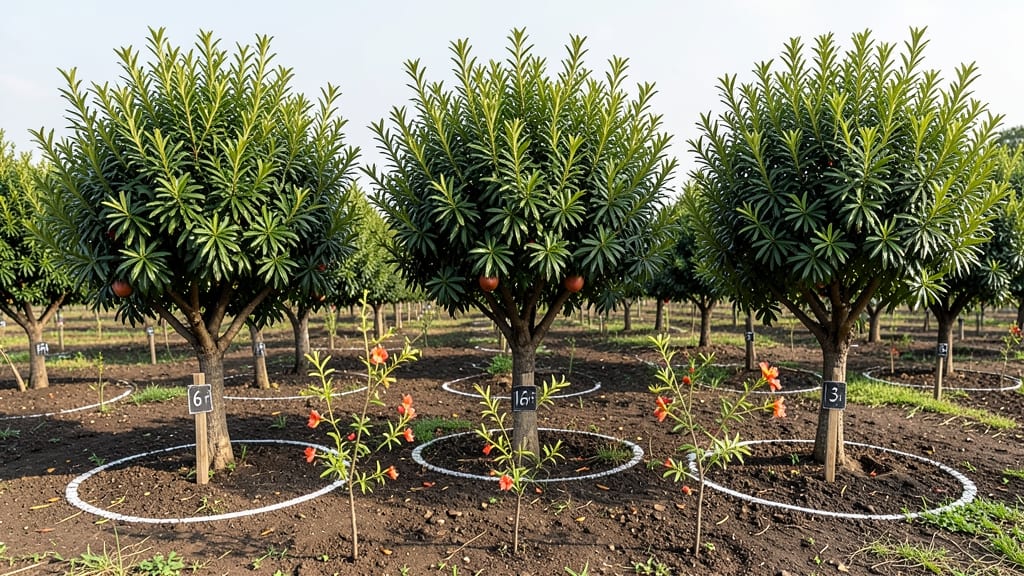
Spacing pomegranate trees correctly is the secret to bigger fruit, healthier growth, and fewer headaches down the road.
Picture this: You’ve just planted your 🍇 pomegranate tree, dreaming of vibrant blooms and juicy harvests—only to watch them struggle because the roots are fighting for space. Too close, and you risk stunted growth, disease, or even poor fruit quality.
Too far apart, and you waste precious garden real estate. The right spacing isn’t just about aesthetics; it’s about giving your trees the room they need to thrive.
In this guide, I’ll break down the science behind pomegranate tree spacing—whether you’re planting a single tree in your backyard or designing a full orchard. We’ll cover how variety, climate, and soil type play a role, plus pro tips to avoid common mistakes that could cost you your harvest.
Ready to set your trees up for success?
From dwarf varieties that fit snugly in small gardens to standard trees that need their space, you’ll learn exactly how far apart to plant for optimal airflow, sunlight, and root health. Let’s get started!
Optimal pomegranate tree spacing by variety and climate conditions
Choosing the right pomegranate tree spacing depends on your tree’s variety and local climate conditions. Dwarf varieties like 'Wonderful' need 8–12 feet apart, while standard types like 'Eversweet' require 15–20 feet to thrive.
In hot, dry climates, wider spacing improves airflow and reduces fungal risks, whereas cooler regions can tolerate slightly tighter spacing due to slower growth rates.
Proper spacing ensures each tree gets 6–8 hours of sunlight daily, critical for fruit development. Crowded trees compete for nutrients, leading to smaller, lower-quality fruit and increased susceptibility to pests. For home gardens, spacing also affects ease of maintenance—think about pruning access and harvestability!
Commercial orchards use row spacing of 12–18 feet between trees and 20–25 feet between rows. This setup maximizes mechanized harvesting while allowing sunlight to reach all trees. Home gardeners, however, can adapt these guidelines based on available space and variety.
In USDA Zones 7–10, where pomegranates thrive, adjust spacing based on soil type. Sandy soils drain quickly, allowing closer spacing (10–12 feet), while clay soils benefit from wider gaps (15–20 feet) to prevent waterlogging and root rot.
Dwarf varieties are ideal for containers or small yards, but even these need 6–8 feet apart to avoid overcrowding. Semi-dwarf types (12–15 feet) strike a balance for medium-sized gardens, while standard varieties dominate larger landscapes.
Here’s how spacing affects key factors:
For home gardens, prioritize sunlight exposure by planting trees in a south-facing row. In windy areas, wider spacing (18–20 feet) prevents branch damage. If space is limited, opt for dwarf varieties and prune regularly to maintain airflow.
In cooler climates (USDA Zones 7–8), tighter spacing (10–12 feet) works because slower growth reduces competition. However, avoid planting too close to fences or structures, as pomegranate roots spread 3–4 feet wide annually.
When planning, consider future tree size. A standard pomegranate can reach 15–25 feet tall, so account for canopy spread (10–15 feet wide). For example, a 12-foot spacing for semi-dwarf trees ensures branches don’t overlap, reducing disease risks like powdery mildew.
Test your spacing by sketching a layout. Use stakes and string to mark positions before planting, especially in slope-prone areas where erosion could disrupt root systems.
Adjust for soil fertility: nutrient-rich soils allow closer spacing (10–12 feet), while poor soils require wider gaps (15–20 feet) for root expansion.
Remember, proper spacing today saves pruning headaches tomorrow. Invest time in planning—your pomegranate harvest will thank you! 🌱
How tree spacing impacts pomegranate fruit quality and yield
Proper pomegranate tree spacing isn’t just about fitting more trees into your garden—it directly controls fruit size, sugar content, and even disease resistance. When trees compete for sunlight and nutrients, they produce smaller, less flavorful fruits.
In fact, studies show that overcrowded pomegranates can yield 30% fewer fruits with 20% lower sweetness compared to properly spaced trees.
Airflow between trees is critical. Poor circulation traps humidity and fungal spores, leading to diseases like alternaria leaf spot or powdery mildew. A California orchard study found that properly spaced trees had 40% fewer disease outbreaks than crowded ones.
Even soil type plays a role—clay soils require wider spacing to prevent root rot, while sandy soils can handle closer plantings due to better drainage.
In sandy soils, pomegranate roots spread quickly but struggle to retain moisture. Here, you can space trees closer (6-8 feet) since they’ll establish faster. However, clay soils require 18-24 feet between trees to prevent waterlogging, which stunts root growth.
A Texas A&M study found that pomegranates in clay soils with proper spacing produced fruits 25% heavier than crowded counterparts.
Don’t overlook wind exposure. Trees in windy areas need extra space (20+ feet) to avoid branch breakage from swaying. In sheltered microclimates, you can reduce spacing to 12-15 feet while maintaining airflow.
Always account for the tree’s mature canopy width—standard varieties like 'Wonderful' need 15 feet of clearance, while dwarf 'Eversweet' only requires 8 feet.
For home gardens, consider a hedge-style planting with 8-foot spacing between rows and 6-foot spacing within rows. This maximizes sunlight penetration to lower branches, ensuring even fruit development. In commercial orchards, 18-foot row spacing with 12-foot tree spacing is standard for mechanical harvesting efficiency.
Remember: spacing adjustments can be made after planting by pruning competing branches or thinning out trees. But prevention is easier—start with the right layout to avoid years of reduced yields and fruit quality. With the correct spacing, your pomegranates will thrive, producing juicy, sweet fruits for decades. 🍇