
Pruning
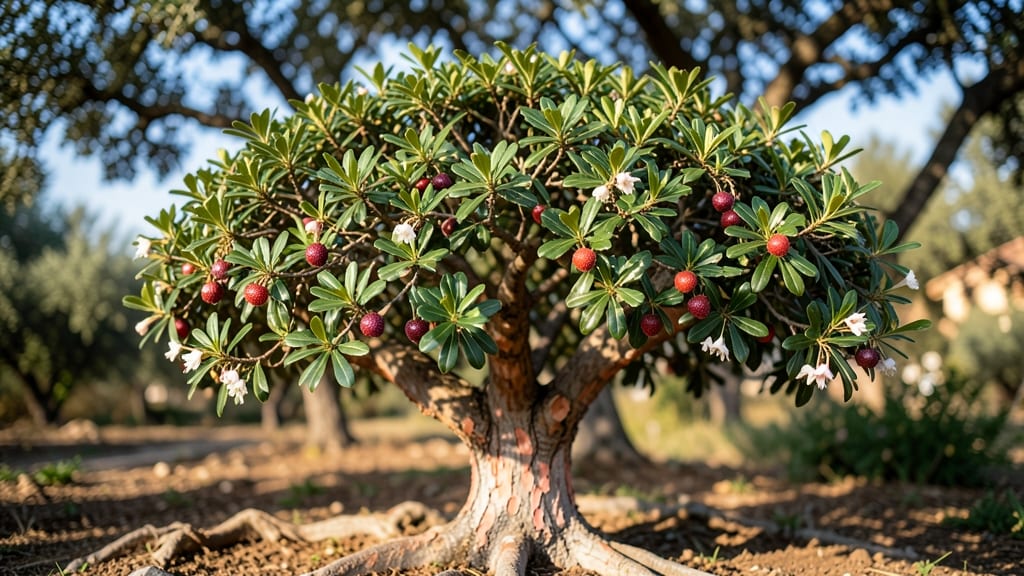
Growing a strawberry tree (Arbutus unedo) in Oregon means year-round beauty that even winter can't touch. 🌿 The secret lies in its cold-hardy nature—perfect for Oregon's zones 7-9—and the right pruning to keep it thriving through rain and frost.
My first one survived Oregon's wet winters with just a little extra care, and now it's the star of my garden. This evergreen tree loves Oregon's coastal and inland microclimates alike, from the milder coastal zones to the drier inland valleys.
It thrives in well-draining soil, whether that's the sandy loam of the Willamette Valley or the rocky ground near the coast. Watering is simple: deep soaks once a week in summer, then letting nature take over in winter.
The real magic happens with pruning—cutting back in late winter to encourage fresh growth and those iconic peeling bark patches. You'll end up with a tree that stays lush all year, even when other plants sleep. The white spring flowers and edible (though tart) berries are the cherry on top.
For Oregon gardeners, this tree pairs beautifully with native companions like Oregon grape or salal. It's a low-maintenance choice that brings texture, color, and structure to any landscape. Let's get yours growing strong!
📚 In This Guide
- What you need
- Instructions
- Tips and common mistakes
- Wrapping up and next steps
What you need
- ○ Pruning shears: Bypass pruners (sharp, clean, and disinfected with rubbing alcohol or a 10% bleach solution). Optional: Loppers for thicker branches (1–2 inches max diameter).
- ● Hand pruners: For smaller cuts (1/4–3/4 inch). Pro tip: Choose ergonomic handles to avoid hand fatigue!
- ○ Gloves: Heavy-duty gardening gloves (cut-resistant for thorns). Optional: Long sleeves for added protection.
- ● Disinfectant: 70% isopropyl alcohol or a 1:10 bleach-water mix (for sterilizing tools between cuts).
- ○ Pruning sealant: Optional but helpful for larger cuts (e.g., Tanglefoot Tree Wound Pruning Seal or beeswax-based products).
- ● Ladder or step stool: If your tree exceeds 6 feet tall (ensure it’s stable and rated for your weight).
- ● Trash bags or bucket: For collecting pruned branches (1–2 large bags or a 5-gallon bucket).
- ● Weather check: Prune on a dry, calm day (avoid rain or wind). Oregon’s mild winters? Perfect—just avoid frost!
- ● Safety gear: Safety glasses (to shield from debris) and ear protection (if using a chainsaw for very thick branches).
- ● Tree ID confirmation: Double-check it’s an Arbutus unedo (strawberry tree) or Arbutus menziesii (Pacific madrone) native to Oregon. Pro tip: Look for peeling cinnamon bark and red berries!
- ● Sharpener: A pruner sharpener or fine-grit sandpaper to maintain tool edges.
- ● Notebook & pen: To jot down pruning notes (e.g., branch sizes, growth patterns).
- ● Tree paint: For sealing cuts on very large branches (e.g., Tree Seal by Espoma).
- ● Extension pole: For high branches (e.g., Fiskars 58” Extendable Pole Saw).
- ● Compost bin: To recycle pruned branches as mulch (chop small pieces first!).
- ● Camera: Snap before/after photos to track your tree’s progress over the years!
How to prune a strawberry tree in Oregon’s climate
Oregon’s mild winters and wet summers make pruning your strawberry tree (Arbutus unedo) a year-round task—here’s how to keep it thriving.
✂️ Step 1: Prune Lightly in Late Winter (February)
Start by removing any dead, diseased, or crossing branches with clean, sharp pruners. Look for branches that rub against each other—they’ll create wounds that invite rot. I always start with the obvious: any brown or brittle stems that snap when bent are gone immediately.
Next, thin out crowded areas to improve airflow. Aim for a vase-like shape by cutting back branches that grow inward. This isn’t about drastic cuts—just enough to let light reach the center. You’ll see new growth emerge within 2-3 weeks if you’ve pruned correctly.
☀️ Step 2: Light Pruning After Flowering (May-June)
Once the tree finishes blooming, give it a second look. Deadhead spent flowers by trimming back to the nearest outward-facing bud. This encourages more blooms next season and keeps the tree looking tidy. I like to do this on a dry day—wet wood splinters more easily when cutting.
Watch for any suckers (shoots growing from the base) and remove them unless you’re propagating. These can drain energy from your main tree. If you’re unsure whether a branch is dead, scratch the bark with your fingernail—green underneath means it’s alive; brown means it’s gone.
🌿 Step 3: Minimal Summer Maintenance (July-August)
Oregon’s humidity can encourage fungal growth, so keep an eye out for yellowing leaves or mold. Prune only what’s necessary—just remove any leaves or branches showing signs of disease. Use sterilized pruners to avoid spreading pathogens.
This is also the time to shape the tree subtly. If a branch grows too long or leggy, trim it back by one-third to encourage bushier growth. You’ll notice new side shoots forming within 4-6 weeks, signaling the tree is responding well.
⏰ Step 4: Final Pruning in Early Fall (October)
As temperatures drop, give the tree one last trim to prepare for winter. Remove any weak or thin growth that wouldn’t survive the cold. I focus on branches smaller than ¼ inch in diameter—they’re the most vulnerable to frost damage.
This is also when you can prune to control the tree’s size. If it’s outgrown its space, trim back the longest branches by ⅓ to maintain its shape. The goal is to leave it strong enough to handle Oregon’s wet winters without stress.
🪴 Step 5: Winter Checks (December-February)
While you’re not pruning heavily in winter, do a quick inspection. Remove any branches broken by ice or wind. If you see signs of pests (like sawdust-like frass from bark beetles), prune those areas immediately and dispose of the clippings far from the tree.
This is also the time to plan next year’s pruning. Take a step back and visualize the tree’s structure. You’ll spot opportunities for better airflow or light penetration that you might have missed earlier in the year.
Tips & tricks for perfect strawberry tree pruning in Oregon
Oregon’s unique climate demands a thoughtful approach—these tips will help you master pruning your strawberry tree year-round.
Timing is Everything: The 2-3 week window after your February pruning is critical for new growth. If you’re in a cooler Oregon microclimate, extend your February pruning to early March—watch for bud swell as your cue. This timing lets the tree recover before spring’s active growth phase begins.
Tool Preparation: Sterilize your pruners between cuts, especially in summer when fungal spores thrive. I dip mine in rubbing alcohol or a 10% bleach solution between trees—this prevents spreading diseases like anthracnose, which Oregon’s humidity loves to encourage. Sharp tools also make cleaner cuts that heal faster.
Seasonal Focus Areas: Summer’s minimal pruning should prioritize disease removal over shaping. Look for branches with black spots or powdery white coatings—these are your top targets. The one-third rule for leggy branches in Step 3 works because it mimics natural pruning patterns while encouraging bushier growth that Oregon’s wet summers can support.
Visual Pruning Cues: When deadheading in May-June, aim to cut just above an outward-facing bud. Imagine a line from the bud to the branch’s center—this creates the natural vase shape that strawberry trees thrive in. The "scratch test" for branch viability (green under bark = alive) works because it checks for active cambium layer, which Oregon’s mild winters sometimes confuse with dormant wood.
Pro Tips for Strawberry Tree Oregon
- Oregon’s unique climate demands a thoughtful approach—these tips will help you master pruning your strawberry tree ye...
- Timing is Everything: The 2-3 week window after your February pruning is critical for new growth. If you’re in a cool...
- Tool Preparation: Sterilize your pruners between cuts, especially in summer when fungal spores thrive. I dip mine in ...
Frequently asked questions
Got questions about growing and pruning the strawberry tree (Arbutus unedo) in Oregon’s chilly climate? You’re not alone!
Here are answers to the most common queries—from timing to troubleshooting—to help you nurture this cold-hardy beauty with confidence.
When is the best time to prune a strawberry tree in Oregon?
Prune your strawberry tree in late winter or early spring (February–March), just before new growth begins. This timing avoids disturbing winter dormancy while giving the plant energy to recover. Pro tip: Avoid heavy pruning in fall—it can stimulate tender new growth that may not survive Oregon’s frosts!
How cold-hardy is the strawberry tree in Oregon’s climate?
The strawberry tree thrives in USDA Zones 7–9, making it a great fit for most of Oregon (except high deserts or alpine areas). While it tolerates brief dips to 10°F (-12°C), heavy snow or prolonged sub-zero temps may damage leaves. Pro tip: Mulch heavily in winter and plant in sheltered spots to boost resilience!
Should I remove dead branches immediately, or wait?
Remove dead, diseased, or crossing branches ASAP—even outside the main pruning window. Deadwood can harbor pests or fungi, and crossing branches compete for resources. For healthy but unproductive branches, wait until late winter/early spring. Pro tip: Sterilize pruners with rubbing alcohol to prevent spreading disease!
Why isn’t my strawberry tree producing fruit in Oregon?
Fruit production often lags in young trees (3–5 years old) or due to poor pollination, over-pruning, or nutrient deficiencies. Oregon’s damp climate can also deter pollinators—hand-pollinate with a small brush if needed. Ensure it gets full sun (6+ hours/day) and well-draining soil. Pro tip: A balanced fertilizer in early spring can boost fruit set!
What’s a good alternative if I want a similar-looking but easier-to-grow plant?
If the strawberry tree’s slow growth or specific needs feel challenging, consider madrona (Arbutus menziesii) (native to Oregon!) or toyon (Heteromeles arbutifolia). Both offer year-round interest, though toyons fruit more reliably. For low-maintenance evergreens, Port Orford cedar or holly are also excellent Oregon natives. Pro tip: Visit a local nursery to compare textures and sizes!
Wrapping up and next steps
Growing a strawberry tree in Oregon is a rewarding way to add beauty, fragrance, and even edible fruit to your landscape—all while embracing its cold-hardy charm! 🌿 With the right pruning techniques, you’ll keep your tree thriving year-round, ensuring vibrant blooms and lush foliage.
Whether you’re a seasoned gardener or just starting, this guide gives you the confidence to nurture your tree like a pro.
Ready to take the next step? Mark your calendar for your first pruning session this fall—just as the leaves begin to change—and watch your strawberry tree reward you with grace and resilience for seasons to come. Happy pruning! 🌟