
Pruning
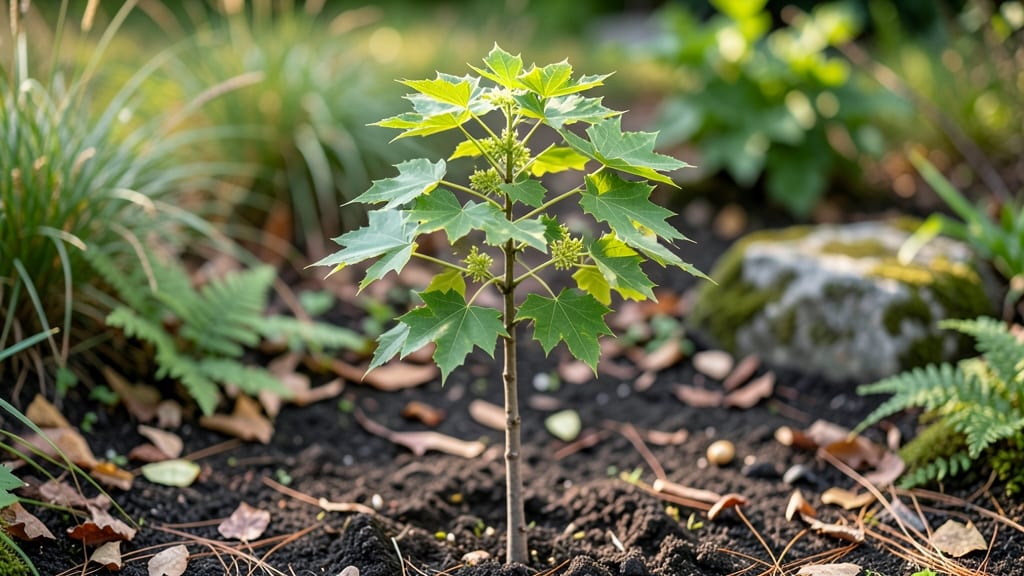
Your sugar maple sapling’s future as a stately shade tree starts with the right pruning from day one. ✂️ I’ve watched these young trees transform from scraggly sticks into elegant giants by following a simple year-round routine—one that prevents weak branches and encourages strong growth from the very first spring.
The key is timing: prune in late winter before buds swell, then again after leaf drop in fall, with light shaping in summer if needed. Most gardeners make two mistakes—waiting until the tree’s too big or cutting too aggressively.
A sharp pair of pruners and a 30-minute session every season is all it takes to train your maple’s structure while it’s still young.
By winter three, you’ll see the difference: straight trunks, evenly spaced branches, and a canopy that grows upward instead of outward. The tree will handle storms better, resist disease, and develop that classic maple silhouette you’ve always admired in older specimens.
Works for both backyard plantings and larger landscapes—just adjust the scale. Here’s how to start shaping yours today, without the guesswork that leads to lopsided growth later.
📚 In This Guide
- What you need
- Instructions
- Tips and common mistakes
- Wrapping up and next steps
What you need
- ● Pruning shears: Bypass pruners (sharp, clean, and disinfected with rubbing alcohol). Size: 6–8 inches for small branches.
- ● Loppers: For branches up to 1.5 inches thick. Look for: Ratcheting or bypass style for precision.
- ● Hand saw: Pruning saw with fine teeth (for thicker branches, if needed).
- ● Gloves: Heavy-duty, cut-resistant gloves (saplings can have thorns!).
- ● Disinfectant: 70% isopropyl alcohol or a tree-pruning sealant (to prevent disease spread).
- ○ Tarp or bucket: For collecting debris (optional but helpful!).
- ● Water & rag: To clean tools before/after use.
- ● Pruning sealant: Wound dressing for larger cuts (controversial but useful in some climates).
- ● Tree bandage: For protecting saplings from pests after pruning.
- ● Ladder or stool: If your sapling is taller than 6 feet (safety first!).
- ● Notebook & pencil: To track pruning dates and notes on growth.
- ● Safety glasses: For protection against flying debris.
Step-by-Step guide to pruning your sugar maple sapling
Here’s how I prune my sugar maple saplings to encourage strong, healthy growth—no special tools needed.
✂️ Step 1: Prune in Late Winter or Early Spring
Sugar maples are dormant in late winter (just before buds swell) or early spring (when new growth begins). This timing prevents stressing the tree while it’s vulnerable. I always prune before the sap starts flowing heavily—usually between February and March in most climates.
Look for dead, diseased, or crossing branches first. These are your top priorities. Dead branches snap easily when bent; diseased ones may have dark spots or oozing sap. Crossing branches rub against each other, creating wounds that invite pests and rot.
✂️ Step 2: Remove Weak or Rubbing Branches
Use clean, sharp pruning shears to cut branches at a 45-degree angle, about ¼ inch above a bud or branch collar. The collar is the swollen area where the branch meets the trunk—never cut into it, or you’ll damage the tree’s healing tissue.
For larger branches (over ½ inch thick), use loppers and make the cut just outside the branch collar. If a branch is too thick for loppers, call a professional—sugar maples are sensitive to improper cuts.
✂️ Step 3: Thin the Canopy for Airflow
Step back and look at the tree’s shape. Remove up to 25% of the canopy to improve airflow and sunlight penetration. Focus on branches growing inward or downward—they compete with stronger, upward-growing branches.
I aim for an open, vase-like shape. This reduces disease risk and helps the tree support its own weight as it matures. Never remove more than ¼ of the foliage in one season—this stresses young saplings.
✂️ Step 4: Light Summer Pruning for New Growth
In mid-summer, check for water sprouts—fast-growing, vertical shoots that steal energy from the main structure. These are easy to spot: they’re thin, upright, and often appear at branch junctions.
Trim these back to a bud or side branch using your pruners. Avoid heavy pruning in summer—it encourages new growth that won’t harden off before winter. A little maintenance keeps the tree balanced without shocking it.
✂️ Step 5: Clean Up and Monitor
After pruning, sterilize your tools with rubbing alcohol to prevent spreading disease. Collect and dispose of clippings—don’t leave them near the tree, as they can harbor pests.
Watch the tree over the next few weeks. Healthy new growth should appear within 4-6 weeks of spring pruning. If branches ooze sap excessively, the cuts may be too large—adjust your technique next time.
Tips & tricks for pruning sugar maple saplings
A few simple strategies can make all the difference in keeping your young sugar maple thriving for decades.
Timing is Everything: The late winter to early spring window (February-March) is critical—this is when your tree is dormant but about to wake up. Pruning too early risks cold stress, while pruning too late can stimulate new growth that won't harden off before winter. I've learned this the hard way after seeing saplings struggle when pruned at the wrong time.
Branch Collar Matters: In Step 2, when making cuts, never remove the branch collar—the swollen area where the branch meets the trunk. This tissue contains healing cells that protect against disease. I've seen too many trees develop cankers from improper cuts. Always cut just outside the collar, at a 45-degree angle, about ¼ inch above a bud.
Canopy Thinning Strategy: When thinning in Step 3, focus on creating that open vase shape by removing branches growing inward or downward. These branches compete with stronger upward-growing ones for sunlight and nutrients. I aim to remove up to 25% of the canopy—never more than that in one season, as this can stress young saplings. Think of it as giving your tree room to breathe.
Summer Maintenance Secret: For that mid-summer check in Step 4, look for water sprouts—the thin, upright shoots that appear at branch junctions. These steal energy from your tree's main structure. Simply trim them back to a bud or side branch using your pruners. This light maintenance prevents energy drain without shocking the tree.
Pro Tips for Sugar Maple Tree Sapling
- A few simple strategies can make all the difference in keeping your young sugar maple thriving for decades.
- Timing is Everything: The late winter to early spring window (February-March) is critical—this is when your tree is d...
- Branch Collar Matters: In Step 2, when making cuts, never remove the branch collar—the swollen area where the branch ...
Frequently asked questions
Got questions about nurturing your sugar maple tree sapling? You’re not alone! Here are some common concerns—and their answers—to help you prune with confidence year-round.
When is the best time to prune a young sugar maple sapling?
The ideal time is late winter to early spring (before buds swell), but you can also prune in summer if needed. Avoid heavy pruning in fall—it stresses the tree and invites pests. For saplings, focus on removing dead or crossing branches anytime they’re spotted!
How much can I trim off a sugar maple sapling without harming it?
For young trees, never remove more than 15–25% of the canopy in a single session. Prune selectively to improve airflow and shape—aim for open-centered growth. Over-pruning weakens the tree and reduces its ability to store energy for future growth.
Why are my sapling’s leaves turning yellow after pruning?
Yellowing leaves often signal stress from over-pruning, disease, or pests. Check for:
- Fungal spots (like tar spot)
- Sap-sucking insects (aphids, scale)
- Improper cuts (too close to the trunk)
Can I prune a sugar maple sapling in winter?
Yes, but only in mild winters (avoid freezing temps). Pruning in dormancy helps prevent disease spread, but harsh cold can stress the tree. If you must prune in winter, do it on a warm, dry day and sterilize tools with rubbing alcohol to kill bacteria.
What if my sapling isn’t growing after pruning?
Slow growth could mean:
- Insufficient sunlight or nutrients (test soil and amend if needed)
- Root damage (avoid compacting soil around the base)
- Underwatering (deep water 1–2x/week in dry spells)
Wrapping up and next steps
Growing a healthy sugar maple tree sapling is all about patience and precision—especially when it comes to pruning! By following year-round care, you’ll nurture strong, graceful branches that stand the test of time. Whether you’re trimming in spring, summer, or winter, remember: consistency is key! 🌳✨
Now that you’re armed with the right tools and techniques, take the next step: schedule your first pruning session. Start small, observe your sapling’s growth, and adjust as needed. With a little love and attention, your sugar maple will thrive for decades to come!