
Container Gardens
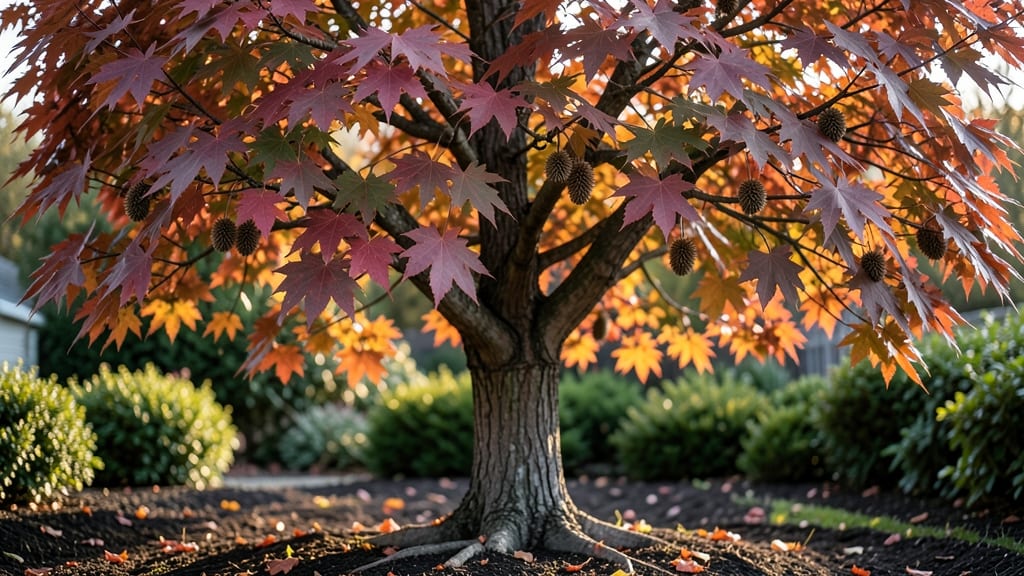
Sweet gum trees grow best in USDA hardiness zones 7 through 9, where they handle summer heat and humidity while needing well-drained soil. In colder zones (6 or lower), they'll thrive in containers with proper winter protection.
These trees evolved to handle the hot, humid summers of their native southeastern U.S. range, but their roots can't tolerate soggy soil or freezing temperatures. 🌳 In containers, you'll need to upgrade to a 5-gallon pot minimum for young trees and use a fast-draining mix with perlite or sand.
The key to container success in cooler climates is winter insulation—wrap the pot in burlap and move it to a sheltered spot before temperatures drop below 20°F.
What many gardeners don't realize is how quickly sweet gums grow—up to 3 feet per year in ideal conditions. This rapid growth means container roots will outgrow their space faster than you might expect.
I've found that adding mycorrhizal fungi to the potting mix helps compensate for the limited root zone, giving these thirsty trees better access to nutrients in their confined space.
💡 In This Article
- Sweet Gum Tree USDA Zone Limits and Climate Adaptations
- Growing Sweet Gum Trees in Containers: Soil, Size, and Winter Care
Sweet gum tree USDA zone limits and climate adaptations
Sweet gum trees (Liquidambar styraciflua) evolved in the southeastern U.S., where they thrive in zones 7-9 because their biology is perfectly adapted to hot summers and high humidity.
Their leaves contain a waxy cuticle that reduces water loss during 90°F+ temperatures, while their deep root systems tap into moisture up to 6 feet underground. This explains why they struggle in drier climates—their roots can't access shallow moisture sources like many drought-tolerant species.
The real challenge comes from cold snaps. Sweet gums can't tolerate prolonged exposure below 10°F, as their sap begins to freeze, rupturing cell walls. This is why zone 6 gardeners see dieback—even a single -5°F night can kill young trees.
Their native range's mild winters (average 30-40°F) explains this sensitivity. Interestingly, their star-shaped leaves also help them shed snow more efficiently than broadleaf competitors, preventing branch damage during winter storms.
Humidity plays a crucial role too. Sweet gums release volatile organic compounds that help them survive in their native 70-90% humidity range. In arid zones, these trees experience transpiration stress, where water loss exceeds uptake, leading to leaf scorch.
The good news? Their rapid growth (3 feet/year) means they can quickly establish root systems that improve drought tolerance once mature—though this takes 3-5 years in optimal conditions.
What most gardeners overlook is how soil temperature affects germination. Sweet gum seeds require 60-70°F soil to sprout, which is why spring planting yields better results than fall. Their native range's warm soils explain why they struggle in colder zones where early frosts can kill young seedlings before they establish.
This is one reason container growing works better in zones 6 and below—you can control soil temperature with mulch and move pots to warmer microclimates when needed.
For those in marginal zones, understanding these adaptations helps explain why some sweet gums survive while others fail. A tree planted in zone 7a (0-5°F winters) might thrive, while one in zone 6b (-5°F) needs winter protection.
The key difference? Root insulation and reduced wind exposure, which can drop temperatures 5-10°F colder than ambient air.
Consider this: A sweet gum's ability to handle 95°F heat but not -10°F cold creates a 105°F temperature range where it thrives.
This explains why container growing works in cooler zones—you can move the tree to a garage or insulated shed during extreme cold, effectively creating a microclimate within its ideal range. 🌡️