
Pruning
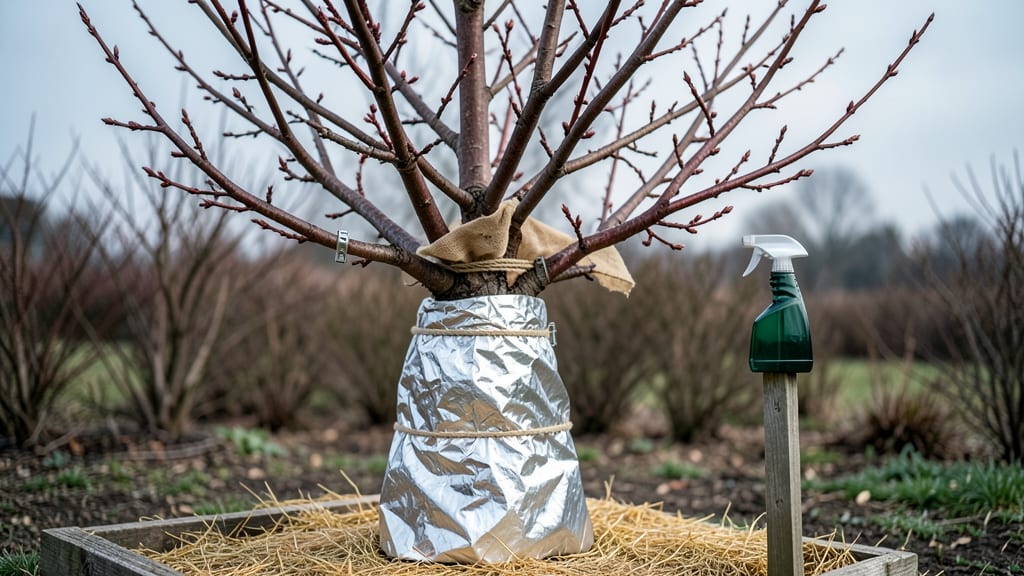
Tree frost blankets protect plants from cold damage by trapping heat while allowing sunlight and airflow, preventing harm to tender shoots and buds during light freezes. Use lightweight fabric and secure loosely to avoid suffocating growth.
These protective covers create a microclimate around plants, raising temperatures just enough to prevent frost damage without trapping harmful moisture. 🌱 The key is choosing breathable materials—like burlap or lightweight polyester—that let sunlight filter through while blocking wind chill.
I’ve found that securing them loosely with stakes or clips prevents fabric from pressing against delicate branches, which could lead to physical damage or mold buildup over time.
Timing matters just as much as technique: cover plants in the late afternoon before temperatures drop, and remove them during the day to allow airflow and photosynthesis. For young trees or newly planted shrubs, this method can mean the difference between survival and irreversible damage during unexpected cold snaps.
💡 In This Article
- How Frost Blankets Work to Safeguard Plant Health
- Best Practices for Applying Frost Blankets Without Harming Plants
How frost blankets work to safeguard plant health
Frost blankets function like a cozy, breathable jacket for plants, leveraging the principles of thermal insulation and radiative heat retention.
The fabric traps a thin layer of air next to the plant's surface, which acts as an insulator—this trapped air has a thermal conductivity about 25 times lower than water, meaning it resists heat loss far more effectively.
When nighttime temperatures drop below 32°F, the blanket creates a microclimate that can raise temperatures by 5-10°F around the plant, often enough to prevent frost damage to tender foliage or buds.
The magic lies in the material's permeability. Unlike plastic sheeting, which creates a suffocating greenhouse effect by trapping moisture, frost blankets are made from breathable fabrics like burlap, polyester mesh, or lightweight fleece.
These materials allow moisture vapor to escape while still blocking wind chill—critical for preventing condensation burn, where trapped moisture freezes on plant surfaces and damages cells. For example, a burlap blanket might allow 30-40% airflow while still providing 80% wind protection, striking the perfect balance for plant health.
Sunlight plays a crucial role too. Frost blankets let UV rays penetrate during the day, which helps plants continue photosynthesis even when covered. This is why removing covers during sunny afternoons is vital—it prevents overheating from trapped solar energy.
Studies show that plants covered with frost blankets during the day can experience temperature spikes of up to 15°F above ambient, which stresses delicate growth. The ideal fabric should block 90% of wind but allow 70% of light to pass through, maintaining a stable environment.
Another key difference from plastic covers is UV protection. Many frost blankets are treated with UV-resistant coatings that prevent fabric degradation over multiple seasons, unlike plastic which becomes brittle and tears easily. This durability matters because a torn blanket loses its insulating properties, leaving plants vulnerable.
For instance, a polyester frost blanket might last 3-5 years with proper care, while plastic sheeting often fails after 1-2 seasons due to sun exposure.
For young trees or newly planted shrubs, the blanket’s effect is most dramatic. A 2-inch layer of trapped air under the blanket can create a temperature buffer zone that shields buds from freezing.
This is especially critical for fruit trees like peaches or cherries, where a single frost event can destroy next year’s crop. The blanket’s ability to reduce temperature fluctuations by 50% compared to uncovered plants makes it a game-changer for gardeners in marginal climates.
What most people overlook is the psychological effect on plants. The blanket’s presence reduces wind stress, which can cause physical damage to stems or leaves.
For example, a 10 mph wind can cool a plant’s surface by 5°F—the blanket cuts this effect by 70%, keeping the plant’s energy focused on survival rather than defense. This subtle but critical support helps plants recover faster from cold snaps.
Think of it like dressing a child for winter: you want them warm enough to stay comfortable, but not so bundled they can’t move or sweat. That’s the sweet spot frost blankets hit—just enough protection without suffocation. 🌿