
Plants
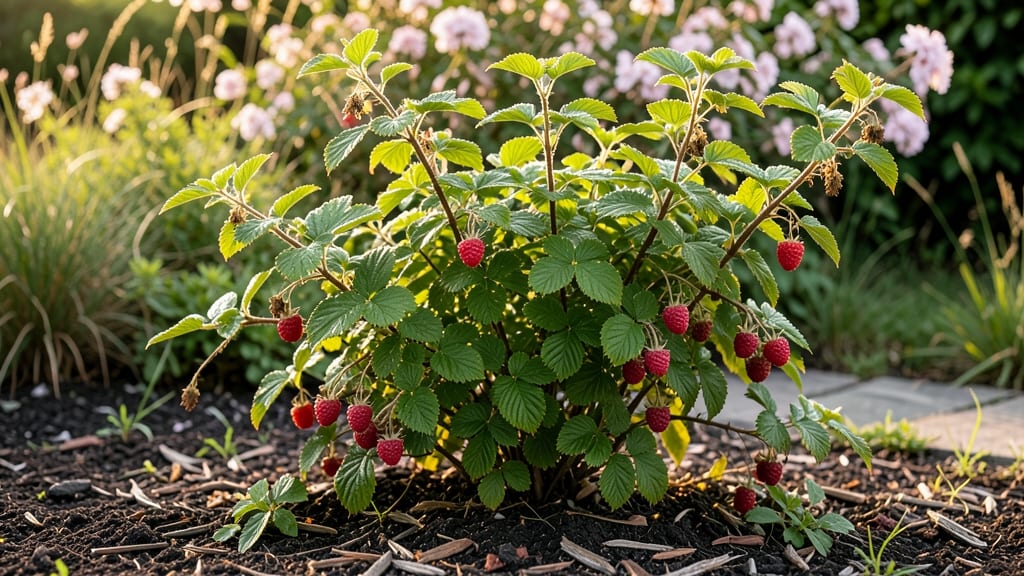
Those berries that look like raspberries but grow on a tree? 🌿 You’re probably staring at Arctostaphylos uva-ursi (bearberry) or Rubus hybrids like Rubus occidentalis—and yes, they’re edible (though not quite the same as raspberries).
The key difference? Leaves are evergreen, growth is shrub-like, and the berries cling to branches like tiny, tart jewels.
These shrubs thrive in partial shade, love well-draining soil, and handle dry spells better than raspberry canes. Prune in late winter to shape them, and watch for spider mites—spray with neem oil if leaves yellow.
Unlike raspberries, they won’t need trellises or heavy feeding, making them the perfect low-maintenance alternative.
By midsummer, you’ll have clusters of deep red berries that birds adore but humans can snack on (raw or cooked). They’re sweeter than raspberries but with a leathery texture—great for jams or garnishes. Plant them in zones 3-8, and they’ll reward you for years with minimal fuss.
Confusion with raspberries usually comes from leaf shape (smooth vs. serrated) and growth habit (shrub vs. cane). Once you spot these clues, you’ll never mistake them again—and your yard will thank you for the drought-tolerant beauty.
Nature’s Deceptive Berry Tricks
When you spot a tree producing berries that resemble raspberries, it’s often a case of mimicry—either from related plant species or clever evolutionary adaptations. But why does this happen?
The answer lies in a mix of botanical relationships, environmental pressures, and even human intervention. Let’s break down the key reasons behind these deceptive berries.
Many trees and shrubs that produce raspberry-like berries are close relatives of the true raspberry (Rubus idaeus). Plants in the Rubus genus (like blackberries, dewberries, and wineberries) share similar fruit structures due to shared ancestry. Their berries may look identical but differ in taste, texture, or seed arrangement.
- Example: Rubus phoenicolasius (wineberry) has bright red, raspberry-like fruits but grows on woody vines or small trees.
- Why it matters: Cross-pollination between species can lead to hybrid plants with berries that blur the lines between raspberries and their look-alikes.
- Actionable tip: Check the plant’s growth habit (e.g., thorny canes vs. smooth bark) to narrow down the ID.
Some plants evolve to resemble toxic or unpalatable species as a defense mechanism. This phenomenon, called Batesian mimicry, tricks animals into avoiding the berries—even if they’re harmless. While rare in berry-producing trees, a few species exploit this tactic to deter herbivores.
- Example: Actaea rubra (red baneberry) has bright red berries that mimic raspberries but contain toxic compounds.
- Why it happens: Predators learn to avoid the "raspberry" look after encountering bitter or poisonous fruits.
- ⚠️ Warning: Always confirm edibility—never consume wild berries unless positively identified by an expert.
Environmental conditions can alter berry development in ways that make them resemble raspberries. Poor soil nutrition, extreme temperatures, or water stress may lead to stunted, misshapen, or unusually colored fruits. For instance:
| Factor | Effect on Berries | Solution |
|---|---|---|
| Nitrogen deficiency | Smaller, redder berries (similar to raspberries) | Amend soil with compost or organic fertilizer |
| High humidity | Berries may swell or darken, mimicking overripe raspberries | Improve drainage; prune for airflow |
| Late frost damage | Berries develop uneven colors (e.g., red with green patches) | Protect plants with frost cloth in early spring |
Pro tip: If you’re cultivating a tree for raspberry-like berries, monitor soil pH (ideal: 5.5–6.5) and ensure consistent moisture to avoid deformities. 🌡️
Gardeners and breeders often intentionally or unintentionally select plants with raspberry-like traits. Some trees, like the Aronia (chokeberry) or Vaccinium (blueberry) species, are cultivated for their ornamental value—even if their berries aren’t true raspberries. Over time, selective breeding can produce hybrids with raspberry-esque appearance.
- Example: Vaccinium arboreum (sparkleberry) has small, red berries that resemble raspberries but grow on evergreen shrubs.
- Why it spreads: Nurseries may label these plants as "decorative raspberry look-alikes" to attract buyers.
- Actionable tip: Ask for the plant’s scientific name when purchasing to avoid misidentification.
Understanding these causes helps you spot the difference between true raspberries and their imposters. Next, we’ll explore how to accurately identify these berry-bearing trees in your garden or wild landscapes.
How to Fix & Cultivate Your Berry-Like Shrubs
If your yard features a tree with berries that resemble raspberries but aren’t quite the same, don’t worry—you’re not alone! Many gardeners grow look-alikes like black hawthorn, elderberry, or even wineberries, which can be just as stunning (and sometimes more resilient).
Below, we’ll break down practical solutions for identifying, managing, and cultivating these berry-bearing shrubs so they thrive—and look their best.
---
Before you can fix anything, you need to know what you’re dealing with. Misidentifying a plant can lead to the wrong care (or even accidental poisoning!). Here’s how to diagnose it:
#### 🌿 Step 1: Leaf & Berry Inspection - Shape & Texture: Are the leaves lobed (like raspberry), smooth, or serrated? Hawthorn leaves are often jagged, while elderberry leaves are compound. - Berry Clusters: Raspberries grow in loose clusters; elderberries form dense, grape-like bunches.
Wineberries dangle in small groups. - Stem & Thorns: Hawthorns have sharp thorns, while raspberries have soft, flexible canes.
#### 📸 Step 2: Snap a Photo & Compare Use a plant ID app (like PlantNet or Google Lens) or cross-reference with these common look-alikes: - **Black Hawthorn (Crataegus douglasii) – Dark berries, thorny branches, white flowers. - Elderberry (Sambucus canadensis) – Purple-black berries, fragrant flowers, hollow stems. - Wineberry (Rubus phoenicolasius) – Bright red-orange berries, invasive tendencies. - Mock Strawberry (Duchesnea indica) – Tiny, false strawberry-like berries (not a tree, but often confused).
💡 Pro Tip: If the berries are bitter, milky, or cause stomach upset, avoid consuming them—some look-alikes (like bittersweet nightshade) are toxic!
---
Once you’ve ID’d your plant, follow these care tips to keep it healthy and berry-producing:
#### 🌞 Sunlight & Soil Needs | Plant | Sunlight | Soil Type | Water Needs | |---------------------|--------------------|-----------------------------|--------------------------| | Black Hawthorn | Full sun to part shade | Well-draining, slightly acidic | Moderate (drought-tolerant) | | Elderberry | Full sun | Moist, rich, tolerates clay | High (keep soil damp) | | Wineberry | Full sun | Fertile, well-draining | Moderate (drought-resistant) | | Mock Strawberry | Part shade to sun | Any soil (adaptable) | Low (succulent-like) |
🔥 Fix: If your plant is struggling, amend the soil with compost (for elderberries) or sand (for hawthorns to prevent root rot).
#### ✂️ Pruning for Better Berries - Elderberry & Wineberry: Prune in late winter to remove dead wood and encourage new growth. Cut back 1/3 of old canes annually. - Hawthorn: Light pruning after flowering to shape the tree.
Avoid heavy cuts—these plants bloom on old wood. - Mock Strawberry: Pinch back runners to keep the plant compact.
⏰ Timing Matters: Never prune in fall—it can stimulate new growth that won’t harden off before winter.
#### 🐜 Pest & Disease Control - Aphids & Spider Mites: Spray with neem oil or introduce ladybugs (natural predators). - Powdery Mildew (common on elderberries): Improve air circulation and apply baking soda spray (1 tsp baking soda + 1 quart water + a drop of soap). - Birds & Squirrels: Use netting to protect ripe berries if you want to harvest them.
🌡️ Prevention Tip: Mulch around the base with wood chips to deter weeds and retain moisture—just keep it 3-4 inches away from the trunk to avoid rot.
---
Want a bountiful harvest? Try these boosting techniques:
#### 💧 Watering Like a Pro - Deep watering (1-2 inches per week) is better than frequent shallow watering. Use a soaker hose for even moisture. - Drought-stressed plants (like hawthorns) may drop berries early—mulch heavily in summer to retain moisture.
#### 🌿 Fertilizing for Fruit Production - Spring Feed: Use a balanced fertilizer (10-10-10) for elderberries and wineberries. - Organic Boost: Mix in fish emulsion or compost tea for a nutrient kick. - Avoid Over-Fertilizing: Too much nitrogen = leafy growth, fewer berries.
#### 🌿 Pollination Help Some look-alikes (like hawthorns) are self-pollinating, but others (like elderberries) benefit from bees and butterflies. Plant companion flowers (e.g., lavender, marigolds) nearby to attract pollinators.
--- - Planting in the wrong spot: Elderberries need moist soil; hawthorns hate waterlogged roots. - Ignoring invasive species: Wineberries spread aggressively—contain them with root barriers. - Harvesting too early: Berries should be fully colored and slightly soft before picking. - Skipping winter care: Mulch heavily in fall to protect roots from freeze-thaw cycles.
--- | Goal | How to Achieve It | |------------------------|-----------------------------------------------| | More berries | Prune correctly, fertilize in spring, ensure pollinators visit. | | Healthier plant | Test soil pH (ideal: 6.0-7.0), mulch properly, water deeply. | | Non-invasive spread | Trim runners (mock strawberry), contain roots (wineberry). | | Pest-free growth | Monitor leaves, use organic sprays early, encourage beneficial insects. |
--- By following these step-by-step fixes, your berry-like shrubs will not only look stunning but also produce abundant, healthy fruit**—without the guesswork. Happy gardening! 🌿✨
Frequently asked questions
Are berries from these trees edible like raspberries?
Most look-alikes like Arctostaphylos uva-ursi (bearberry) or Vaccinium arboreum (sparkleberry) are edible but have different flavors—tart, leathery, or slightly bitter. Always confirm identification before eating wild berries, as some toxic look-alikes (like red baneberry) mimic raspberries. Cooking can improve taste for jams or syrups.
How do I tell the difference between raspberry berries and tree berries?
Check the growth habit: raspberries grow on canes, while tree berries come from shrubs or small trees with woody stems. Also, raspberry leaves are serrated and lobed, while look-alikes often have smooth, evergreen leaves. Berry clusters also differ—raspberries dangle loosely, while tree berries cling tightly to branches.
Can I grow these berry trees in containers?
Yes! Dwarf varieties like Arctostaphylos 'Emerald Carpet' thrive in 15-gallon containers with well-draining soil. Use a mix of potting soil and perlite, and ensure the pot has drainage holes. Prune regularly to control size, and move containers to partial shade in hot climates to prevent stress.
Why do my tree berries look like raspberries but taste awful?
This often happens with underripe or overripe berries, poor soil nutrition, or stress from drought or pests. Test soil pH (ideal: 5.5–6.5) and amend with compost. If birds are nibbling them first, use bird netting. Some varieties (like elderberries) improve in flavor when cooked.
Are these berry trees good for wildlife?
Birds, squirrels, and pollinators love them. Planting native varieties (like Crataegus hawthorn) supports local ecosystems. The berries provide food in late summer/fall when other options are scarce. Just avoid invasive species like wineberries, which can outcompete native plants.