
Plants
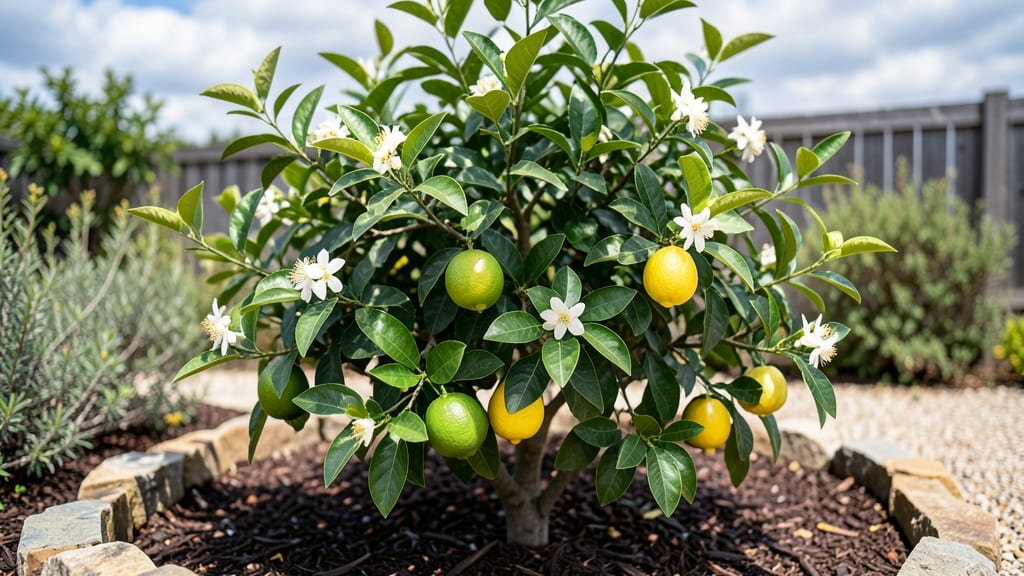
A lemon tree leaf looks like an elongated oval with smooth, glossy edges and jagged serrations, showcasing bright green coloration and prominent parallel veins running the length of the leaf. Young foliage often starts lighter before deepening to its signature vibrant hue.
A lemon tree leaf's distinctive appearance sets it apart from other citrus varieties.
The oval shape typically measures 2-4 inches long, with a slightly tapered end that gives it an elliptical look when viewed from above. 🌿 The serrated edges create a sawtooth pattern that's more pronounced than lime leaves, while the parallel veins create a striking visual pattern when held up to light.
What's fascinating is how these leaves develop—new growth emerges in a lighter green shade before gradually darkening to that classic citrus green we recognize.
The leaf's glossy surface isn't just for show—it helps reflect sunlight in Mediterranean climates, where lemon trees originally thrived. This waxy coating also makes the leaves slightly leathery to the touch, distinguishing them from softer citrus varieties.
When you crush a lemon leaf between your fingers, you'll notice that signature citrus aroma that's stronger than the fruit itself, thanks to concentrated essential oils in the foliage.
💡 In This Article
- Key Characteristics of Lemon Tree Leaves
- Identifying Lemon Tree Leaves vs. Common Look-Alikes
Key characteristics of lemon tree leaves
The lemon tree leaf's signature oval-elliptical shape is its most defining feature, typically measuring between 2-4 inches long and 1-2 inches wide at its broadest point. This elongated form creates a graceful, tapered silhouette that distinguishes it from rounder citrus leaves.
The edges aren't just serrated—they form sharp, tooth-like projections spaced about 1/8-inch apart, creating a distinctive sawtooth pattern that's more pronounced than lime leaves but less jagged than grapefruit foliage. 🌿
What makes these leaves truly stand out is their glossy, waxy surface, which isn't just aesthetic—it's an evolutionary adaptation. This natural coating reflects up to 30% more sunlight than non-glossy leaves, protecting the tree from excessive heat in its native Mediterranean climate.
The texture is surprisingly firm when touched, almost leathery, which helps the leaves retain moisture during dry periods. This durability also means they stay attached longer than many other citrus varieties, often lasting 2-3 months before natural senescence.
The leaf's parallel venation is another key identifier, with 5-7 prominent veins running lengthwise from the stem to the tip. These veins create striking patterns when viewed against light, almost like a natural network of fine lines.
What's particularly interesting is how these veins contain concentrated citral compounds, which give lemon leaves their intense aroma—often stronger than the fruit itself. When crushed, you'll notice this citrusy scent is more complex than just lemon, containing hints of bergamot and neroli notes.
Seasonal color changes add another layer of identification. New growth emerges in a lighter green shade (almost yellow-green) before gradually darkening to the classic deep, vibrant green we associate with lemon trees.
In cooler months or high-altitude regions, leaves may develop a slightly bluish tint due to cooler temperatures affecting chlorophyll production. This color progression helps distinguish lemon foliage from evergreen varieties that maintain consistent coloring year-round.
One fascinating botanical detail is how lemon leaves develop aromatic glands along their veins, particularly concentrated near the midrib. These glands contain essential oils that give lemon leaves their distinctive scent and flavor—up to 0.3% of the leaf's dry weight can be these volatile compounds.
This high concentration means you can often smell lemon leaves from several feet away, a trait that helps identify them even when not in full view. 🍋
When comparing to other citrus leaves, lemon foliage stands out through its combination of size, serration sharpness, and glossiness. Lime leaves are smaller (1-2 inches) with finer serrations, while orange leaves are broader with more rounded edges.
The lemon leaf's elliptical shape and pronounced veins create a visual signature that's immediately recognizable to experienced gardeners and citrus enthusiasts alike.