
Plants
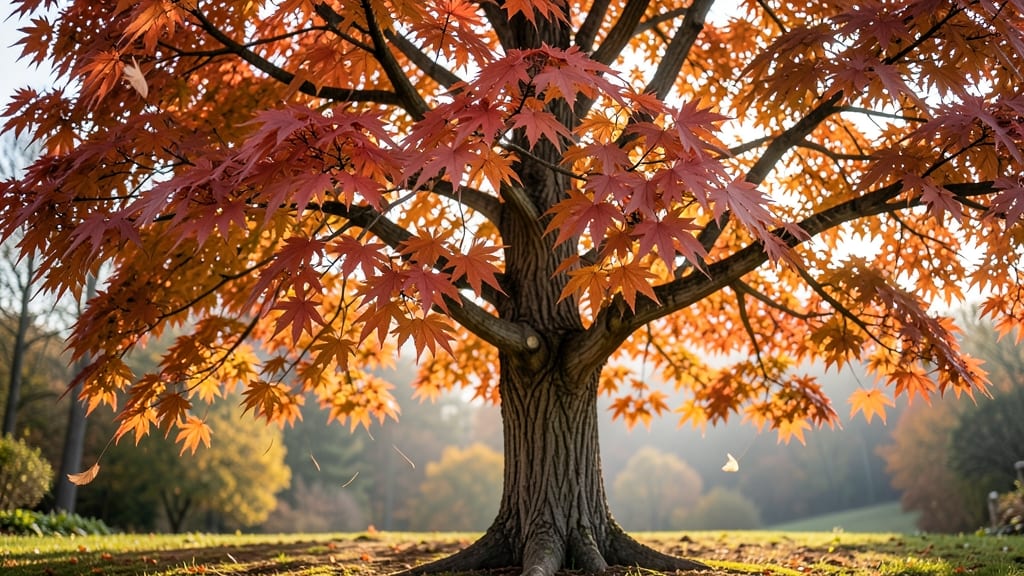
A maple tree looks like a classic shade tree with palmate leaves featuring 3-7 sharp points, smooth silver-gray bark that develops deep furrows as it matures, and broad, spreading branches that create a dense canopy. Most varieties grow between 30 and 120 feet tall.
A maple tree's most distinctive feature is its lobed leaves, which resemble a child's handprint with 3-7 pointed fingers. 🌿 The bark starts smooth and silvery-gray in younger trees but develops dramatic ridges and furrows as the tree ages, creating a textured, almost sculptural appearance.
What sets maples apart from other trees is their opposite branching pattern—each leaf pair grows directly across from the one below it, forming a perfect cross when viewed from above.
These trees thrive in temperate climates, often becoming the centerpiece of gardens and parks due to their vibrant fall colors—ranging from fiery reds to golden yellows. The canopy shape varies by species, with some growing more upright while others spread wide, creating perfect shade.
Whether you're identifying one in your yard or admiring them in autumn, their unique combination of leaf shape, bark texture, and seasonal color changes makes them instantly recognizable.
💡 In This Article
- Identifying Maple Tree Leaves, Bark, and Growth Patterns
- How to Differentiate Maple Trees from Other Deciduous Species
Identifying maple tree leaves, bark, and growth patterns
The most iconic feature of a maple tree is its palmate leaves, which resemble a hand with 3-7 pointed lobes. These lobes are typically sharp and angular, though some varieties like the Japanese maple have more rounded edges.
The leaf veins form a distinctive web pattern that radiates from a single point, creating a visual effect similar to a spider's web. 🌿 This unique venation pattern helps distinguish maples from other trees with lobed leaves, such as oaks, which have pinnate (feather-like) veins.
The bark of a young maple tree is smooth and silvery-gray, often described as having a "peeling" texture that reveals lighter layers beneath. As the tree matures—typically after 20-30 years—the bark develops deep, interlocking ridges that create a dramatic, almost sculptural appearance.
This progression is particularly noticeable in species like the sugar maple and red maple, where the ridges can become so pronounced they resemble a puzzle piece pattern.
The contrast between the smooth youthful bark and the furrowed mature bark is one of the most striking visual transformations in the tree world.
Maples also exhibit a distinctive opposite branching pattern, where leaves grow directly across from each other on the same stem, forming a perfect cross when viewed from above. This is a key differentiator from trees like willows or ashes, which have alternate branching.
The branch structure itself tends to be sturdy and spreading, creating a rounded or vase-shaped canopy that provides ample shade. Some species, like the silver maple, develop a more irregular, almost weeping shape, while others like the Norway maple grow with a more upright, columnar form.
The seasonal color changes in maple leaves are legendary, with fall foliage ranging from deep crimson to golden yellow, depending on the species. For example, the red maple often turns a brilliant scarlet, while the sugar maple displays a more muted orange-red.
These vibrant hues are due to the breakdown of chlorophyll and the production of anthocyanins, pigments that create the fiery autumn displays. The timing of these color changes varies by species and climate, with northern maples typically turning color earlier than their southern counterparts.
One fascinating detail is how the leaf shape varies even within the maple family. For instance, the Japanese maple has smaller, more delicate leaves with finer lobes, while the bigleaf maple can have leaves up to 12 inches wide with broader, less defined lobes.
The size and shape of these leaves can help identify the specific species, especially when combined with bark texture and branch structure. This diversity is why maples are such a popular choice for landscaping—each variety offers a unique aesthetic.