
Diseases
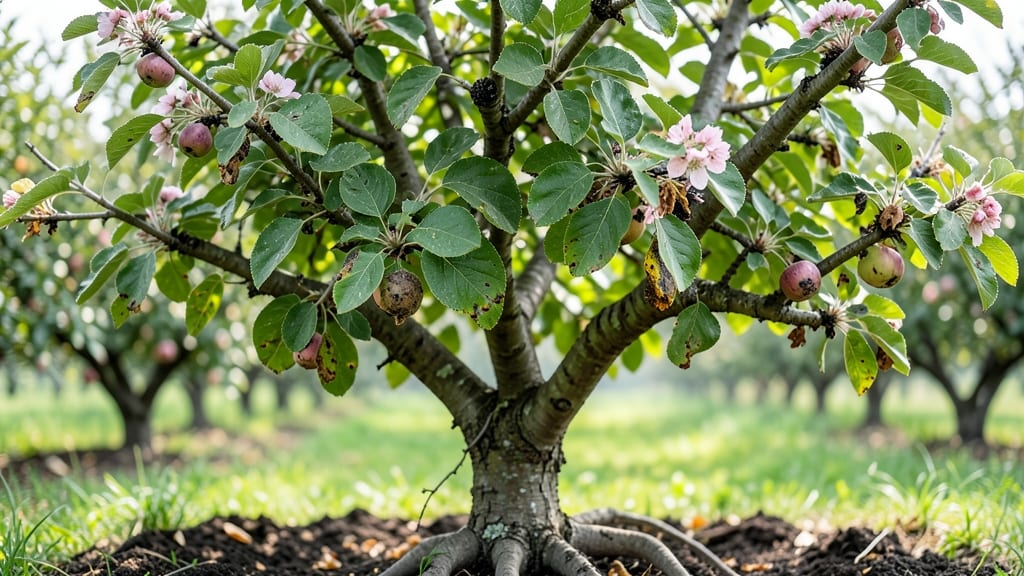
Spotting apple tree diseases with photos can save your harvest—and your tree. 🌿 I’ve seen apple scab turn vibrant green leaves into blackened messes overnight, and fire blight twist branches into sad, oozing canes. The key is knowing what to look for before symptoms spread.
This guide covers the three most destructive diseases—apple scab, fire blight, and cedar apple rust—with clear descriptions of their symptoms, from speckled leaves to blackened canes.
I’ll show you how to tell them apart using simple visual cues, like the velvety black spots of scab or the sheen of fire blight’s ooze.
Once you recognize the problem, you’ll learn organic and chemical treatments that actually work, plus prevention tips to keep your trees healthy. Think pruning at the right time, choosing disease-resistant varieties, and timing sprays before infections take hold.
No more guessing what’s wrong with your tree—or worse, losing it to a preventable disease. By the end, you’ll spot trouble early and stop it before it spreads. Let’s get your orchard back in shape.
Root Causes Of Apple Tree Ailments
Apple trees, like any living organism, are susceptible to diseases—but understanding why these issues arise is the first step to prevention.
Below, we break down the primary culprits behind common apple tree diseases, from fungal invaders to environmental stressors, so you can spot the warning signs before they spiral out of control.
Fungi are the most frequent offenders when it comes to apple tree diseases. These microscopic organisms thrive in moist, warm conditions and often enter through wounds, leaves, or fruit. Here’s how they take hold:
- Overhead Watering or Poor Drainage Fungi like Venturia inaequalis (cause of apple scab) and Botryosphaeria spp. (linked to cankers) spread via water splashes.
If water pools around the base of the tree or drips from leaves, spores latch onto surfaces and germinate. Actionable fix: Use drip irrigation or soaker hoses to keep foliage dry, and ensure the soil drains well to prevent waterlogging.
- Old or Infected Plant Debris Fungal spores overwinter in fallen leaves, mummified fruit, or dead branches.
When spring arrives, they reawaken and infect new growth. Actionable fix: Clean up debris in late fall/early winter, and sterilize pruning tools with a 10% bleach solution (1 part bleach to 9 parts water) to prevent cross-contamination.
- Weakened Tree Immunity Stressed trees (from drought, poor soil, or nutrient deficiencies) have lower resistance to fungal attacks.
For example, Marssonina coronaria (a cause of flyspeck) exploits trees struggling with nitrogen deficiency or compacted soil. Actionable fix: Conduct a soil test every 2–3 years and amend with compost or organic matter to boost tree vigor.
Some diseases don’t spread on their own—they hitch a ride on insects. Here’s how pests enable infections:
- Apple Maggots & Codling Moths These larvae tunnel into fruit, creating entry points for secondary infections like Nectria canker or blue mold.
Their damage also weakens the tree’s defenses. Actionable fix: Use pheromone traps in early spring to monitor populations, and apply organic sprays (like neem oil or kaolin clay) as a barrier.
- Scale Insects & Aphids These sap-sucking pests excrete honeydew, a sticky residue that fosters sooty mold (a black fungal growth).
Sooty mold doesn’t kill the tree but blocks sunlight, stressing it further. Actionable fix: Blast off aphids with a strong stream of water in the morning, or introduce ladybugs (natural predators) to your orchard.
Diseases often exploit environmental weaknesses in apple trees. Here’s how climate and care habits create vulnerabilities:
- Extreme Temperature Swings Rapid shifts from freezing nights to hot days (or vice versa) shock trees, making them susceptible to fire blight (Erwinia amylovora), a bacterial disease that thrives in such conditions. Actionable fix: Plant resistant varieties (like ‘Liberty’ or ‘Enterprise’) and mulch heavily to moderate soil temperature.
- Poor Air Circulation Dense foliage or overcrowded trees trap moisture, creating the perfect fungal buffet. Diseases like powdery mildew (Podosphaera leucotricha) spread rapidly in stagnant, humid air. Actionable fix: Prune to open the canopy, ensuring sunlight and air reach the inner branches.
- Nutrient Imbalances Too much nitrogen (common in synthetic fertilizers) leads to soft, succulent growth—a fungal magnet. Conversely, zinc or boron deficiencies weaken cell walls, making trees prone to cankers. Actionable fix: Use a balanced organic fertilizer (like 5-5-5) and conduct leaf tissue tests to identify specific deficiencies.
Sometimes, well-intentioned actions backfire. Here’s how human factors contribute:
- Overuse of Broad-Spectrum Fungicides While copper sprays or sulfur can prevent diseases, overapplying them disrupts beneficial microbes in the soil, making trees more vulnerable to root rots (Phytophthora). Actionable fix: Rotate fungicides and incorporate mycorrhizal fungi to restore soil health.
- Improper Pruning Techniques Jagged cuts or pruning during wet weather create open wounds where pathogens like Nectria or Cytospora can invade. Actionable fix: Prune in dry conditions, use sterilized tools, and seal large cuts with pruning sealant (for cuts > ½ inch).
Many diseases start with subtle clues. Watch for:
- Yellowing leaves (could signal scab or nutrient deficiency)
- Black spots on fruit (apple scab)
- Oozing cankers (bacterial fire blight)
- Premature leaf drop (often a sign of stress or fungal attack)
💡 Quick Action: If you spot these, isolate the tree and take photos (for diagnosis) before treating. Early intervention is key!
Quick Fixes for Common Apple Tree Ailments
When your apple tree shows signs of distress, acting fast can mean the difference between a full recovery and permanent damage. Below are practical, step-by-step solutions tailored to the most common apple tree diseases, along with prevention tips to keep your orchard thriving. 🌿🚀
Cause: Venturia inaequalis (a fungal infection that thrives in wet, humid conditions).
How to Fix It: 🔥 1. Prune for Better Airflow (🌬️) Remove infected leaves, twigs, and fruit mummies (dried-up scabbed fruit) in late winter or early spring. Dispose of them in a sealed bag or burn them—never compost! Pro Tip: Focus on thinning dense branches to reduce humidity buildup.
🍳 2.
Apply Fungicide at the Right Time (🛡️) - Dormant season (before buds swell): Use a copper fungicide or sulfur spray (follow label rates). - Pink bud stage: Switch to a fixed copper or organic neem oil (for mild cases). - Post-bloom (petal fall): Reapply with a systemic fungicide (like myclobutanil) for extra protection. Pro Tip: Rainproof your spray! Apply fungicide before a forecasted rain to avoid washing it off.
👨🍳 3. Clean Up & Repeat (🧹) After harvest, rake and remove all fallen leaves—they’re fungal spore factories. Store pruned branches in a dry, shaded area until disposal.
Prevention: ✅ Plant resistant varieties (e.g., ‘Liberty,’ ‘Enterprise’). ✅ Space trees 15–20 ft apart for airflow. ✅ Mulch with straw (not wood chips) to reduce soil moisture.
Cause: Erwinia amylovora (a bacterial infection that spreads like wildfire—literally).
How to Fix It: 🔪 1. Prune Infected Branches Immediately (⚠️)
- Cut 6–12 inches below blackened, wilted tissue (the bacteria hides there!).
- Sterilize pruners with rubbing alcohol between cuts.
- Burn or bag infected branches—do not compost!
Pro Tip: Prune on a dry day to prevent bacterial spread via rain splash.
🥘 2. Apply Copper Bactericide (🛡️) Spray copper hydroxide (e.g., Kocide) every 7–14 days during bloom and after pruning. For organic growers, baking soda spray (1 tbsp baking soda + 1 tsp oil + 1 gallon water) can help.
⏰ 3. Monitor & Repeat (👀) Fire blight can re-infect, so inspect weekly during warm, rainy seasons. Remove blighted blossoms as soon as you spot them.
Prevention: ✅ Avoid overhead watering (use drip irrigation). ✅ Plant fire blight-resistant varieties (e.g., ‘Prima,’ ‘GoldRush’). ✅ Reduce tree stress with proper watering and fertilization.
Cause: Gymnosporangium juniperi-virginianae (a fungus that jumps from junipers to apple trees).
How to Fix It: 🌡️ 1. Remove Juniper Hosts (🪓) If you have eastern red cedars nearby, prune and burn infected branches (orange gelatinous galls = spore factories).
🎯 2. Spray for Fungus Early (💦)
- Before buds swell: Apply copper fungicide or neem oil.
- When spots appear: Use myclobutanil or propiconazole (follow label instructions).
Pro Tip: Reapply after heavy rain—this fungus loves moisture!
✨ 3. Clean Up Fallen Leaves (🍂) Rust spores overwinter in debris, so rake and dispose of infected leaves before winter.
Prevention: ✅ Remove junipers within 1 mile of your orchard (if possible). ✅ Plant rust-resistant varieties (e.g., ‘Redfree,’ ‘Akane’). ✅ Improve drainage to reduce fungal growth.
Cause: Podosphaera leucotricha (a fungal infection that thrives in hot, dry conditions—yes, really!).
How to Fix It: 💡 1. Blast Off the Mildew (🚿)
- Early morning: Hose down infected leaves with water to remove spores.
- For stubborn cases: Use a baking soda spray (1 tbsp baking soda + 1 tsp soap + 1 gallon water).
🔥 2. Apply Sulfur or Neem Oil (🌿)
- Dormant season: Spray sulfur dust (follow rates).
- Active growth: Use neem oil (1% solution) every 7–10 days.
Pro Tip: Avoid sulfur if temps exceed 90°F—it can burn leaves!
🌡️ 3. Adjust Watering & Prune (💧)
- Water deeply but infrequently (avoid wetting leaves).
- Thin the canopy to improve airflow.
Prevention: ✅ Space trees 12–15 ft apart. ✅ Choose mildew-resistant varieties (e.g., ‘Jonagold,’ ‘Honeycrisp’). ✅ Mulch with straw to keep soil moist (not leaves).
| Season | Task | Why It Works |
|---|---|---|
| Winter | Prune & dispose of debris | Removes overwintering spores |
| Early Spring | Apply dormant oil or copper spray | Kills fungal/bacterial spores early |
| Bloom Time | Reapply fungicide/bactericide | Protects new growth |
| Summer | Monitor & hose off infections | Prevents spread in hot, dry weather |
| Fall | Clean up & mulch properly | Reduces spore survival over winter |
Final Pro Tip: 📊 Keep a garden journal! Track when diseases appear, what you sprayed, and how your tree responds—it’ll help you stay one step ahead next season. 🌱
Frequently asked questions
How can I tell if my apple tree has a disease just by looking at photos?
Compare your tree’s symptoms to disease photos by focusing on key visual clues: apple scab shows velvety black spots on leaves, fire blight has blackened, oozing cankers, and cedar apple rust features orange gelatinous galls on branches. Use a phone app like PlantNet to upload photos for instant ID—it’s free and accurate for common issues.
Can I use the same fungicide for all apple tree diseases?
No—fungicides target specific pathogens. Copper-based sprays work for bacterial diseases like fire blight, while myclobutanil treats fungal issues like scab or rust. Always check the label! For organic growers, neem oil is versatile but less effective than targeted fungicides.
Why do some apple trees get diseases while others nearby stay healthy?
Disease resistance varies by variety—some apples (like ‘Liberty’) are bred to fight scab, while others (like ‘McIntosh’) are highly susceptible. Other factors include soil health (poor drainage = fungal paradise), proximity to junipers (rust spores jump from them), and pruning habits (overcrowded branches trap moisture).
Is it safe to eat apples from a diseased tree?
It depends: Apple scab only affects the skin (peel before eating), but fire blight or rust can contaminate fruit. If your tree has oozing cankers or blackened spots, avoid eating the fruit. When in doubt, cook apples thoroughly—heat kills most pathogens.
How often should I inspect my apple trees for diseases?
Check your trees weekly during growing season (spring to fall) and monthly in winter. Focus on new growth (early signs appear here), undersides of leaves (fungi love shade), and branch junctions (cankers hide there). Use a hand lens for close-ups—early detection saves your tree!